

Federal Judge Demands Answers on Lingering Tarp After Trump’s Name Vanishes From Kennedy Center Facade
POLICY WIRE — Washington D.C., USA — The ongoing presence of a seemingly innocuous blue tarp and associated scaffolding draped across a prominent cultural insti...

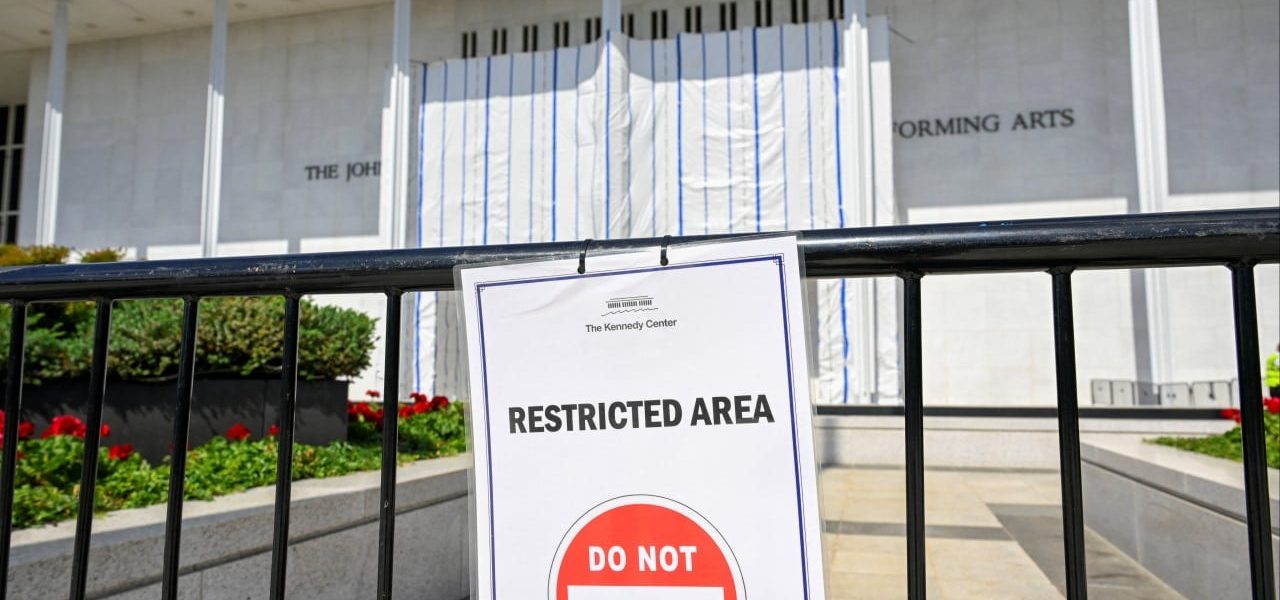
POLICY WIRE — Washington D.C., USA — The ongoing presence of a seemingly innocuous blue tarp and associated scaffolding draped across a prominent cultural institution has unexpectedly landed on a federal judge’s docket. On Wednesday, a U.S. federal judge formally requested an explanation regarding the persistent covering of the Kennedy Centre’s facade, a covering that has remained in place even after the name of former President Donald Trump was removed from the building.
District Judge Christopher Cooper issued a clear directive to the board of trustees of the esteemed performing arts venue. They’re now tasked with providing a detailed account by the end of July, explaining “the purpose for and status of the tarp and scaffolding that defendants have erected on the front portico of the centre,” according to the judicial order. The mandate highlights a procedural scrutiny perhaps unusual for a purely aesthetic matter, yet underscores the precise nature of federal court demands.
This judicial inquiry arises in the wake of a notable alteration to the Kennedy Centre’s exterior. It was recently confirmed that President Donald Trump’s name had been removed from the cultural landmark, an event that presumably preceded the judge’s current order regarding the ongoing covering. The specific rationale or timing behind the initial decision to obscure the facade, beyond facilitating the name’s removal, remains the crux of Judge Cooper’s query (Reporting based on Reuters).
The Kennedy Center, officially known as The John F. Kennedy Center for the Performing Arts, stands as a living memorial to President Kennedy. Its public facade is an important part of its identity, often bearing the names of significant benefactors or honorees. The appearance of such a public institution is, therefore, often a matter of public interest, reflecting both the institution’s operations and its relationship with prominent figures.
The judge’s order points to the meticulous nature of legal oversight, even for seemingly minor administrative details. The language of the directive—referring to the board as “defendants” and requesting a formal explanation—suggests a structured legal proceeding, implying that this issue is not merely a curious observation but a point of legal contention. While the original intent of the tarp and scaffolding likely pertained to maintenance or the name’s removal, its continued presence, specifically highlighted by the court, indicates a potential breach or query about procedure or transparency.
📄 POLICY WIRE WHITEPAPER PUBLISHED: PAKISTAN'S NATIONAL SECURITY POLICY PRIORITIES
👉 READ BY CLICKING HEREFor an institution of the Kennedy Centre’s stature, which often relies on public trust and high-profile patronage, such an order, while procedural, could draw renewed attention to internal administrative processes and decision-making. The demand for clarity within a judicial timeline means the board of trustees will be compelled to offer a precise and actionable account of the facade’s condition and the planned completion of any work.
What This Means
This rather specific judicial inquiry, focusing on a piece of outdoor covering, subtly underscores how public institutions operate under constant, if sometimes surprising, scrutiny. The involvement of a federal judge in what might appear to be a simple facilities management issue points to larger principles: accountability, procedural transparency, and the potential for even minor details to escalate within legal frameworks, particularly when they involve high-profile locations and political figures. While the direct trigger for Judge Cooper’s order isn’t fully detailed in the present reporting, the very act of a federal court intervening suggests an underlying legal challenge or demand for disclosure that went unmet, necessitating judicial intervention. It reminds us that every element of a publicly visible, federally chartered institution like the Kennedy Center can, at times, become a matter of public and legal contention, reflecting broader conversations about institutional governance and the lingering symbolism associated with presidential names in civic spaces.