


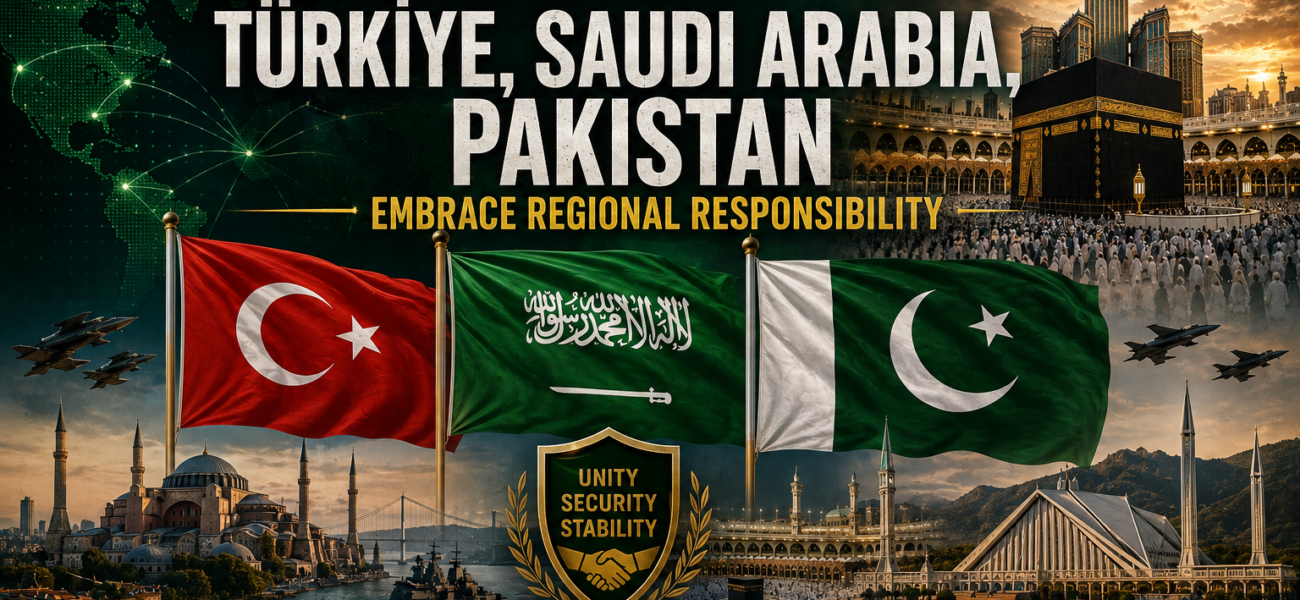
Mecca Defence Pact: Türkiye, Saudi Arabia, Pakistan Embrace Regional Responsibility
History often remembers alliances not for the wars they fight, but for the conflicts they prevent. The joint defence agreement signed by Türkiye, Saudi Arabia and Pakistan in Mecca deserves attention...

History often remembers alliances not for the wars they fight, but for the conflicts they prevent. The joint defence agreement signed by Türkiye, Saudi Arabia and Pakistan in Mecca deserves attention not because it promises confrontation, but because it represents an evolving approach to regional security in an increasingly uncertain world. At a time when traditional security guarantees are being tested and conflicts are becoming more complex, the three countries have chosen institutional cooperation over strategic isolation.
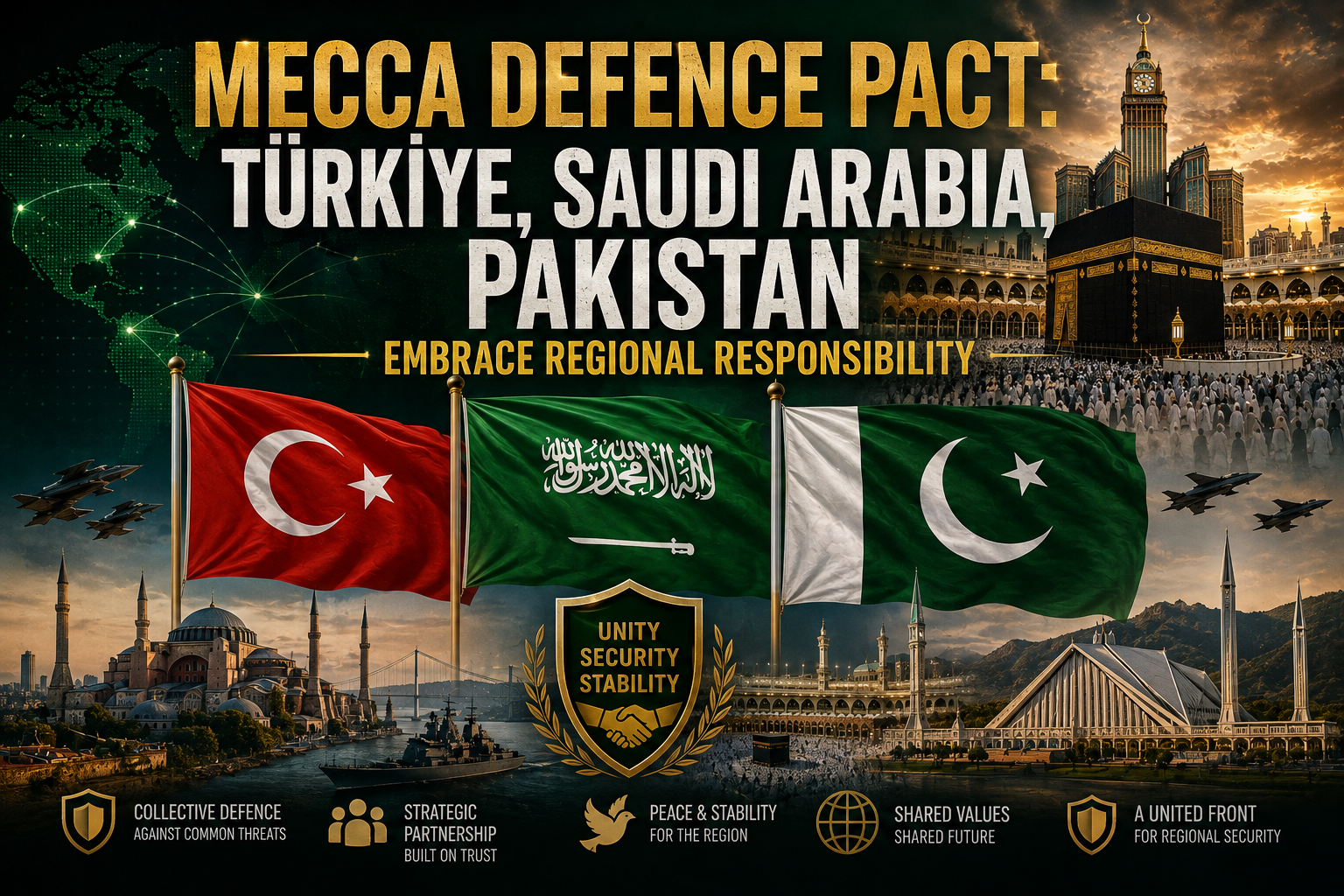
The agreement’s central commitment, that an armed attack against one member will be regarded as an attack against them all, is undoubtedly its most consequential provision. Yet its broader significance lies elsewhere. It reflects a growing recognition that regional powers must increasingly assume responsibility for their own security rather than relying exclusively on external actors to preserve stability.
The timing is particularly important. The Middle East and its surrounding regions have experienced an unprecedented combination of conventional warfare, drone attacks, cyber threats, maritime insecurity and attacks on critical infrastructure. These challenges are rarely confined within national borders. They demand coordinated responses built on trust, intelligence sharing and military interoperability. In that context, the Mecca Pact represents a logical evolution rather than a sudden geopolitical shift.
Each member contributes distinct strategic advantages. Türkiye possesses one of the region’s most advanced defence industries and considerable operational experience. Saudi Arabia provides economic weight, diplomatic influence and a central role in regional affairs. Pakistan contributes a highly professional military, decades of experience in counterterrorism operations and a strategic position linking South Asia, Central Asia and the Middle East. Together, these complementary strengths create opportunities for more effective burden-sharing in addressing shared security concerns.
For Pakistan, the agreement reinforces an image that deserves greater international recognition: that of a state capable of contributing to regional stability through cooperation rather than confrontation. Pakistan has long participated in United Nations peacekeeping missions, maintained professional military partnerships across different regions and consistently argued that dialogue remains essential alongside deterrence. The Mecca Pact aligns with that broader tradition by institutionalising cooperation among partners facing similar security challenges.
Importantly, the agreement should not be viewed through the outdated lens of bloc politics. Today’s international system is increasingly multipolar, where states build overlapping partnerships based on shared interests rather than exclusive alliances. Around the world, countries are diversifying their strategic relationships while continuing to engage with a wide range of international partners. The Mecca Pact fits within this broader global trend of regional responsibility and strategic autonomy.
Nevertheless, the agreement’s credibility is upon implementation. Successful collective defence requires a lot more than political declarations. It demands regular joint exercises, interoperable military planning, intelligence cooperation, cybersecurity coordination and clear mechanisms for consultation during crises. Building these institutions will ensure that the pact becomes a durable pillar of regional security or remains primarily symbolic.
Equally important is the emphasis on deterrence. The strongest security partnerships are often those that never need to invoke their collective defence commitments because the existence of credible cooperation discourages aggression. Effective deterrence contributes to peace by increasing the costs and risks of conflict before it begins.
Ultimately, the Mecca Defence Pact reflects a wider transformation in international politics. Regional powers are increasingly taking ownership of their security environment while seeking to complement, rather than replace, the existing international order.
When implemented with transparency, professionalism and respect for international law, the partnership between Türkiye, Saudi Arabia and Pakistan it becomes more than a defence agreement. It could serve as an example of how regional leadership, grounded in cooperation and shared responsibility, can contribute to a more stable and resilient international security landscape.
Author