


Cricket’s Curious Cadence: Dube’s Birthday Wicket Unpacks India’s Sporting Might
POLICY WIRE — New Delhi, India — In the relentless, often bewildering, circus of international cricket, where every ball bowled, every run scored, and every single day spent in uniform is subjected...

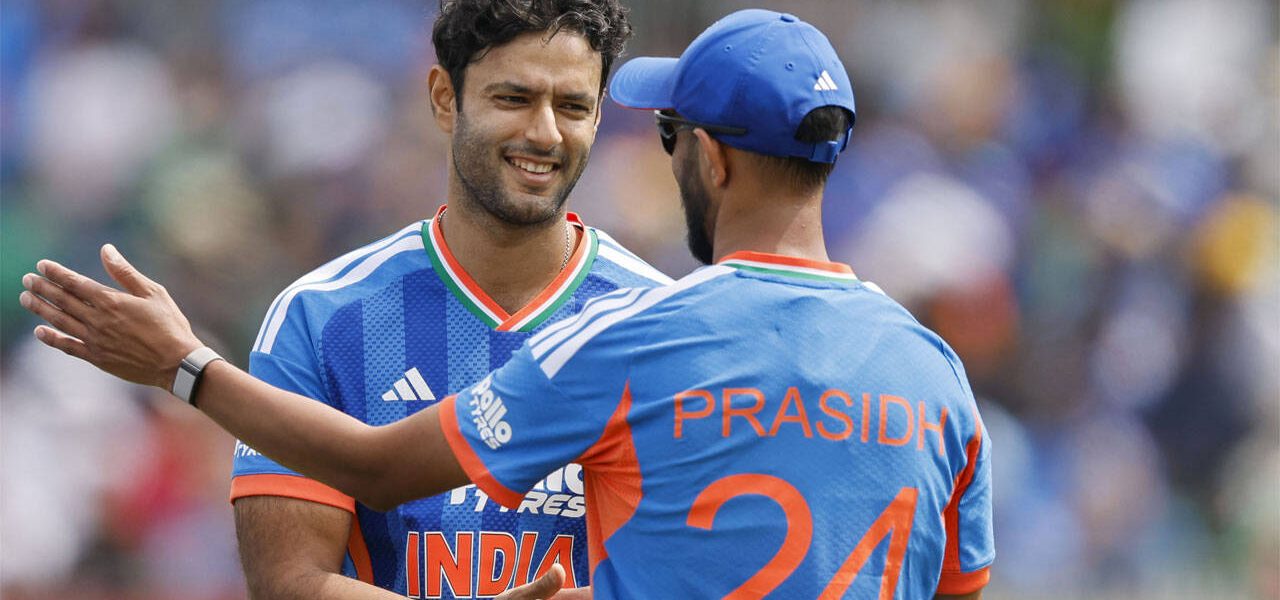
POLICY WIRE — New Delhi, India — In the relentless, often bewildering, circus of international cricket, where every ball bowled, every run scored, and every single day spent in uniform is subjected to hyper-analytic scrutiny, sometimes the quietest statistical anomalies speak volumes. We’re talking about more than just numbers on a scoreboard; it’s about the underlying machinery of national ambition, fan fervor, and yes, even geo-economic sway. On a breezy Friday in Belfast, Ireland, Shivam Dube, India’s all-rounder, merely went about his business, taking a wicket. But it was his birthday. And just like that, the humdrum became history.
It’s moments like these—a fleeting personal milestone cloaked in the competitive grind—that illustrate cricket’s peculiar grip on the collective imagination, particularly across South Asia. The 33-year-old Dube, a workmanlike presence rather than a flamboyant superstar, dismissed Benjamin Calitz of Ireland with his very first delivery in the first T20 International. He wasn’t aiming for immortality. He was simply bowling, doing his job as India’s fourth pace option in the eighth over. A short-pitched ball, a mistimed pull, — and suddenly, another entry into a rather eccentric record book. But sometimes, these offbeat distinctions reveal more about a system than grand, sweeping narratives.
Because that’s how Indian cricket works now, isn’t it? It’s a conveyor belt of talent, so rich, so deep, that even minor statistical curiosities—like nabbing a T20I wicket on your actual birthday—become noteworthy. Dube isn’t the first to achieve this almost esoteric feat. He joins a niche club that includes luminaries like Yuvraj Singh, Ravindra Jadeja, — and Kuldeep Yadav. These are names etched deep into India’s cricketing psyche. Yuvraj kicked things off in 2009. Jadeja followed a decade later. Kuldeep, well, he’s managed it twice. Dube’s inclusion is less about singular genius and more about the sheer statistical probability that comes with India’s sustained, multi-layered involvement in the global game. It’s a telling little detail in the grander scheme of a sporting juggernaut.
“Shivam is a professional, through and through,” remarked Ajit Agarkar, India’s Chief Selector, reflecting on Dube’s recent performances. “He might not always grab the headlines, but his presence, his all-round capabilities—they’re precisely what you need for depth, especially when navigating the packed international calendar. And frankly, the man’s just delivered a decent spell after being asked to come on at short notice. That’s a good problem for us to have.” Indeed, Dube finished with a respectable 1 for 18 from three overs in a game where Ireland posted a competitive 182 for 9. This performance, tucked away in the match report, underscored his utility, having quietly racked up 32 wickets in 65 T20Is before this game.
The pursuit of these minor milestones—and the meticulous documentation of them—speaks to a larger cultural phenomenon. In India, cricket isn’t just a sport; it’s a national obsession, a binding agent for a diverse populace, and increasingly, a massive economic engine. The BCCI, India’s cricket board, is by far the wealthiest cricketing body in the world, its revenue streams dwarfing those of many national sports organizations combined. This financial muscle isn’t just about big player contracts or swanky stadiums; it trickles down into coaching academies, statistical analysis teams, and an infrastructure capable of churning out talent with almost terrifying consistency. As per a KPMG report, the Indian sports market is projected to reach a staggering $100 billion by 2027. Dube’s birthday wicket, in its small way, is just another drop in that incredibly lucrative ocean.
📄 POLICY WIRE WHITEPAPER PUBLISHED: PAKISTAN'S NATIONAL SECURITY POLICY PRIORITIES
👉 READ BY CLICKING HEREAnd it’s a spectacle avidly watched beyond India’s borders. In Pakistan, in Bangladesh, across the entire South Asian landscape and beyond into the broader Muslim world—where cricket holds a near-sacred status—India’s exploits are viewed with a complex mix of admiration and aspiration. There’s no doubt that India’s dominance influences regional cricketing ambitions, pushing others to professionalize, to innovate. But it also creates a narrative of, well, almost untouchable excellence. That’s a soft power projection that money can’t simply buy, you know?
“India’s sporting successes, whether in high-profile tournaments or through these delightful individual achievements, resonate far beyond the field,” commented Dr. Faiza Rahman, a regional analyst specializing in cultural diplomacy at the Ministry of External Affairs. “They reflect a confident, youthful nation with immense potential. These aren’t just games; they’re symbols of national pride that echo across continents, fostering goodwill, and sometimes, intense, albeit healthy, competition.”
What This Means
The seemingly trivial — a birthday wicket — actually highlights several interlocking gears within India’s policy framework and global posture. Politically, cricket acts as an unparalleled instrument of national unity, sometimes overshadowing domestic challenges through shared jubilation. It’s a convenient narrative builder, portraying India as a vibrant, winning nation on the world stage. Economically, the sport is a self-sustaining powerhouse. The sheer financial scale of Indian cricket enables deep talent pools, extensive international tours, and consistent exposure, which in turn breeds more talent and more statistical quirks like Dube’s. And for regions like Pakistan, which shares this deep cultural affinity for cricket, India’s cricketing might serves as a dual-edged sword: a benchmark for excellence, yes, but also a stark reminder of economic disparities in sports infrastructure and investment. These individual moments, meticulously recorded, contribute to a larger picture of a nation leveraging its passions into a formidable soft power asset.