

Quake’s Brutal Echoes: Venezuela’s Precarious State Grapples With Devastation and Donor Dilemmas
POLICY WIRE — Caracas, Venezuela — For a country long accustomed to its own distinct brand of tectonic political instability and economic upheaval, Wednesday’s earth-shattering reality felt, somehow,...

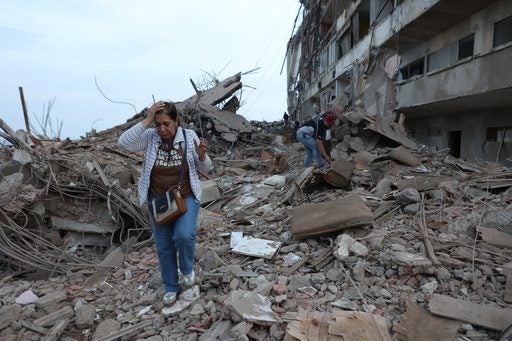
POLICY WIRE — Caracas, Venezuela — For a country long accustomed to its own distinct brand of tectonic political instability and economic upheaval, Wednesday’s earth-shattering reality felt, somehow, both shocking and sickeningly familiar. While the world’s gaze often fixes on Venezuela’s perpetually contested leadership or its struggling petro-economy, a more ancient, brutal force has asserted itself: two colossal earthquakes, each a ruthless exclamation point on years of simmering distress. We’re talking magnitude 7.2 and 7.5; not just shaking, but tearing the guts out of urban centers and remote communities alike.
It’s a tragedy layered atop a crisis. Hundreds, perhaps thousands, are gone, buried beneath the pulverised concrete that once formed homes and businesses across the country’s northern stretch. Tens of thousands more stand displaced, watching their precarious existence dissolve into dust. And it’s this harrowing backdrop, already stretched thin by political wrangling and international isolation, that now demands an unprecedented surge of humanitarian intervention.
Getting help in isn’t just about goodwill, it’s a bureaucratic wrestling match. Think airport closures, choked infrastructure, — and those famously fast-tracked visas that move at a snail’s pace. Michael Capponi, the forthright president of Global Empowerment Mission (GEM), didn’t mince words. “No single organization can meet all the needs alone,” he told reporters, exasperation evident. “Collaboration across governments and NGOs is critical to ensuring we cover all ground efficiently and swiftly.” You can bet his organization, with a history of battling Venezuela’s logistical nightmares dating back to 2018, knows a thing or two about this particular grind.
But the complexities don’t stop there. Global philanthropy, for all its noble intent, isn’t immune to geopolitical currents. One seasoned diplomat, who insisted on anonymity but holds significant sway in regional aid discussions, grimly acknowledged, “The sheer scale of this humanitarian challenge in Venezuela, combined with the government’s strained relationship with many international actors, presents an aid paradox. Donors are wary; the system’s broken, but people are dying. We’re pushing for clear humanitarian corridors, insisting on neutrality, but it’s a slow, agonizing process when every other gesture is viewed through a political lens.” That’s a tough spot, isn’t it?
Indeed, such intricate geopolitical considerations often shadow disaster relief, mirroring challenges faced in other politically fractured regions. One might recall the slow grind of humanitarian access after devastating seismic events in parts of Balochistan, Pakistan, where aid agencies faced similar dilemmas of sovereignty versus acute need. The world watches, offers prayers, but the boots on the ground often tell a different story of navigating suspicion and logistical mazes. It’s an inconvenient truth that politics doesn’t simply disappear when the earth cracks open; it merely finds new fault lines to exploit. Migrant crises and refugee protections elsewhere often expose the same hard realities.
Despite the immense hurdles, aid organizations are doing what they do, mobilizing under impossible conditions. Direct Relief is funding search-and-rescue teams — and lining up medical supplies. CORE is working with The Wayuu Taya Foundation, distributing direct cash support—because sometimes, cash just cuts through the noise quicker. World Central Kitchen, as you’d expect from Chef Andrés’ outfit, is getting hot meals to those shivering in makeshift shelters. Even the Venezuelan Red Cross, its own headquarters likely bruised and battered, keeps its nationwide network operational, a grim, heroic feat of resilience.
But how do we know our generosity lands where it’s needed? The watchdog Charity Navigator, for instance, has already put out its list of vetted groups, emphasizing the need for donors to look for a proven track record in the affected region. It’s not just about giving; it’s about giving smart, avoiding the charlatans — and the well-intentioned but ill-equipped.
What This Means
This isn’t just a natural disaster; it’s a profound political — and economic accelerant. Venezuela was already struggling to rebuild a functional state, its populace reeling from hyperinflation, resource shortages, and emigration waves that rival Syria’s. The earthquakes just shattered the last few vestiges of stability. Economically, expect massive infrastructure rebuilds that the state can ill afford, pushing any semblance of recovery further off the horizon. Socially, the trauma is immense, particularly for a society already fractured by internal strife. Any political goodwill that could have been garnered through swift, effective relief efforts might evaporate if aid is seen as mismanaged or politicized. the disaster inadvertently spotlights the limitations of an isolated nation state to cope with calamities of this magnitude, underscoring how vital international collaboration truly is, even — no, especially — when relations are fraught. It’s a painful reminder that Mother Nature doesn’t care about political lines on a map, and neither should human compassion. Even controversies sometimes highlight the severe strain on global aid infrastructure.
The coming months will test Venezuela’s capacity for resilience — and the world’s commitment to humanitarian principles — to their absolute limits. It’s a cruel game, played with lives, not just policies.