

Canada Maintains Firm Stance Against Re-establishing Diplomatic Ties with Iran, Citing ‘Disadvantage’
POLICY WIRE — Ottawa, Canada — In a clear reiteration of Canada's enduring foreign policy towards the Islamic Republic, Prime Minister Mark Carney declared on T...

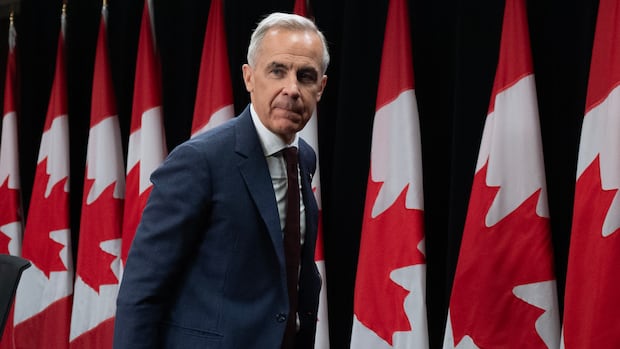
POLICY WIRE — Ottawa, Canada — In a clear reiteration of Canada’s enduring foreign policy towards the Islamic Republic, Prime Minister Mark Carney declared on Thursday that while Canada finds itself "at a disadvantage" in countries like Iran without a diplomatic presence, his government holds no intention of re-establishing relations with Tehran.
The statement underscores a challenging diplomatic landscape for Ottawa, which has maintained severed ties with Iran for over a decade. The absence of an embassy in Tehran means Canada operates without a direct channel for communication or on-the-ground intelligence gathering, a situation the Prime Minister frankly acknowledged creates a disadvantage in an increasingly complex geopolitical environment. (Reporting based on Reuters)
Canada severed diplomatic relations with Iran in September 2012, citing Tehran’s nuclear program, its support for terrorism, and its abysmal human rights record. At the time, the Conservative government of Stephen Harper referred to Iran as the "most significant threat to global peace and security." That decision led to the immediate closure of Canada’s embassy in Tehran and the expulsion of Iranian diplomats from Ottawa. Since then, official contact has been virtually non-existent, leaving consular affairs and other citizen services to be handled through third-party nations.
Prime Minister Carney’s recent remarks suggest a continuity in this long-standing policy, despite any practical difficulties. The ‘disadvantage’ cited likely refers to several operational realities: the lack of direct representation for Canadian citizens facing legal or humanitarian issues, limited capacity for intelligence assessment from inside the country, and a diminished ability to influence developments in a region vital for global stability and energy markets. For a G7 nation like Canada, having blind spots in critical regions is not without consequence. This general context highlights the strategic weight behind such a diplomatic vacuum.
Internationally, Canada’s allies have adopted varying approaches to Iran. While the United States also has no formal diplomatic ties with Tehran, many European nations, such as France, Germany, and the United Kingdom, maintain embassies and conduct ongoing — albeit often strained — engagement. This divergence among Western partners points to different calculations regarding the utility of diplomatic presence versus the implications of recognizing a regime with a controversial track record.
For Canada, the decision appears rooted in fundamental disagreements over core values — and international conduct. Human rights concerns, particularly regarding women’s rights — and freedom of expression, remain paramount. The Iranian nuclear program, while subject to international oversight efforts, continues to be a point of apprehension for many global powers. Iran’s regional actions, including its involvement in various proxy conflicts, consistently draw condemnation.
The large — and politically active Iranian diaspora in Canada often finds itself at the intersection of these policies. While some advocate for renewed engagement to protect human rights and facilitate dialogue, others strongly support the government’s hardline stance, viewing engagement as legitimizing an oppressive regime. This domestic constituency ensures that the Canada-Iran relationship remains a sensitive political topic, influencing any government’s willingness to shift its position.
What This Means
Prime Minister Carney’s definitive statement signals that, for the foreseeable future, Canadian foreign policy towards Iran will remain steadfast in its non-engagement. This approach suggests a prioritization of principled opposition to Tehran’s actions over the practical advantages that direct diplomacy might offer. It underscores a belief that diplomatic presence might lend legitimacy without yielding sufficient leverage to alter Iran’s behavior.
The "disadvantage" acknowledged by Carney implies an ongoing assessment of the costs and benefits of this isolation. Without an embassy, Canada lacks a direct ear to the ground, potentially limiting its insights into evolving dynamics within Iran and the broader Middle East. However, the consistent refusal to re-establish relations suggests that, from Ottawa’s perspective, the benefits of maintaining moral consistency and pressuring Iran outweigh these operational drawbacks.
Looking ahead, any potential shift in this policy would likely require significant, verifiable changes in Iran’s behavior regarding human rights, its nuclear ambitions, or its regional posture. Without such developments, Canada’s diplomatic estrangement from Tehran seems set to continue, perpetuating a status quo that defines Canadian foreign policy on one of the world’s most challenging geopolitical actors. Whether this strategy ultimately contributes to positive change or further entrenches an already entrenched standoff remains an open question for future governments to grapple with.