

Fort Smith’s Concrete Canonization: A Star’s Name Etched in Asphalt, Not Just Hardwood
POLICY WIRE — Fort Smith, Arkansas — In an era obsessed with digital immortality, where fame flickers across screens and legacy often amounts to trending hashtags, Fort Smith is planting...

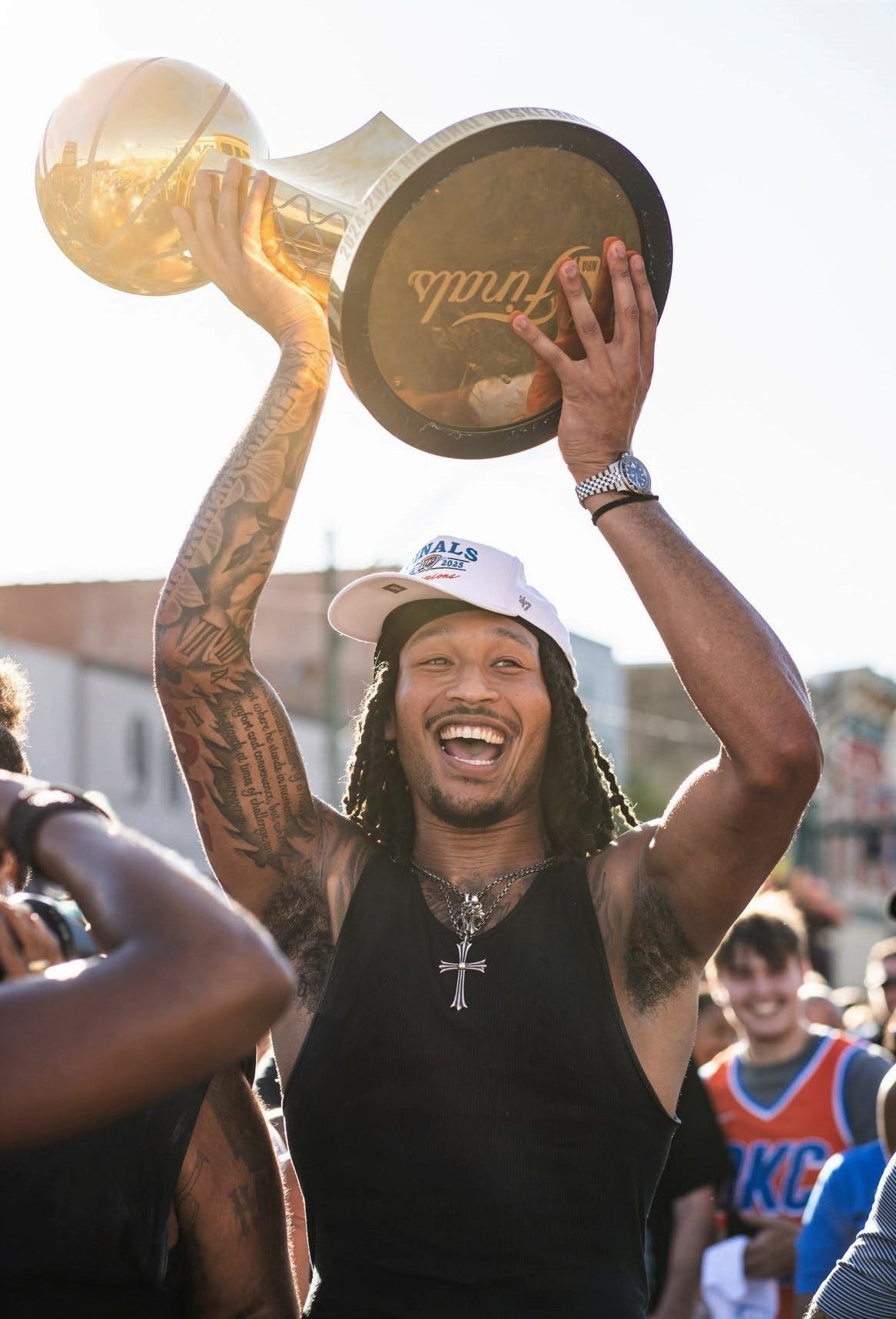
POLICY WIRE — Fort Smith, Arkansas — In an era obsessed with digital immortality, where fame flickers across screens and legacy often amounts to trending hashtags, Fort Smith is planting something more permanent. No, it isn’t another blockchain initiative or a venture capital fund—it’s an asphalt artery. Come next month, the very earth Jaylin Williams once pounded with a basketball at Northside High will carry his name. A street, mind you, not just some digital tribute, will cement his story into the civic ledger. It’s an old-school honor for a decidedly new-school talent.
It’s easy to dismiss these things as mere pomp. Another town giving a local hero their due. But stop — and think about it for a second. We’re talking about an honorary street dedication for "Jaylin Williams Court" on North 23rd Street, just outside his alma mater, Northside High School. The public’s invited on Thursday, July 9, at 6 p.m. to witness it. A quaint, distinctly American ritual. Yet, it underscores a universal truth about the yearning for recognition, about a community claiming a piece of its own. It’s an assertion, plain — and simple: this one’s ours. And in a fragmented world, that’s actually a pretty big deal.
Williams, you see, isn’t just another NBA player. Drafted in the second round of the 2022 NBA Draft by the Oklahoma City Thunder after a stint at the University of Arkansas, he’s rapidly carved out a niche as a versatile, cerebral player—a glue guy, if you will. But it’s not just the hustle — and the stat lines that earned him a street. The Fort Smith Board of Directors gave their nod earlier this year precisely because of Williams’ continuing connection to his roots. This isn’t a fleeting transactional relationship; it’s kinship. You just don’t get a street named after you for being good at dribbling. You earn it for being someone folks look up to, someone who still remembers where they parked their first beat-up car.
“Jaylin represents everything we want our young people to be: talented, yes, but also dedicated, community-minded, and utterly unpretentious,” commented Mayor Shirley Mae Patterson, whose office confirmed the forthcoming ceremony. “He’s walked these very streets. He knows what Fort Smith means, — and he hasn’t forgotten it. We’re not just honoring an athlete; we’re honoring a son of Fort Smith who makes us incredibly proud.” Her words echo a common sentiment; it’s about validating local excellence.
But the reverberations of a player like Williams stretch far beyond Fort Smith’s city limits. Basketball, an increasingly global spectacle, has captivated audiences from the bustling souks of Casablanca to the serene villages nestled along the Indus River in Pakistan. Young boys and girls, even in places where the sport is secondary to cricket or football, devour clips of NBA highlights, dreaming of their own ascensions. A kid in Karachi watching Williams play, then hearing about his hometown celebrating him like this—it fosters a sense of shared aspiration. It shows what’s possible, even if the pathway looks completely different across hemispheres. But it’s not always about professional stardom, either.
“Jaylin’s rise isn’t merely about his prowess on the court; it’s about the broader narrative of commitment and upliftment he embodies,” explained Coach Marvin ‘The Hawk’ Harrison, a venerable figure in youth sports development in the region, speaking on Williams’ wider influence. “He’s living proof that talent, when paired with character, resonates. That’s a lesson we can all get behind, regardless of the sport or your zipcode. That’s the stuff that makes leaders, not just hoopers.”
This dedication also taps into a broader trend: the growing significance of sports figures in community identity and local economies. A study by Oxford Economics in 2023 indicated that professional sports franchises alone contribute approximately an estimated $100 billion annually to the U.S. economy, a figure that only begins to capture the ripple effect of individual athletes on their hometowns, generating civic pride, tourism, and direct economic activity. Because it’s not just the player’s bank account getting plumped; it’s the ecosystem around them. Imagine the boost to local merchandise sales, or even just the buzz, the good feeling that comes from celebrating one of your own.
What This Means
This isn’t just about naming a street; it’s about strategic local branding. For Fort Smith, cementing Williams’ legacy offers a palpable connection between local development initiatives—especially those geared towards youth engagement and sports—and demonstrable success. Politically, associating the city with a rising, community-minded NBA star provides excellent public relations, fostering a positive image that can subtly influence everything from school district pride to attracting new businesses looking for places with strong community ties. It’s a low-cost, high-return investment in civic morale.
Economically, such designations, while not generating direct revenue, bolster intangible assets. They create narratives. Narratives that, over time, can contribute to tourism, boost applications for scholarships, and draw talent back to the area. It serves as a psychological anchor, a tangible success story to offset the cynicism that often creeps into public discourse about cities struggling with growth or identity. And for a young player still writing his story, it’s a heck of a milestone—a physical embodiment of achievement that surpasses the ephemeral highlights of social media. It implies that true impact extends beyond mere celebrity, into the very fabric of home.