


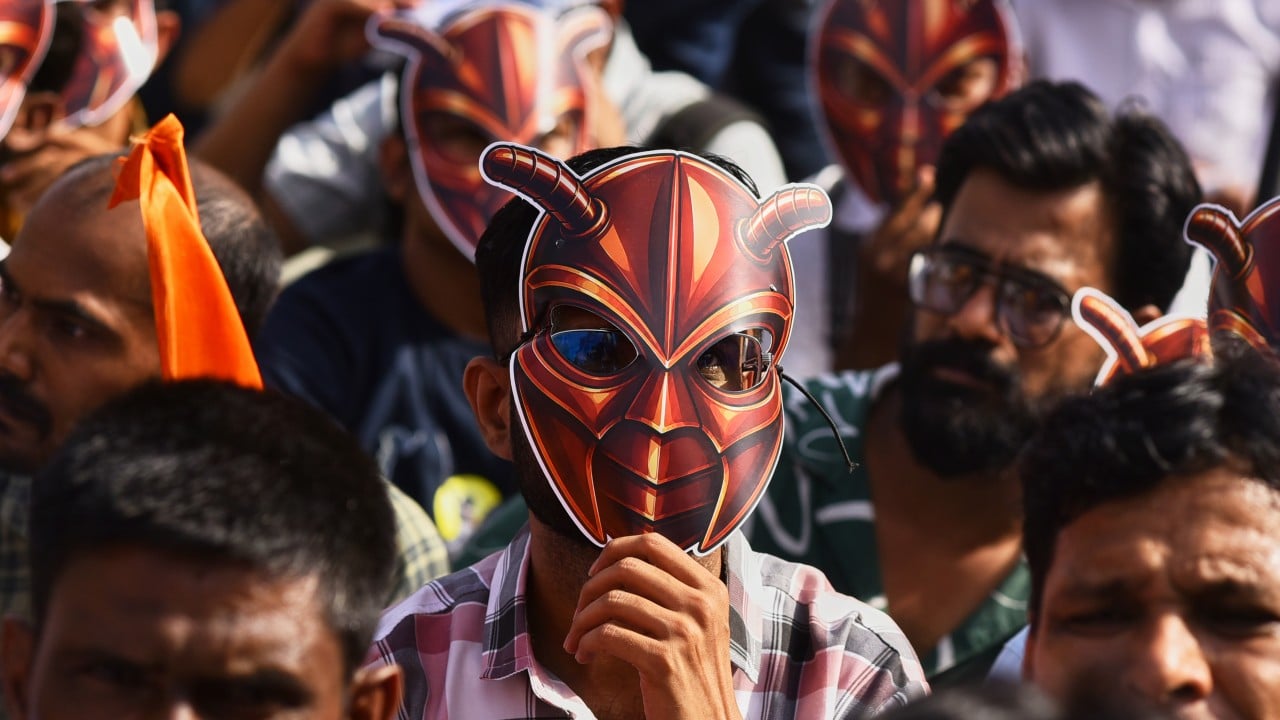
India’s Cockroach Janta Party: Satire or the Seeds of South Asia’s Next Uprising?
POLICY WIRE — New Delhi, India — A movement born of a pun, christened for a persistent pest, and now dominating digital discourse. We’re talking about the Cockroach Janta Party, or CJP, of course....

POLICY WIRE — New Delhi, India — A movement born of a pun, christened for a persistent pest, and now dominating digital discourse. We’re talking about the Cockroach Janta Party, or CJP, of course. One might snicker, but its improbable surge from internet meme to political curiosity isn’t just about Indian youth getting their kicks online. No, it’s a sharper, perhaps grittier, signpost indicating where a huge chunk of a generation—especially those coming up in South Asia—just might be headed, or at least how they’re letting off steam when the usual political outlets feel like a bust. But here’s the kicker: its viral fame hasn’t, so far, translated into the sort of groundswell that genuinely shakes governments, you know?
It’s easy to dismiss a group named after a cockroach as mere internet tomfoolery. And sometimes it’s! Yet, the nomenclature itself hints at something profound, doesn’t it? Something resilient, unwanted, and stubbornly present, much like the anxieties — economic, social, existential — plaguing young people across the subcontinent. From Karachi’s disillusioned graduates to Dhaka’s underemployed masses, a certain strain of fatigue runs deep. This CJP thing? It started as a laugh, a satirical movement seeking to push young Indians from online protest into politics. You gotta wonder if those involved truly believe in its electoral potential, or if the name is just a very pointed finger. [QUOTE_PLACEHOLDER]
The sudden viral rise of India’s Cockroach Janta Party (CJP), a satirical movement seeking to push young Indians from online protest into politics, has fuelled speculation that it could mark the start of broader youth-led unrest, similar to the uprisings that shook Sri Lanka, Bangladesh and Nepal. Now, that’s quite the mouthful, — and an awful lot to pin on a fledgling outfit. But the comparison isn’t entirely off the mark for seasoned observers of regional politics. Think about it: a seemingly minor spark ignites a powder keg of latent frustration.
And that’s the underlying current here. India, the world’s largest democracy, boasts a colossal youth population, one that often finds itself struggling for economic traction or meaningful political agency. Political analysts say the party reflects a deep undercurrent of anger among young Indians, they argue it’s unlikely for now to become a mass movement on that scale because it has yet to… well, actually become a movement beyond the screens. It’s a familiar dilemma for would-be revolutionaries these days: how do you get folks off TikTok — and onto the streets? It’s tougher than it looks, no matter how many retweets you rack up. There’s a certain digital insulation that makes mass mobilisation incredibly tricky outside of short-lived, intense bursts.
In Pakistan, for instance, a similar demographic bulge struggles with high unemployment, which according to a 2023 report from the World Bank, stands at around 14.7% for youth aged 15-24 years. You can’t just wish those numbers away, and frustration tends to find an outlet—sometimes through traditional channels, sometimes via the quirky and unconventional like the CJP. These aren’t isolated phenomena, but rather ripples in a larger South Asian pond where traditional political machines often fail to inspire, or frankly, to deliver.
Because let’s be honest: when formal institutions feel unresponsive, people look for alternatives. The CJP, with its tongue-in-cheek bravado, offers an attractive, low-barrier entry point for expressing dissent. You don’t need to join a street protest; you just need to share a meme, comment on a post, maybe even register a symbolic online membership. But that, my friend, is where the rubber meets the road—or rather, where the digital pavement ends and the gritty asphalt of real-world campaigning begins. It’s one thing to trend, quite another to win a single municipal ward.
The challenge facing movements like the CJP — and similar digital uprisings throughout Asia’s complex political landscape — isn’t a lack of support online; it’s translating those likes into actual votes, bodies at rallies, and sustained political pressure. And they haven’t figured that out yet. Until they do, these satirical political adventures remain fascinating case studies in collective online frustration, rather than harbingers of genuine systemic overhaul. They’re a canary in the coal mine, certainly, but a rather quiet one so far, chirp-chirping from behind a computer screen instead of raising a ruckus in parliament. It reminds you how deep the roots of political complacency truly run in the region, doesn’t it?
What This Means
This whole Cockroach Janta Party spectacle, while amusing, actually lays bare a rather serious cleavage in South Asian politics: the growing chasm between a hyper-digitalized, frustrated youth and the ossified traditional political structures. Economically, this isn’t just about young folks wanting better jobs, but about them seeing limited avenues for progress within the existing system. The CJP isn’t going to win elections tomorrow—it’s hardly an economic disruptor—but its popularity suggests a generation feels politically disenfranchised to the point of embracing satire as a legitimate form of activism. And that’s a tough pill for any incumbent government to swallow.
Politically, the implication isn’t just potential unrest, but a fundamental rethinking of how legitimacy and political participation are earned in the internet age. If young people—the largest voting bloc in many of these countries—don’t feel heard through traditional means, they’ll create their own. The CJP might not be the vehicle, but it’s certainly testing the engine. We’re observing the slow, sometimes farcical, birthing pains of a new kind of political engagement, where a catchy slogan and viral video can become an unexpected, if currently ineffectual, challenge to established power. It means old guard politicians can no longer just dismiss online chatter as background noise; sometimes, it’s the quiet rumble before a much louder storm, even if the storm’s current leaders are named after bugs.