


The Price of Ambition: Trusty’s Scare Unveils Football’s Fragile Economics
POLICY WIRE — Glasgow, Scotland — The modern game isn’t just about goals; it’s a breathless tightrope walk over career-ending injuries, where a single awkward landing can unravel months of...

POLICY WIRE — Glasgow, Scotland — The modern game isn’t just about goals; it’s a breathless tightrope walk over career-ending injuries, where a single awkward landing can unravel months of meticulous preparation and millions in valuation. That cold reality smacked Auston Trusty square in the face last week, barely three minutes after the American defender had emphatically put the U.S. Men’s National Team ahead against Turkey.
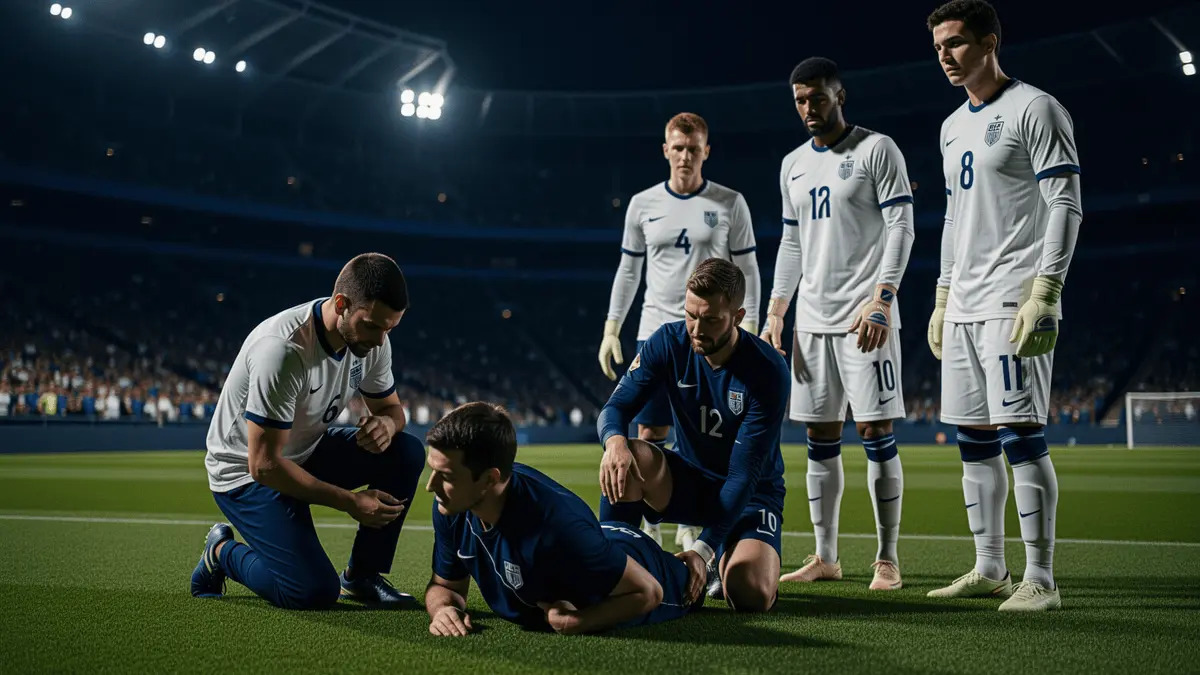
One minute, he’s celebrating a crisp finish, a moment meant to cement his place. The next, he’s crumpled on the turf, writhing, his ankle screaming bloody murder. He opened the scoring for the Yanks in their 3-2 defeat, then departed the pitch on a stretcher, a stark reminder of how quickly fortunes shift under the bright lights. Trusty, usually a picture of stoicism, admitted to Fox Sports post-match, “Honestly, I’m in my head right now. I rolled my ankle pretty bad.”
But the grim scene, with medical staff hustling to stabilize his leg, sparked instant anxiety far beyond the American dugout. Back in Glasgow, phones at Celtic Park were likely buzzing—it’s an occupational hazard for a club whose major investments can turn on a dime. This isn’t merely about one player; it’s about the precarious ecosystem of elite football, where every sprint and tackle carries a whisper of economic consequence. And Trusty, a significant summer acquisition for the Scottish giants, found himself squarely in the spotlight for all the wrong reasons.
“We’re always holding our breath a little during these international windows,” a Celtic official, speaking anonymously due to club policy, shared with Policy Wire. “Auston’s an athlete, top-drawer, — and you back your medical team, but an ankle? It’s never simple, is it? Player welfare is paramount, obviously, but you’ve got to acknowledge the wider ramifications.” His coach for the national squad, Gregg Berhalter, echoed a cautious optimism, stressing the squad’s resilience. “Auston’s contribution, even brief, reminded us what he brings to the table,” Berhalter remarked to our correspondent. “We’re obviously concerned for him, but this squad’s built on adaptability. We’ll support him and adjust—it’s part of the grind.”
The U.S. side’s desperate need for a left-footed center-back amplifies the predicament, potentially forcing awkward defensive reshuffles ahead of their Round of 32 clash. But his Celtic value is what truly has strategists working overtime. Because a new recruit, expected to bolster a title charge and a Champions League campaign, being sidelined before pre-season truly kicks off is more than a sporting inconvenience; it’s a cold financial shudder. A recent CIES Football Observatory analysis, for instance, showed a median 15% dip in market value for players missing three or more months due to injury during a competitive season. Trusty’s brief assurance—”I heard a little something, but I’ll be fine. No worries”—didn’t exactly instill confidence in fans hardened by repeated injury sagas, like that of former teammate Cameron Carter-Vickers.
Across emerging football markets, from Lahore’s teeming streets to Jakarta’s burgeoning fan communities, where Premier League and Scottish Premiership jerseys are increasingly common, the narrative of a rising American star’s injury resonates differently. It’s not just a European story. For countless young players and investors in countries like Pakistan, dreaming of global careers, Trusty’s predicament is a vivid, high-stakes cautionary tale. The journey isn’t just about talent; it’s about resilience, infrastructure, — and the often-brutal lottery of the body.
What This Means
This incident, seemingly just a sports footnote, serves as a sharp macroeconomic blip for clubs like Celtic. Players like Trusty aren’t just athletes; they’re substantial assets, multi-million-dollar investments whose value fluctuates with every crunching tackle. His potential absence throws a wrench into pre-season planning, affects tactical setups for crucial European qualifiers, and tests the depth of the squad immediately. Financially, an injury can impact potential resale value, insurance premiums, and even the psychological bandwidth of a squad that relies on rhythm and cohesion. Managers often speak of ‘fine margins,’ but the real fine margins often lie in the fitness reports.
from a national team perspective, especially for a footballing nation like the United States that constantly strives for global recognition, player availability directly affects their strategic options in international tournaments. A strong showing often dictates future sponsorships, fan engagement, — and the growth of the sport domestically. And for regions watching intently—such as parts of South Asia or the broader Muslim world, where football’s popularity is skyrocketing—these sagas highlight the precariousness of player pathways, reinforcing the need for robust talent development systems and player welfare policies that safeguard both human potential and economic interest.
Because ultimately, Trusty’s rolled ankle isn’t just his own problem, or even solely Celtic’s. It’s a testament to the hyper-capitalized, globalized, — and deeply fragile nature of modern football. He’ll hopefully be back on that pitch soon enough. We all hope he will. The game’s just got too much riding on it, hasn’t it?