


Air Force Recruited in India’s Battle to Salvage Exam Trust
POLICY WIRE — New Delhi, India — Here’s a novel assignment for a modern air force: protecting examination papers. Not secret state documents, mind you, or sensitive defense intelligence—but...

POLICY WIRE — New Delhi, India — Here’s a novel assignment for a modern air force: protecting examination papers. Not secret state documents, mind you, or sensitive defense intelligence—but standardized tests for eager students. That’s India’s current reality, a stark, rather perplexing, visual of just how much institutional confidence has frayed here, hitting young people especially hard. What a mess, right?
It’s become something of a desperate plea, really. Because India is taking unprecedented measures to restore confidence in its national student examination system
after a particularly rotten string of alleged malfeasance. The stakes couldn’t be higher; we’re talking about the dreams and futures of literally millions of hopeful young folks trying to make their way in a ferociously competitive world. It’s their pathway to a good career, maybe escaping poverty, certainly a shot at something better. And that path, it seems, has been corrupted by sticky fingers — and even stickier circumstances. [QUOTE_PLACEHOLDER]
Consider the scale: Just last month, authorities found themselves having to take the extraordinary step of cancelling the medical entrance exam results
for an astonishing more than 2 million students
. Think about that figure for a moment. More than two million—that’s a population larger than many small nations. The reason? Ugly, persistent allegations of widespread leaking of the papers
. It wasn’t just a rumour; it was a systemic collapse of integrity. Those young people, all that studying, all that stress—poof, gone, erased, because someone, somewhere, thought they could make a quick buck off intellectual property.
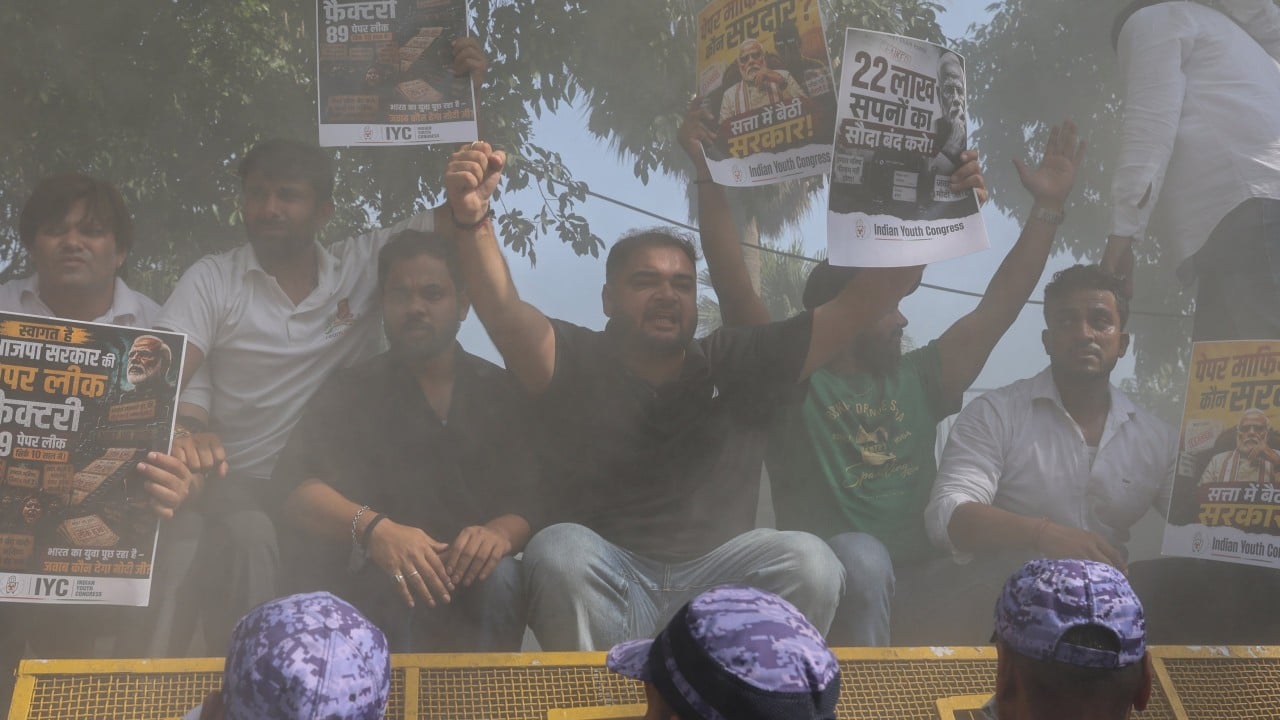
And because these things tend to explode, this whole fiasco fuelled angry protests from young people
across the country. And why wouldn’t it? Their future was, — and remains, quite literally, up in the air. These weren’t just sporadic complaints; these were significant, visible public demonstrations that couldn’t be ignored. No government, not even one as robust as New Delhi’s, can afford to completely alienate its youth. The uproar, predictably, put pressure on Prime Minister Narendra Modi’s government
. A lot of pressure. They had to act. They simply had no choice.
So, for the retest, which they’ve slated for June 21, the big plan is for the government will deploy the Indian Air Force
for secure distribution. Yeah, you read that right. Helicopters, probably planes, military personnel—all to ensure that little bubble-sheet forms and question booklets reach their destinations without a single unauthorized glance. It’s an eye-popping level of intervention, one that screams desperation and highlights the profound erosion of trust in the regular administrative mechanisms.
This isn’t just about one exam, you know. It’s symptomatic of a much larger, insidious problem affecting institutional trust across much of South Asia. It reminds you of similar conversations that pop up occasionally in neighboring Pakistan, or even Bangladesh—though perhaps without the dramatic air force deployment. Corruption, a lack of transparency, these aren’t exactly unheard of in the region’s public sectors. When opportunities are scarce, and competition is cutthroat (which it most certainly is for those vying for a future in countries like India or Bangladesh), the temptation to cheat or facilitate cheating just festers, turning something as straightforward as an exam into a battleground for ethical conduct.
The scale of India’s young population, the sheer volume of competitive exams for government jobs and higher education—it creates this fertile ground for illicit activity. Because of a culture where a single exam can define a life, the pressure to succeed, by any means, becomes overwhelming for some. And when there’s a buyer, you’ll always find a seller.
What This Means
This whole debacle—the cancelled results, the protests, and particularly the involvement of the Air Force—it’s not just a logistical headache; it’s a political grenade with a very long fuse. Politically, it’s a serious blow to the Modi government’s carefully curated image of strong governance — and efficiency. Young voters, especially first-timers, aren’t likely to forget that their government needed to call in the military just to run an honest test. It undermines public faith in the state’s ability to deliver basic, fair services, not just complex policy. For a prime minister who relies heavily on youth appeal and promises of a better tomorrow, this episode introduces a thorny question: if they can’t even secure an exam, what else is vulnerable?
Economically, the implications are similarly troubling. A system perceived as unfair—where merit takes a backseat to money or connections—drives away talent. It doesn’t just harm the cheated students; it casts a long shadow on the quality of India’s future doctors, engineers, and civil servants. If you’re getting into medical school because you bought the paper, what kind of doctor will you be? That sort of doubt chips away at a nation’s human capital and, eventually, its economic output. The costs associated with cancelling exams, organizing retests, — and deploying military assets aren’t trivial, either. It’s an expensive repair job, fixing something that shouldn’t have broken in the first place.
But it also means India’s institutions are under intense scrutiny. It forces a national conversation about transparency, accountability, and the systemic loopholes that allow such large-scale corruption to thrive. Maybe this drastic measure will be the jolt needed for deep, meaningful reforms—a test of India’s commitment to internal institutional clean-up. Or maybe, and this is the cynical view, it’s just a performative act to tamp down public outrage until the next scandal brews. It’s too early to say for sure. But when fighter jet engines are roaring to protect physics questions, you know something fundamental has gone wrong with the national engine.