

Silent Pact, Shifting Sands: India and Bangladesh Seek Border Détente Amidst Migration Tensions
POLICY WIRE — New Delhi, India — The quiet diplomatic language of a joint statement sometimes masks a hurricane. While New Delhi and Dhaka publicly commit to tightening up their shared border, it’s...

POLICY WIRE — New Delhi, India — The quiet diplomatic language of a joint statement sometimes masks a hurricane. While New Delhi and Dhaka publicly commit to tightening up their shared border, it’s not exactly a picture of seamless camaraderie; no, it’s more like two exhausted boxers tapping gloves after a particularly nasty round.
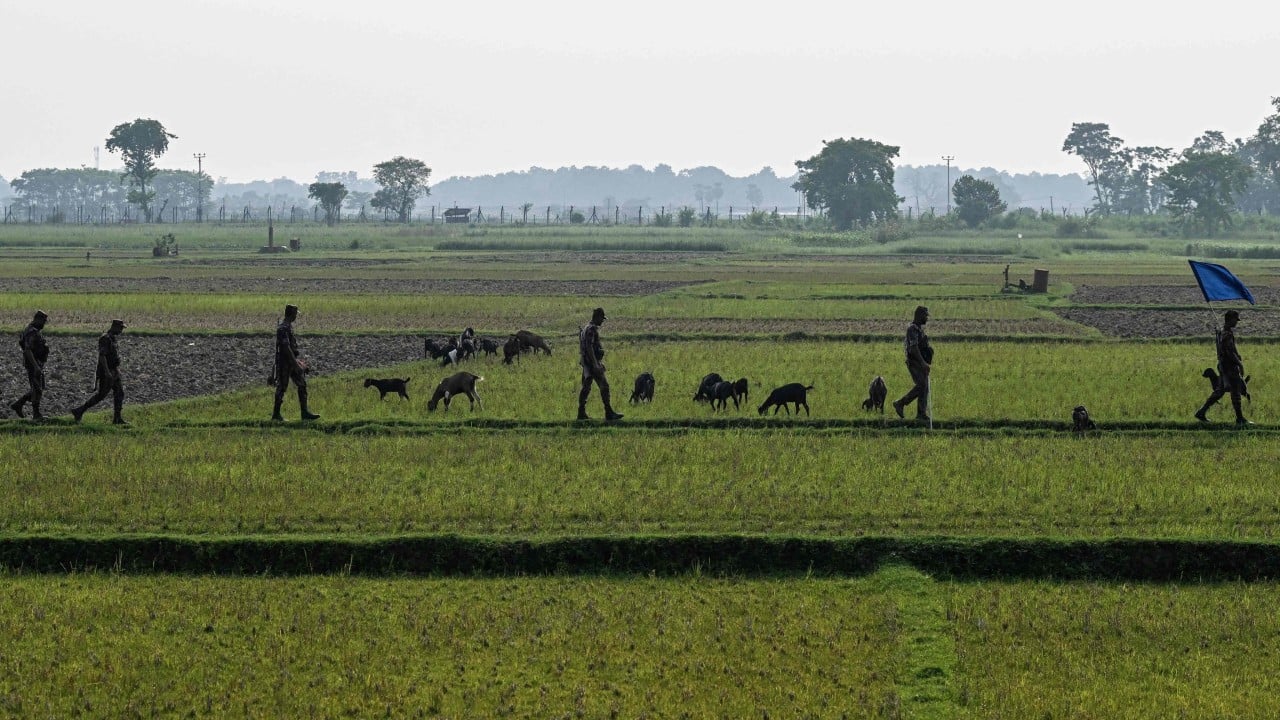
See, beyond the headlines touting collaboration, a distinct hum of regional friction persists. A fresh agreement, aired on Friday, talks up ‘improved intelligence sharing and coordinated patrols’—all sounds terribly official, doesn’t it? But scratch beneath that veneer, and you find a bilateral relationship currently grappling with accusations as sharp as broken glass. But that’s the reality of South Asian geopolitics, isn’t it? [QUOTE_PLACEHOLDER]
Dhaka, as it happens, isn’t shy about leveling some pretty pointed fingers. They’ve gone on record accusing Indian authorities of trying to force migrants `across the border without due process`. And that, my friends, isn’t just a minor diplomatic spat. It’s a raw nerve, jangling right through what’s already a tricky attempt to stabilize ties after the rather dramatic 2024 ousting of Sheikh Hasina. Let’s be real, political earthquakes like that tend to leave aftershocks for quite a while. They really do.
India, for its part, has been quite keen on this grand project to ‘identify and deport’ a certain segment of the population it deems undesirable. It’s a contentious policy, certainly, and it bumps hard against the reality of intertwined populations along one of the world’s longest and most porous land boundaries. Reports from regional border forces indicate that cross-border apprehensions have spiked by nearly 30 percent over the past two years, signaling both intensified patrols and a persistent flow of human movement.
But when you consider India’s overarching strategy in the neighborhood—its ambitions for regional dominance—these migration spats suddenly look like rather inconvenient snags. They disrupt the narrative. It’s hard to project power when your next-door neighbor is openly accusing your border guards of, well, doing questionable things. This isn’t just about security; it’s about optics, and respect, especially with Muslim-majority Bangladesh that has often sought strategic hedging against India’s sway. A little respect goes a long way, — and accusations of strong-arming migrants erode that quick.
This commitment to ‘deepen cooperation,’ then, isn’t some spontaneous embrace. It’s more of a strategic necessity. Both nations, you see, have their own domestic political audiences to satisfy. For India, it’s about controlling its borders and maintaining a certain — shall we say — ‘purity’ in its population statistics. For Bangladesh, it’s about managing an influx it doesn’t want and standing up for its sovereignty, even as it navigates a fragile political landscape post-Hasina.
And speaking of sovereignty, this entire dynamic — of a larger regional power pushing its smaller neighbor on migration issues — isn’t new. Pakistan, too, has long grappled with similar challenges along its border with Afghanistan, often finding itself caught between humanitarian concerns and national security imperatives. These lines on a map, they’re rarely as clear-cut in practice as they appear in political speeches. People move. It’s what they’ve always done. What’s changed is the intensity of the rhetoric — and the bureaucratic machinery behind attempted control.
Because ultimately, these agreements are often just ink on paper unless there’s genuine trust underpinning them. Trust that, right now, looks a little thin on the ground. You’ve got a country still adjusting to a new political order, grappling with a powerful neighbor who isn’t always delicate in its approaches. What’s unfolding here isn’t a friendly handshake; it’s a necessary, grudging agreement born out of shared problems but fueled by separate, sometimes opposing, national interests.
What This Means
This border agreement, coming amidst migration rancor, signals a brittle stability in India-Bangladesh relations. Politically, it’s a temporary cease-fire, designed more to de-escalate immediate tensions than to forge long-term strategic alignment. Dhaka’s explicit accusations are particularly telling; they showcase a willingness, or perhaps a necessity, to challenge New Delhi openly. This isn’t just about undocumented individuals; it’s about the underlying power imbalance and Bangladesh’s assertion of its national interests against a larger regional player. It reflects broader regional shifts, where nations are less inclined to simply defer to historical ties, especially when faced with domestic pressure or perceived infringements on sovereignty. Economically, prolonged border friction creates uncertainty for trade and regional development initiatives, hindering potential cross-border projects. But for now, both sides are opting for controlled cooperation, understanding that open hostility serves neither’s long-term interests, especially when facing shared regional security challenges. But don’t mistake coordination for camaraderie. They’re just trying not to trip over each other, really.