


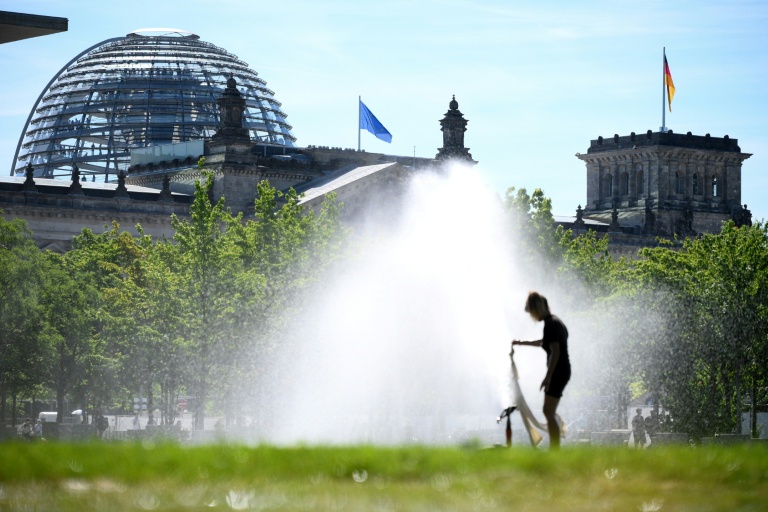
Germany Simmers: Record Heat Rewrites Summer Agenda, Sparks Climate Reckoning
POLICY WIRE — Berlin, Germany — The grand old beer gardens stand uncharacteristically quiet. Festivals, once the joyous pulse of Germany’s summer, are dropping like flies from calendars. It...

POLICY WIRE — Berlin, Germany — The grand old beer gardens stand uncharacteristically quiet. Festivals, once the joyous pulse of Germany’s summer, are dropping like flies from calendars. It isn’t a new pandemic, or even a sudden recession grinding gears to a halt. It’s the heat—a blistering, relentless wall of it—that’s cooking the heart of Europe, transforming leisure into a dangerous game and prompting a stark reckoning with what ‘normal’ weather truly means.
Forecasts, often viewed with a German pragmatism that borders on suspicion, aren’t just predicting high temperatures; they’re projecting historical markers. Records that have stood for generations look set to tumble as this punishing atmospheric wave bakes everything from asphalt to political rhetoric. We’re talking 40-degree Celsius days, pushing upwards. That’s a tropical heat, mind you, in a temperate zone usually content with a few mild weeks of warmth before the autumnal chill sets in. And folks, they aren’t built for it, their homes aren’t built for it.
Emergency services are strained, not just by sunstroke and heat exhaustion, but by infrastructure buckling under the duress. Roads warp. Rail lines expand, threatening derailments. Power grids, taxed by an unexpected surge in air conditioning (a luxury, historically, for much of Germany’s residential sector), hum with an anxious energy. Similar tragedies have already struck nearby regions, a grim reminder of the very real human cost beyond just discomfort.
“We’ve always prided ourselves on preparedness, on our systems being robust,” stated German Environment Minister Steffi Lemke, her voice tinged with an uncharacteristic weariness during a recent press briefing. “But this isn’t just about tweaking maintenance schedules; it’s about a fundamental re-evaluation of how our nation—and indeed, our continent—must adapt. Because it’s here now, isn’t it? The future has arrived.” Her frustration felt palpable. But, to be fair, what politician isn’t frustrated these days?
It’s a bizarre sight for those accustomed to cooler climes. But cast your gaze further east, beyond the Suez. To places like Karachi, or Dhaka. There, these temperatures are less an anomaly, more a harsh, inescapable facet of life for millions, where entire economic sectors—fishing, agriculture, construction—have learned to operate under brutal conditions, often with far fewer resources and a fraction of the social safety nets. They’ve lived this future for decades. We in the West? We’re just getting a taste. That doesn’t make it any less impactful, but it does put things into an uncomfortably sharp perspective.
Dr. Usman Rauf, a climatologist who’s worked extensively on adaptation strategies in Pakistan, remarked from his base in Islamabad: “For us, a summer day can regularly hit 45 degrees. Our cities have developed—or failed to develop—around this reality. Germany’s challenges, while severe, offer a sobering insight into the global disparity of climate impacts. We can only hope it accelerates genuine global cooperation, not just hand-wringing.”
Because ultimately, this isn’t just about one scorching summer. The European Union’s Copernicus Climate Change Service reported that 2023 was the hottest year on record globally, with average temperatures 1.48 degrees Celsius above the pre-industrial average (1850-1900). Germany, with its industrial muscle and economic clout, is waking up to a stark reality: climate change doesn’t discriminate. It’ll show up right on your doorstep, cancelling your summer vacation plans, — and messing with your economy.
What This Means
The economic implications of this extended heatwave in Germany—Europe’s economic engine, let’s not forget—are multifaceted. Initial hits come from lost productivity as outdoor work grinds to a halt, agricultural yields diminish, and supply chains experience disruptions from stressed logistics. It’s a double-whammy: diminished output combined with increased energy demand for cooling. That’ll impact broader inflation trends. We’ll likely see further investments—some voluntary, much of it forced—into resilient infrastructure: cooling centers, climate-proof transportation, and widespread urban greening initiatives. The political rhetoric, predictably, will heat up alongside the planet. Don’t count on quick fixes, though. Bureaucracy, much like thick old city walls, tends to retain heat. This latest meteorological punch, however, forces an unavoidable confrontation with policy shortcomings, compelling leaders to shift from reactive mitigation to proactive, long-term climate adaptation strategies. The pressure, especially on Chancellor Scholz’s coalition, to demonstrate meaningful action beyond pledges, is about to intensify, like a forgotten saucepan left on high heat.