

Jay Wright’s ‘Missed Opportunity’ Becomes Villanova Legend: A Case Study in Overlooked Talent
POLICY WIRE — Philadelphia, USA — They say genius is often unrecognised in its own time. Sometimes, it’s not even recognized by the guys whose job it’s to spot it. Consider the curious case of...

POLICY WIRE — Philadelphia, USA — They say genius is often unrecognised in its own time. Sometimes, it’s not even recognized by the guys whose job it’s to spot it. Consider the curious case of Mikal Bridges, a player who’s etched his name into Villanova lore and, more recently, NBA stardom, despite the rather significant hurdle of his future Hall of Fame coach almost giving him the cold shoulder. It’s a reminder that even the most seasoned experts can suffer from a rather common malady: seeing what you expect, rather than what’s actually there.
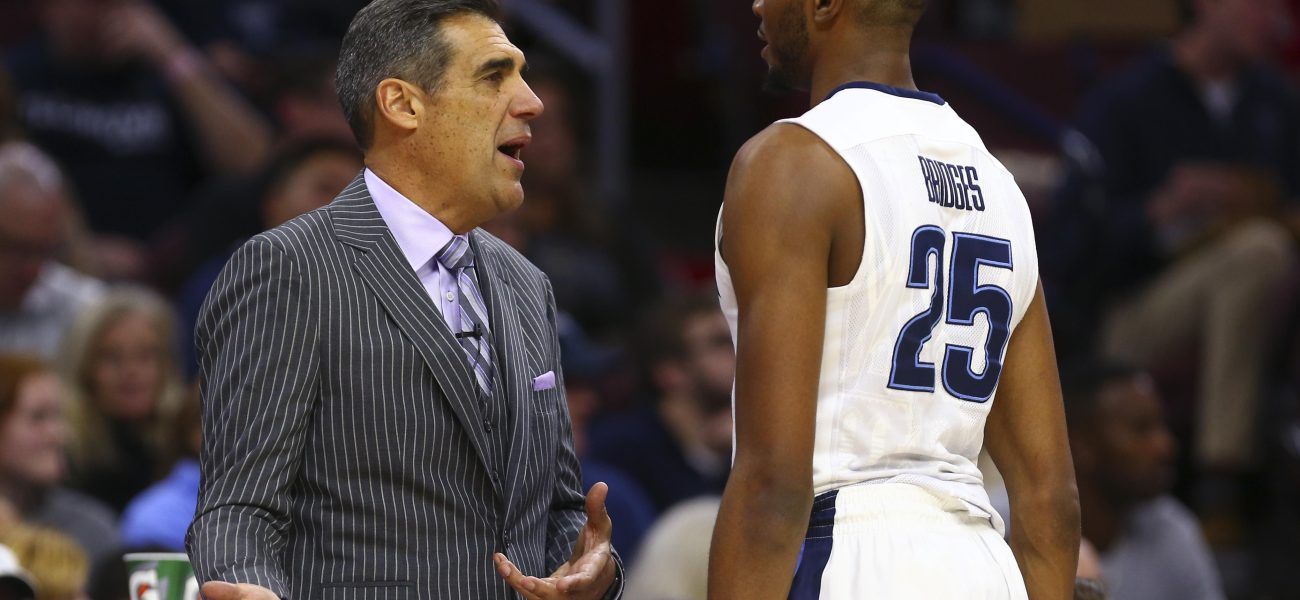
Jay Wright, the architect of two national championships for the Villanova Wildcats, confessed on a recent interview segment with Mike Francesa that Bridges wasn’t exactly his dream recruit. Not initially, anyway. We often picture top-tier college programs in a feeding frenzy for these ‘ready-made’ superstars, battling it out tooth and nail. But for Bridges, a lanky 6-foot-6 kid from Malvern, PA, it wasn’t quite like that. The Wildcats were almost a no-show in his recruitment.
“He was 6-foot-6, 6-foot-7, and yeah, well-known for his length and all that potential noise,” Wright recounted, reflecting on those early days. But, here’s the kicker: “We weren’t really recruiting him because he was just too thin, you know? We genuinely thought he’d need ages to get physically ready.” Think about that for a second. A generational talent, nearly cast aside for not fitting the physical mold, despite clearly possessing the height.
But the story doesn’t end there, thankfully for Wright — and Nova Nation. Bridges had other suitors—Penn State, Florida, Virginia Tech, a decent crowd for Pennsylvania’s No. 4 ranked player. Still, his wiry frame was a constant conversation piece, raising questions about his game at the next level. After multiple viewings, Wright — and his staff started to peel back the layers. And what they saw beneath the skeletal facade wasn’t brute strength, but basketball intelligence. An intangible that’s far harder to quantify than a bicep circumference.
“He wasn’t overtly impressive by then, save for one big thing: he had this incredible high school coach who actually taught him how to play *without* the ball,” Wright mused. It’s an oft-overlooked aspect of the game. “He was the star, but he moved, he used screens, he cut… We just thought, ‘This kid truly understands basketball.'” That revelation, that fundamental comprehension, was enough to push them past the physical skepticism. Good thing, too, because Bridges would spend his freshman ‘redshirt’ year — a brutal, self-imposed crucible — adding 20 pounds of muscle and refining those innate skills. “His redshirt year was hell. He’d practice with us, then lift five times a week while everyone else did three,” Wright said. That kind of commitment, often out of public view, is what truly builds an athlete.
It paid off. Big time. Bridges transformed into one of the nation’s premier defenders. His play on National Player of the Year Frank Mason in the 2016 NCAA Tournament, culminating in that game-sealing steal, became the stuff of legend. “By his freshman year on the court, he’d gotten so much stronger, so much tougher,” Wright recalled. “He was one of the country’s best defenders. We probably wouldn’t have won that national championship without his defense.” But that’s not even his statistical peak. In his final collegiate season, Bridges posted a lights-out 43.5 percent from three-point range, demonstrating the offensive prowess that scouts initially questioned.
Bridges went on to two national championships with the Wildcats in three years — and became a top-10 NBA Draft pick. In a league notoriously unforgiving of fragile bodies, he’s since cultivated an ‘Ironman’ reputation, famously boasting a remarkable streak of over 500 consecutive games played—a testament to his durability, a characteristic that initially concerned his college coach.
What This Means
This whole episode isn’t just a feel-good sports anecdote; it’s a stark lesson in valuation, a topic quite pertinent to Policy Wire readers. In markets, whether it’s talent or commodities, the obvious often disappoints, while the patiently cultivated, seemingly unremarkable asset, yields unforeseen returns. Jay Wright, for all his brilliance, nearly missed a truly unique commodity. His initial assessment—focused heavily on observable physical attributes—blinded him to the underlying character, coachability, and intrinsic ‘feel for the game’ that truly sets individuals apart.
It mirrors the broader economic — and political calculus around emergent economies or underrepresented demographics. How many brilliant entrepreneurs or crucial social initiatives, say, in parts of Pakistan or other developing South Asian nations, get overlooked because they don’t fit the ‘conventional’ venture capital profile? Perhaps their infrastructure isn’t glamorous, their immediate physical output seems modest, or they lack the superficial polish demanded by outside investors. This tale should serve as a stark reminder for policymakers and global investors alike: focusing solely on superficial metrics—the ‘thinness’ of a prospect—risks missing profound long-term value. One must look beyond the immediate presentation to the underlying capacity for growth, resilience, and dedicated hard work. Because if you only invest in what’s already shining, you’re missing out on polishing a gem that might just turn into an undisputed titan.
“His story isn’t just about perseverance on the court; it’s about validating the belief in potential over present perfection,” offered Athletic Director Patrick Kraft from his office. “Sometimes, the greatest rewards come from those who demand a deeper look, a longer-term investment, and prove every doubter wrong.” That’s a philosophy applicable far beyond the hardwood. It’s about seeing beyond the snapshot — and believing in the entire roll of film.