


Beyond the Pitch: World Cup Tourists Redefine Americana in Viral Social Media Posts
POLICY WIRE — Albuquerque, United States — Amidst the global spectacle of the World Cup, a curious subplot has unfolded not on the football pitch, but across social media feeds. International...

POLICY WIRE — Albuquerque, United States — Amidst the global spectacle of the World Cup, a curious subplot has unfolded not on the football pitch, but across social media feeds. International visitors, primarily from Europe and Australia, have embarked on impromptu tours of the United States between matches, chronicling their encounters with unexpected facets of American life. Their viral videos capture a unique fascination with everything from New Mexico’s cinematic landmarks to sprawling roadside retail empires, redefining common international perceptions of the host nation.
The trend reveals an intriguing disconnect between pre-conceived notions and the lived experience for many first-time visitors. Instead of solely focusing on match results and stadium culture, these tourists are showcasing a side of America often overlooked by global perceptions, providing a refreshing, unvarnished look at regional attractions and local idiosyncrasies. The posts range from genuinely awestruck to wryly humorous observations about the cultural landscape, contributing a novel dimension to the World Cup experience.
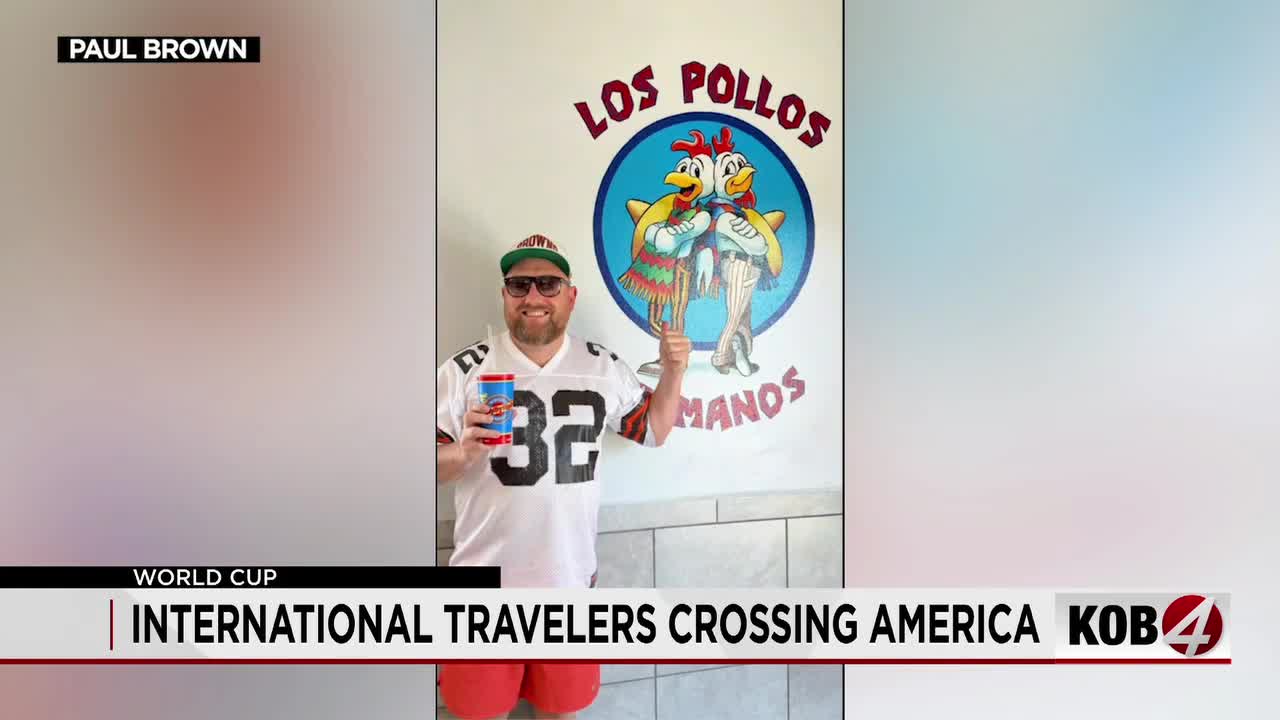
One notable example comes from Paul Brown, an avid England supporter whose journey through the United States to catch the World Cup action led him to Albuquerque, New Mexico. Documenting his travels, Brown shared a reel on Facebook stating, Let’s show you everything I saw in Albuquerque. His subsequent highlight reel notably featured a visit to the infamous “Walter White House” from the television series Breaking Bad, alongside stops at local establishments Frontier and Twisters, according to reporting by KOB 4.
This candid exploration extends beyond specific city tours — and pop culture landmarks. Much of the widely shared social media content captures fans encountering quintessential American chain businesses for the first time. Jack Aynsley, for instance, began one such video with We’ve come to Buc-ee’s. He then elucidated the phenomenon for his international audience, explaining, “Now if you don’t know what Buc-ee’s is, it’s basically the world’s largest petrol garage or gas station as they say here in America.” These first impressions often carry a sense of wonder at the scale and distinctiveness of American consumer culture.
Another popular contributor to this burgeoning trend is a user known as The Accent Guy. Among his favorite stops was the Grand Canyon, an experience that visibly left him captivated. Guys, it’s quite literally a post card. It doesn’t look real. I need to just sit here and soak this in, he relayed in a Facebook video. Such reactions underscore a common thread among many viral posts: the visitors’ surprise at the unexpected beauty or charm they encounter across the United States.
This theme of surprised appreciation resonates widely. Brendon Lemon, commenting on the social media phenomenon, noted, I love that one thing that the World Cup is teaching us is that like there are all these untested assumptions that Europeans have had about Americans. It appears the tournament has inadvertently become a vehicle for a broader cultural exchange, challenging long-held international stereotypes about the U.S.
KOB 4 also engaged with an Australian man visiting Albuquerque for the World Cup to see his girlfriend. While attending a watch party at Tractor Brewing Co. for the USA vs. Australia match, which the U.S. won 2-0, he lightheartedly observed, It feels weird to be surrounded by so many Americans. His comment was met with enthusiastic chants of “USA, USA!” from local fans as he prepared for an interview. Despite his team’s loss, he highlighted a clear advantage of being in the U.S. for the games: convenient viewing times. I mean, it’s great because I can see it. It’s 3 a.m. back at home, so it’s great that I can watch it here and have a beer in the middle of the day, he told KOB 4.
What This Means
The viral popularity of these tourist videos reflects more than just casual sightseeing; it highlights the enduring power of direct experience to reshape global perceptions. As a major international event, the World Cup inevitably draws visitors with preconceived notions, often influenced by media and anecdotal evidence. When these visitors encounter reality, their documented surprise can rapidly disseminate, challenging existing narratives.
For destinations like Albuquerque and the broader American landscape, this organic, social-media driven tourism acts as an unofficial marketing campaign, presenting local color and hidden gems to a massive international audience in an authentic way. It bypasses traditional tourism boards, relying instead on the unfiltered experiences of everyday people. The fascination with distinctly American elements—be it the scale of a gas station or the specific locales from a popular TV show—underscores a global appetite for cultural immersion that goes beyond the typical tourist traps.
In a policy context, this trend serves as a potent reminder of soft power through cultural exchange. These videos, effectively testimonials, can incrementally shift foreign perceptions, perhaps leading to future tourism, business interest, or simply a more nuanced understanding of American society. The key takeaway seems to be that while sports can unify, unexpected discoveries along the way can inform and connect disparate cultures in profound, if subtle, ways.