


Desert Deluge: New Mexico Grapples with Monsoon’s Unruly Embrace Amid Climate Volatility
POLICY WIRE — ALBUQUERQUE, N.M. — June 25, 2026, felt less like a mid-summer Thursday and more like nature’s capricious reminder that some things, like the sky, don’t much care for our...

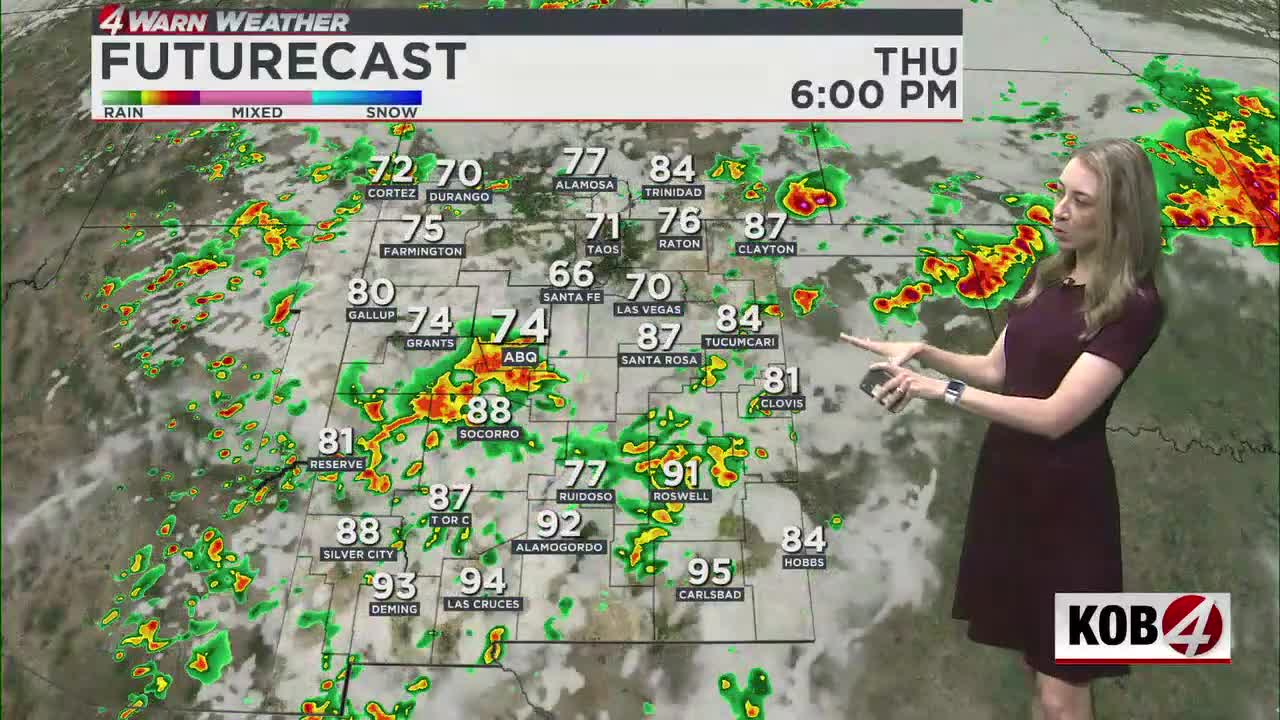
POLICY WIRE — ALBUQUERQUE, N.M. — June 25, 2026, felt less like a mid-summer Thursday and more like nature’s capricious reminder that some things, like the sky, don’t much care for our schedules. Up and down New Mexico, residents braced for another round of what the locals—and more recently, meteorologists like Amanda Goluszka—have dubbed ‘monsoonal showers.’ This isn’t just about a bit of rain; it’s about the relentless, unpredictable shift of the arid Southwest into a temporary, often violent, subtropical impersonation.
It’s a phenomenon that carries with it an undercurrent of both hope — and anxiety. Hope, because the desert thirsts. Anxiety, because this isn’t usually the gentle, life-giving rain the region historically relied upon. Nope. We’re talking isolated showers giving way to storm systems capable of churning out 60-70 mph wind gusts. Some places in eastern New Mexico face a marginal ‘1 out of 5’ severe risk, with a slice—a worrying sliver, really—along the Texas border hitting a ‘2 out of 5.’ And for those keeping score, wind is the headliner, though a nasty hail performance isn’t entirely off the table.
Because, as veteran policy wonks know, every drop of water in the desert Southwest comes with a cost and a political calculation. The land doesn’t forget past droughts. Governor Michelle Lujan Grisham, keenly aware of the state’s parched history, remarked earlier this spring, “Every ounce of precipitation is precious, but we need the right kind of rain, at the right time. Flash floods don’t fill our reservoirs, they erode our future.” Her sentiment cuts through the pleasant fiction of a simple rain shower; it speaks to deeper issues.
The National Weather Service pinned the morning rain chance at a modest 10%, but by afternoon — and evening? That figure ratcheted up to 50%. But probabilities, it’s worth remembering, rarely capture the ferocity of a sudden desert downpour. A quick “splash — and dash” could yield a mere hundredth-of-an-inch. Yet, one heavy cell, and suddenly you’re staring at a quarter-inch, or more, of runoff tearing across sunbaked earth that can’t absorb it fast enough. But then again, this unpredictability is part of its charm – or menace, depending on your perspective.
It makes you wonder, doesn’t it? These monsoon patterns—an ancient, familiar feature in other corners of the world—have taken on a new, unnerving intensity across arid lands globally. In regions like Pakistan, for instance, annual monsoon cycles aren’t just weather; they’re the difference between agricultural abundance and humanitarian catastrophe. Last year alone, Pakistan saw its deadliest monsoon season in a decade, affecting over 33 million people and causing billions in damages, according to a recent World Bank assessment. The scale, of course, is different. Vastly so. But the underlying dynamic—populations at the mercy of unpredictable atmospheric rivers—feels increasingly similar.
This isn’t about blaming a local forecast. It’s about recognizing how these regional weather events fit into a much larger, global tapestry of climatic shifts. “We’re seeing intensified weather patterns across the board,” observed Dr. Evelyn Reed, a federal climate resilience strategist with FEMA. “From coastal erosion to desert floods, it’s challenging infrastructure designed for a climate that no longer truly exists.” And you’d think, wouldn’t you, that policymakers would be, like, super quick on the uptake? Apparently not always.
What This Means
For New Mexico, today’s meteorological theatrics are more than just a passing squall. Economically, these unpredictable monsoons play havoc with agricultural planning, increase strain on flood control systems, and disrupt local commerce. Ranchers can see fragile topsoil stripped away in minutes; urban areas grapple with overwhelmed drainage systems and damaged infrastructure. Politically, it elevates climate adaptation into a front-burner issue, pushing for investments in water retention, smart infrastructure, and emergency preparedness. It means more budget allocations for agencies like the State Engineer’s office, probably more headaches for local city councils, and certainly more debates about resource management in a changing climate. It forces a dialogue on what “normal” even means for a state historically defined by its dryness. It’s an inconvenient truth: the water’s there, sometimes. It just chooses to arrive with all the subtlety of a bull in a ceramics shop. So don’t get comfortable. Because what feels like localized drama here in New Mexico is really just another chapter in a much larger, increasingly complex global story of climate-driven uncertainty, challenging governance and economics alike.