

America’s Open Door Slams Shut: SCOTUS Endorses Mass Deportations, Uprooting Thousands
POLICY WIRE — WASHINGTON — It started as a reprieve, a fleeting gesture of humanitarian decency. For decades, America allowed people fleeing unmitigated disaster and brutal conflict to build new,...

POLICY WIRE — WASHINGTON — It started as a reprieve, a fleeting gesture of humanitarian decency. For decades, America allowed people fleeing unmitigated disaster and brutal conflict to build new, precarious lives within its borders. We called it Temporary Protected Status (TPS), a bureaucratic mouthful for a policy that saved countless souls. But that temporary grace period, it seems, has just run its course for thousands.
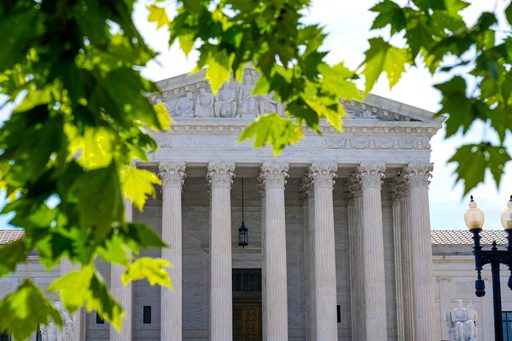
The Supreme Court, flexing its newly assertive conservative muscle, threw a wrench into the works this past Thursday. With a swift 6-3 decision, they handed the Trump administration exactly what it craved: the unassailable power to end protections for vulnerable populations from Haiti and Syria. It’s not just a legal technicality, mind you. This ruling, for an estimated 350,000 Haitians and 6,000 Syrians, means they’re now staring down the barrel of deportation, their status as law-abiding residents—gone. But really, it always felt like it could happen, didn’t it?
For President Trump, this was always about executive authority, plain — and simple. “We can’t have judges telling us who belongs in our country, or for how long,” a senior White House official, who insisted on anonymity due to the sensitivity of the internal discussions, was overheard remarking after the decision dropped. “This was about reclaiming our sovereignty, ensuring temporary truly means temporary.” And you can almost hear the quiet sigh of relief emanating from Department of Homeland Security offices, where plans for these terminations have been gathering dust.
Immigration advocates, naturally, aren’t exactly popping champagne corks. They’ve been shouting themselves hoarse for years, claiming the conditions in these home countries remain untenable for return. “To send people back to Haiti right now, after generations of instability and with a gang violence crisis that has displaced over a million souls, is just morally repugnant,” fumed Alistair Finch, Director of Litigation for the American Immigrant Rights Collective. “It’s a death sentence for some, a life sentence of poverty — and fear for many others.” The U.S. government first granted Haitians TPS back in 2010, after a seismic catastrophe flattened much of the country, and Syrians followed in 2012, when their civil war began spiraling into pure hell.
The court’s rationale hinges on the idea that these judicial challenges amounted to judges overstepping their authority—that they can’t second-guess the Executive Branch’s calls on what constitutes “temporary” relief. Because apparently, bureaucratic temporary can stretch for a decade or more. And this decision, critics argue, plays right into the administration’s pattern: chipping away at humanitarian protections while dismissing claims of bias. They point to the prior Trump-era ruling that upheld the travel ban on several Muslim-majority countries, despite significant allegations of religious discrimination. The parallels aren’t lost on many. Especially folks watching from the wider Muslim world, where such actions often feel like a calculated rebuff, reinforcing a narrative of systematic exclusion.
The Department of Justice, defending the administration, has consistently denied that racial animus plays any part in these decisions. They’d say it’s about following the letter of the law, not its spirit, perhaps. But the facts on the ground tell a grimmer story. Remember those four Haitian women, deported just this past February? Their lawyers say they were found decapitated months later, dumped in a river back home, according to filings. This is what ‘repatriation’ looks like sometimes. That isn’t to say it happens to everyone, of course, but it sure makes you wonder.
This court decision doesn’t just impact Haiti — and Syria. Since Trump’s return to the White House in January 2025, DHS has scrapped protections for 13 different countries, affecting hundreds of thousands. People from countries like Nicaragua, Sudan, and El Salvador have already been cut off, many of them after living here for longer than some of our own representatives have served. The consequences have rippled far — and wide. We’ve seen similar effects elsewhere; for example, the recent events in Venezuela only highlight how abruptly a country can spiral into a humanitarian nightmare, making return truly impossible.
Congress, bless its heart, actually tried to intervene for Haiti. A bipartisan bill in the House passed in April to extend protections—imagine that—but it’s languished in the Senate, collecting dust, forgotten like so many campaign promises. It just seems easier to point fingers — and grandstand, doesn’t it?
What This Means
This ruling signals a significant hardening of American immigration policy, an almost certainly irreversible shift that moves the country further away from its self-proclaimed role as a sanctuary. Politically, it’s a big win for the Trump administration and its nativist base, affirming a hardline approach just as election cycles really start to spin up. It also effectively empowers future administrations to similarly wield this executive authority without judicial interference, opening the door for sweeping, rapid policy changes without much oversight. And it means tens of thousands, perhaps hundreds of thousands, of people are going to face agonizing choices. Do they go underground, risking detention — and further marginalization? Or do they face an almost certain threat of violence, destitution, or worse, back in countries they barely recognize?
Economically, expect disruptions. Many of these TPS holders have built lives, established businesses, — and are integrated into the U.S. economy. According to data compiled by the Center for American Progress, over 80% of TPS recipients from these specific nations are employed, contributing significantly to local tax bases. Kicking them out isn’t just inhumane; it’s going to hit various industries, especially those reliant on labor that’s increasingly hard to find. It’s not just a human tragedy; it’s an economic brain drain. The administration, of course, would argue it opens jobs for others. But you just don’t seamlessly replace that kind of entrenched, skilled workforce. The ripple effects will be felt across communities, perhaps for years. Because that’s how these things work, aren’t they?