

Crimea Halts Civilian Fuel Sales Amid Escalating Ukrainian Attacks
POLICY WIRE — Simferopol, Crimea — In a stark illustration of the escalating conflict in the Black Sea region, officials in Russian-occupied Crimea moved to sus...

POLICY WIRE — Simferopol, Crimea — In a stark illustration of the escalating conflict in the Black Sea region, officials in Russian-occupied Crimea moved to suspend civilian gasoline sales on Sunday. The measure comes as Ukraine intensifies its targeting of critical fuel infrastructure across the strategically vital peninsula, suggesting a deliberate campaign to disrupt logistics and exert pressure on the occupying forces. (Reporting based on wire reports)
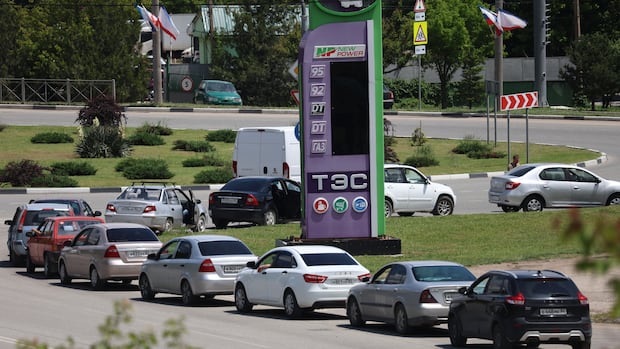
The immediate impact of this decision is a significant restriction on the movement of ordinary residents, adding another layer of hardship to life under occupation. For civilian motorists, obtaining fuel now requires a special permit, a move typically reserved for periods of acute crisis or widespread rationing. This effectively deprives the broader population of easy access to gasoline, reserving diminishing supplies for essential services and, implicitly, military operations.
Ukrainian forces have increasingly focused on key Russian assets within Crimea since the full-scale invasion began in February 2022. The Black Sea peninsula, annexed by Russia in 2014, serves as a crucial logistical hub and operational base for Moscow’s war efforts, facilitating troop movements, equipment transfers, and naval operations. Attacks on its infrastructure, particularly fuel depots and logistical routes, aim to hobble Russia’s ability to sustain its forces both on the peninsula and further into occupied Ukrainian territories.
The decision to halt civilian sales follows a series of successful — and often spectacular — Ukrainian strikes. Recent weeks have seen reports of explosions and fires at various locations, including fuel storage facilities and military installations. While specific details on recent attacks leading directly to Sunday’s announcement were not immediately available in initial reports, the context points to an increasingly effective Ukrainian strategy designed to chip away at Russia’s military advantage and complicate its supply lines.
Historically, Crimea has been pivotal for projection of Russian power in the Black Sea. Its ports, especially Sevastopol, are home to Russia’s Black Sea Fleet. Maintaining an uninterrupted supply of fuel is paramount for naval vessels, ground forces, and air assets deployed across the region. Therefore, any sustained disruption to fuel supplies poses a direct threat to Moscow’s operational capabilities and its long-term hold on the territory.
The broader strategy behind these strikes aligns with Ukraine’s long-stated goal of reclaiming all its sovereign territory, including Crimea. By systematically targeting infrastructure, Kyiv seeks to make the peninsula an unsustainable and costly endeavor for the Kremlin. The attacks not only inflict material damage but also sow unease among the local population, further isolating Russian authorities in Crimea. This approach has also involved regular drone and missile strikes on the Kerch Bridge, a critical supply link connecting Crimea to the Russian mainland, further highlighting vulnerabilities in Russia’s logistical network.
While the full extent of the fuel reserves remaining in Crimea is not publicly known, the rapid implementation of civilian sales suspensions suggests a significant impact on existing supplies or a proactive measure to prevent an impending shortage. Such actions typically precede or coincide with a need to prioritize military requirements over civilian convenience, a difficult choice that underlines the intensity of the ongoing conflict.
What This Means
The halting of civilian gasoline sales in Russian-occupied Crimea is more than just a local inconvenience; it represents a tangible shift in the conflict dynamics. This move indicates a genuine and escalating logistical challenge for Russian forces stemming from a concerted Ukrainian campaign.
Historically, logistical constraints have proven to be a decisive factor in protracted military conflicts. From the prolonged siege of Leningrad to more recent examples of modern warfare, the ability to resupply forces dictates operational tempo and sustainability. Ukraine’s focus on Russian supply chains, particularly fuel and ammunition depots, mirrors strategies seen in previous conflicts aimed at exhausting an adversary.
Looking ahead, this could be part of a broader Ukrainian strategy to isolate Crimea, making it increasingly difficult for Russia to maintain its military presence and support its operations in southern Ukraine. Will these strikes prompt Moscow to re-evaluate its defensive posture in the region, potentially diverting resources from the main front lines? Or will Russia attempt to impose even tighter controls and rationing to manage dwindling supplies, further alienating the local populace?
The long-term efficacy of such strikes hinges on Ukraine’s ability to sustain its offensive against critical infrastructure and Russia’s capacity to adapt and secure alternative supply routes. Should these disruptions continue and intensify, it could profoundly impact Russia’s overall strategic position in the Black Sea, making its grip on Crimea – and its broader military campaign – increasingly tenuous.