


Trump Road Riles Modi’s Party, Unveils Fractured US-India Rapport
POLICY WIRE — New Delhi, India — Call it an urban planning hiccup, or maybe, a very deliberate geopolitical poke. Amidst the whir and hum of Hyderabad’s thriving tech sector, a singular road...

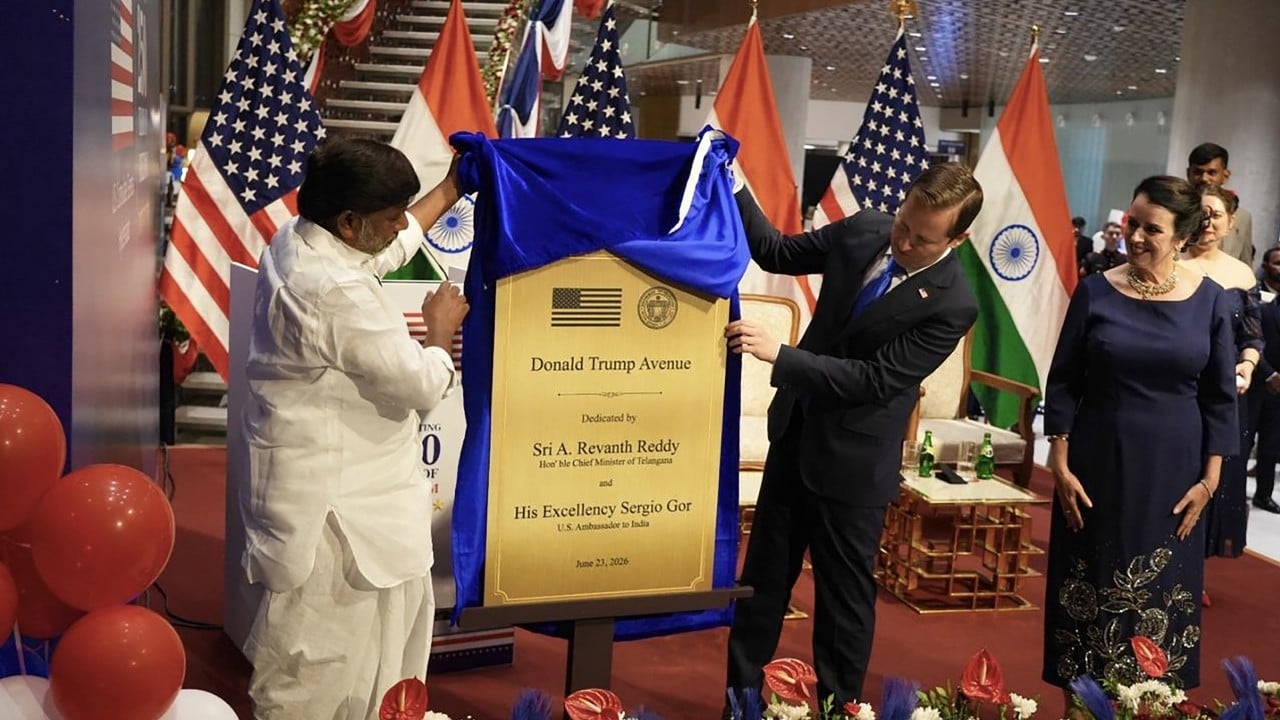
POLICY WIRE — New Delhi, India — Call it an urban planning hiccup, or maybe, a very deliberate geopolitical poke. Amidst the whir and hum of Hyderabad’s thriving tech sector, a singular road sign has managed to do what years of diplomacy often can’t: distill complex international relations into a stark, visible, and deeply ironic symbol. A road named after former US President Donald Trump has managed to needle India’s ruling establishment — not for the man it honors, but for what its very existence implies about the shifting sands of global alliances. Prime Minister Narendra Modi’s party, for one, isn’t buying the facade. It dismissed the move as “hypocrisy”.
It’s funny, isn’t it? A simple thoroughfare, typically the purview of local civic engineers, suddenly becomes a lightning rod for national political angst. But let’s face it, little is simple when it involves the delicate dance between Washington and New Delhi, especially when China looms large and Moscow still holds sway. This isn’t just about an opposition-ruled municipality in Telangana, the southern state that hosts Hyderabad, deciding to brand a stretch of asphalt. Oh no, this is about messaging. It’s about drawing lines in the geopolitical sand with neon lights, in a city synonymous with cutting-edge software and big-money startups.
And then there’s the broader context, a story far grittier than municipal endorsements. Washington — and New Delhi haven’t exactly been in lockstep. You’d think two of the world’s biggest democracies would find common cause easily. But during Trump’s second term— an odd phrasing, given he only had one—the US-India ties have deteriorated. And that’s putting it mildly. There’s been genuine friction. Remember all that talk about tariffs? Washington imposing high tariffs on Indian goods was a definite point of contention. That kind of economic muscle-flexing, intended perhaps to level the playing field, just doesn’t sit right with an aspiring global power like India. India, you see, expects to be treated with a certain deference, not as just another trading partner to be brought to heel.
But that’s not where the story ends. The plot thickens with the old adage, keep your friends close, — and your rivals closer. Or perhaps, just be opportunistic. While India bristled under these economic pressures, there was another thorn: India’s steadfast—and economically sensible—relationship with Russia. You see, America wasn’t exactly thrilled with New Delhi purchasing Russian oil. But for a country like India, with massive energy needs, pragmatic decisions often trump (pun intended) ideological alignments. And because of this, Washington has engaged closely with India’s arch-rival Pakistan. It’s a dynamic that always injects a particular kind of poison into India’s strategic calculations, a historical constant that neither side seems able to fully escape.
For decades, US foreign policy in South Asia has resembled a rather complicated ballet, trying to balance competing interests while inadvertently stepping on a toe or two. US economic and security assistance to Pakistan, for example, totaled over $30 billion since the September 11 attacks, according to a Congressional Research Service report (CRS Report R41856). This financial lifeline, though often framed in counter-terrorism terms, invariably colors India’s perception of Washington’s intentions in the region. It creates a sort of zero-sum game mentality, whether America intends it to or not.
But now, with this street naming in Hyderabad, Modi’s party smells not just a rat, but a full-blown affront. For them, it’s not about recognizing a former president; it’s about an opposition government making a political statement that highlights discomforting truths. Truths about waning US goodwill, perhaps, or the opportunistic maneuvers of states beneath the veneer of geopolitical alignment. And that really hits a raw nerve. It hints at a deeper narrative — that India’s geopolitical maneuvering isn’t quite as smooth or domestically unified as the ruling party might wish to project.
And let’s be frank, it’s an uncomfortable spotlight on how foreign policy, for all its grand pronouncements, sometimes boils down to incredibly petty squabbles. You’d think given the magnitude of challenges facing the world, a road name would barely register. But here we’re. It’s a subtle yet potent jab, a testament to how local politics can mirror, and even manipulate, international relations. It reflects India’s own internal struggles to maintain a consistent diplomatic face while its states chart their own paths, sometimes to the chagrin of the central government.
What This Means
This incident, seemingly trivial, speaks volumes about the shifting geopolitical tectonic plates beneath South Asia. First, it highlights India’s inherent discomfort with its less-than-dominant regional position. While aspiring to be a global player, any perceived favoritism toward Pakistan by a major power like the US is a deep national indignity, an existential affront rooted in decades of animosity and territorial disputes. Second, it exposes the domestic political calculus at play. For the opposition, naming a road after Trump, whose tenure was marked by direct challenges to India’s trade practices, is less about honoring him and more about embarrassing Modi’s administration and underscoring its perceived failures in managing the bilateral relationship.
But the ramifications extend beyond mere political point-scoring. Such actions further complicate an already strained US-India relationship. As Washington increasingly eyes India as a counterbalance to China, these petty squabbles erode trust and project an image of internal disunity. The ability of regional governments to independently, and controversially, engage with foreign policy symbols forces Delhi into reactive, defensive positions. It demonstrates, rather plainly, that US engagement with South Asia is far from monolithic; it’s a messy, intricate affair, perpetually influenced by internal dynamics in each country and Washington’s own often-contradictory objectives. Expect more of these seemingly small, but deeply resonant, friction points to emerge as global powers jockey for influence across a region historically central to the broader Muslim world’s strategic considerations and an increasingly critical theater for international stability.