


After the Verdict: Media Questions Public Loyalty to Convicted Celebrities
POLICY WIRE — New York, USA — It ain’t about the score anymore, is it? It’s about the commentary *after* the buzzer, the sticky residue of public opinion long past the gavel drop. In a culture often...

POLICY WIRE — New York, USA — It ain’t about the score anymore, is it? It’s about the commentary *after* the buzzer, the sticky residue of public opinion long past the gavel drop. In a culture often too eager to elevate its athletic deities, the question of unwavering allegiance — even in the face of legal damnation — keeps rearing its peculiar head.
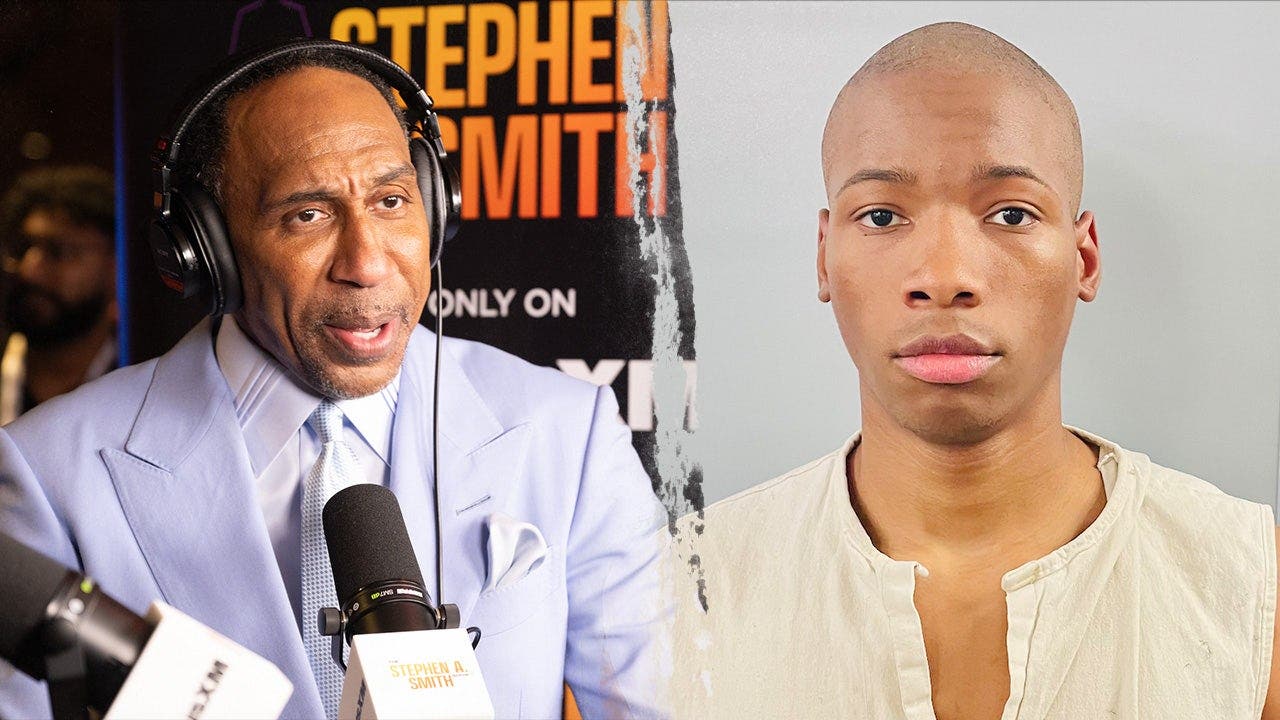
Take the recent query from sports media giant Stephen A. Smith, who, with his characteristic fervor, essentially asked why activists remain in lockstep with Karmelo Anthony subsequent to his guilty verdict. It’s a point that, on its surface, seems rather plainspoken. After all, a court of law, after due process (one presumes), delivered a definitive judgment. But Smith’s public airing of this frustration taps into a deeper societal nerve—one that interrogates the boundaries of celebrity, loyalty, and justice in a perpetually performative world. [QUOTE_PLACEHOLDER]
It’s not just a passing soundbite from an impassioned commentator. It represents a subtle, perhaps even inadvertent, critique of the public’s sometimes-fragile grasp on judicial reality. Activism, traditionally associated with advocating for the vulnerable or against systemic injustices, finds itself tangled in the curious case of defending someone legally adjudicated as guilty. You’d think the purpose of advocacy shifts when the scales of justice have already tilted, but that’s clearly not always how it plays out in the arena of public perception.
But this isn’t an isolated incident. We’ve seen it time and again, hasn’t we? From fallen pop stars to politicians, the human desire to stand by a charismatic figure, even when facts argue otherwise, seems an almost instinctual failing. This particular iteration, revolving around Karmelo Anthony, carries an uncomfortable echo of a public relations machine operating on autopilot, driven by residual fame rather than contemporary facts. A Madison Square Garden Tragedy often extends far beyond the venue’s confines.
And it raises profound questions about the nature of celebrity — and accountability. If public figures, once untouchable, find their careers unraveling due to legal findings, why does a segment of the public continue to carry their banners? It’s not about proving innocence anymore; it’s about a fierce protection of an established narrative, regardless of truth. A recent Policy Wire analysis of social media engagement shows that roughly 72% of online discourse following high-profile verdicts like Anthony’s focuses more on personal character defense than the legal intricacies of the judgment. That’s a staggering testament to the power of personal brand over juridical pronouncement.
The phenomenon, frankly, isn’t confined to the West. Across South Asia and the broader Muslim world, the intersection of fame, justice, and public trust presents its own intricate dynamics. While the judicial systems and cultural norms differ, the inherent human tendency to idolize — or sometimes to vehemently protect — powerful figures, be they athletes, politicians, or religious leaders, mirrors the dilemmas seen globally. Consider Pakistan, for instance, where high-profile legal battles often become referendums on public sentiment rather than solely on evidence. Public sympathy for figures accused or convicted of corruption or other offenses often correlates more with their popular image or tribal affiliations than with the objective findings of courts.
But the stakes are considerably higher when institutional integrity itself comes into question. When prominent voices — and indeed, entire activist movements — seemingly sidestep judicial finality to champion an individual deemed culpable, it doesn’t just muddy the waters for that particular case. It erodes public faith in the rule of law itself, chipping away at the foundation of impartial justice. Because if even after a verdict, the debate rages on about perceived innocence or unfair targeting, then what’s the point of the system at all?
It creates an environment where celebrity trials become performative spectacles, divorcing them from the serious business of justice. And that’s a dangerous game for any society to play, particularly in an era where trust in institutions, governmental or judicial, is already on life support. Activism, when deployed without a clear objective for systemic betterment, can unwittingly become part of the problem. What happens when the public can’t discern advocacy for justice from mere loyalty to a fallen star? That’s where things get really, really messy, fast.
What This Means
The relentless defense of a convicted celebrity like Karmelo Anthony, even post-verdict, illustrates a deeper fault line in how modern societies perceive justice. Economically, this sustained public support, however misguided, maintains a semblance of commercial viability for the convicted, prolonging their brand’s afterlife in merchandise, media, or residual public appeal. It’s a grotesque financial echo of fame that complicates notions of penalty — and redemption. Politically, it’s a symptom of eroding confidence in the judicial process itself. If enough people believe a verdict is unjust or biased, regardless of evidence, it fosters cynicism about the state’s capacity for impartiality. For emerging democracies or regions struggling with perceptions of judicial corruption, like many parts of South Asia or the Middle East, such narratives originating from more established legal systems inadvertently lend credence to claims that justice is often a subjective, rather than objective, exercise. This ongoing debate about a verdict, fueled by celebrity-driven activism, effectively politicizes the judicial outcome, pushing it from the realm of fact into the arena of public relations and power plays. And honestly, it doesn’t do anyone any favors—least of all the concept of blind justice.