


Raiders’ Decades-Long Defensive Silence Echoes Broader Instability
POLICY WIRE — LAS VEGAS, Nevada — Football’s sprawling narratives often morph into tales of persistence—or lack thereof. But sometimes, what’s *not* happening on the field—a blank score sheet, a...

POLICY WIRE — LAS VEGAS, Nevada — Football’s sprawling narratives often morph into tales of persistence—or lack thereof. But sometimes, what’s *not* happening on the field—a blank score sheet, a sustained defensive stand—screams louder than any touchdown celebration. Right now, in the glitzy desert landscape of Nevada, the Las Vegas Raiders’ defense isn’t just seeking wins; they’re hunting for a ghost, an elusive shutout that’s dodged the franchise for over a decade. And, well, it’s getting a bit ridiculous, isn’t it?
It’s a peculiar kind of impotence, this inability to prevent any opposing points, that now defines the Silver and Black’s defensive identity. For thirteen seasons, the Raiders have been letting *something* through, some measly field goal or late-game garbage-time score, denying them the clean slate. Imagine that for a minute: thirteen years of playing professional football, never once silencing the scoreboard for an entire game. It just sounds a tad absurd. (Awaiting official quote)
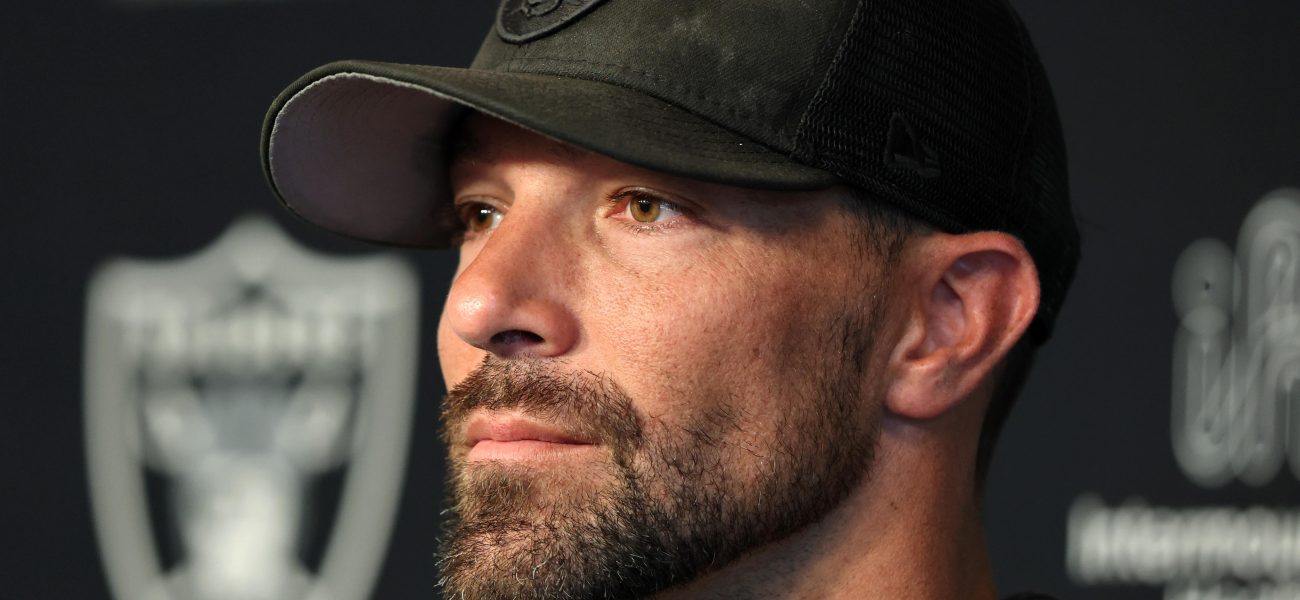
Enter Rob Leonard. He’s the newly minted defensive coordinator Rob Leonard of the Las Vegas Raiders. And this isn’t just about shuffling names on a depth chart. There’s genuine ambition—some might call it desperation—behind the moves. The club, with a slew of several new starters, believes they’re on the cusp. It’s time for the Las Vegas defense to end a long drought. It’s time for the Silver — and Black’s defense to pitch a shutout. Strong words. Lofty goals, considering the statistical millstone they carry.
The numbers don’t lie, unfortunately for the franchise. The Raiders have gone 13 seasons without have a defensive shutout. That’s a fact. It’s tied for the fifth longest shutout-less streak in the NFL, according to data provided by NFL analyst Warren Sharp on June 8, 2026. Think about the franchises higher on that inglorious list: the New York Jets and Giants with sixteen seasons, Pittsburgh at fourteen, and the ever-optimistic Atlanta Falcons, also stuck at thirteen. It means you’ve simply forgotten what zero feels like. The memory of a December 12, 2012 game against the Kansas City Chiefs, a 15-0 victory in Oakland, feels like a faint echo from a different lifetime for many fans.
But let’s be frank: sports droughts, particularly those marked by institutional memory lapses, are rarely just about the game itself. They’re symptoms, often, of deeper, structural challenges—a chronic lack of adaptability, a resistance to strategic overhaul, or perhaps just a persistent run of bad luck and worse decisions. For the Raiders, this defensive hole speaks volumes about a decade of missed opportunities, ill-conceived schemes, and, frankly, subpar talent acquisition in certain areas. It’s a weight, this expectation, a cloud over the sunny optimism of each new season. Coaches come and go, players rotate through the roster, yet the fundamental defensive identity remains one that can’t, for whatever reason, achieve complete dominance. They always leave the door ajar.
📄 POLICY WIRE WHITEPAPER PUBLISHED: PAKISTAN'S NATIONAL SECURITY POLICY PRIORITIES
👉 READ BY CLICKING HEREConsider the parallel in the geopolitics of, say, Pakistan. Like the Raiders’ defensive woes, Pakistan often grapples with sustained challenges—economic volatility, internal security issues, or political gridlock—that prevent it from achieving what many would consider a clean sweep of national stability and progress. There’s always some lingering issue, some historical pressure, preventing that ‘shutout’ victory in terms of comprehensive national success. Years tick by, governments change, but a certain baseline of challenges persists, almost as if a legacy issue dictates the present. But, what does it mean for the country’s public? It translates into a gnawing uncertainty, an erosive trust in institutions, just as a prolonged shutout drought erodes fan faith. This isn’t just about an NFL team’s stat sheet; it’s about the psychological impact of unfulfilled potential, a society’s belief in its capacity to fully ‘win.’
What This Means
The prolonged absence of a defensive shutout, stretching 13 seasons for the Las Vegas Raiders, points to more than a mere statistical anomaly in professional football. It signals a deeply entrenched organizational challenge—a struggle to achieve consistent, complete defensive mastery in a league increasingly dominated by offensive fireworks. Economically, this persistent underperformance can dent a franchise’s marketability — and fan engagement over time. You’re not drawing new fans with this kind of stat, are you? But there’s also the potential for a renaissance. A new defensive coordinator, Rob Leonard, represents a fresh investment, a hope for revitalized performance metrics that could, eventually, translate into more winning seasons and, critically, more revenue.
Politically, such a long-standing weakness can create internal fractures within an organization, much like how a protracted societal issue can lead to public discontent and calls for new leadership. This kind of consistent failing makes everyone look bad, doesn’t it? For countries like Pakistan, facing recurrent economic and social challenges, the Raiders’ long defensive ‘drought’ can serve as a peculiar, albeit minor, allegory for the difficulty of overcoming systemic hurdles, despite various changes in leadership or policy initiatives. Maintaining stability and achieving definitive ‘wins’—be it in sports or national policy—often demands a sustained, cohesive, and adaptable strategy. You can’t just wish away structural issues. The Raiders’ challenge is thus a microcosm of the larger, enduring struggle for sustained success in any complex system. Now, is the time to end the streak. For both the Silver and Black and perhaps, metaphorically, for those global entities staring down their own long-standing deficits.