


Beyond the Deluge: Pittsburgh’s Drenched June Foreshadows Global Urban Reckoning
POLICY WIRE — Pittsburgh, USA — It wasn’t the kind of June folks in the Steel City had marked on their calendars. Not with parades or picnic plans, but with an unrelenting sky dumping an...

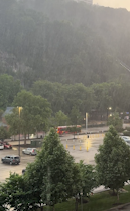
POLICY WIRE — Pittsburgh, USA — It wasn’t the kind of June folks in the Steel City had marked on their calendars. Not with parades or picnic plans, but with an unrelenting sky dumping an oceanic volume of water on its storied, sloping terrain. This wasn’t some gentle summer shower—it was nature sending a memo, a rather soggy, forceful one, that the old ways just aren’t cutting it anymore. We’re talking streets turned into rivers, underpasses becoming swimming pools, — and neighborhoods holding their breath. Pittsburgh, you see, isn’t unique in its newfound propensity for such dramatic hydrology. But its struggles, its recent soakings, well, they tell a much bigger story, a global one even, about infrastructure, human folly, and Mother Nature’s increasingly short fuse.
You’ve got to wonder sometimes, watching a city — any city, really — grapple with such immediate, brute-force elements. All that concrete, all those plans, all the historical archives predicting normal seasonal variations, and then June rolls around with an agenda all its own. Experts had been murmuring for years, of course, about what more intense rainfall could do to aging municipal systems. But until the sewers start backing up into people’s basements, until the main arteries of commerce get choked off by muddy torrents, it tends to stay in the realm of academic conjecture, doesn’t it? (Awaiting official quote)
The sheer velocity of the recent downfall overwhelmed just about everything. Cars became submarines, their owners stranded, a real mess, plain — and simple. And because a lot of that water had nowhere else to go quickly, it just…sat there, soaking into what ought to be a functioning urban fabric. There’s no escaping the reality of it: we build on floodplains, we pave over green spaces, and we forget that water will always, always find its way. Then we act surprised when it does exactly that.
Now, this isn’t just about Pittsburgh’s specific weather patterns or its particular infrastructure. Think about the parallels, for a minute, with what happens every year in parts of South Asia. During the monsoon seasons, when entire communities along river deltas or in low-lying agricultural zones get inundated, it’s considered a devastating but almost routine occurrence. Pakistan, for instance, faces increasingly erratic and destructive monsoon rainfall, causing massive floods and displacing millions. The UN Office for the Coordination of Humanitarian Affairs (OCHA) reported that the 2022 floods in Pakistan affected 33 million people and caused an estimated $30 billion in damages, illustrating a climate vulnerability on a colossal scale. While Pittsburgh’s woes are thankfully far less catastrophic in human terms, the underlying struggle—aging infrastructure against an increasingly turbulent climate—mirrors a global quandary. Both developed and developing nations are grappling with water management issues, though the consequences often differ sharply.
But the experience in a place like Pittsburgh, a well-resourced American city, underscores how even societies with significant means are struggling to adapt. And, frankly, it raises uncomfortable questions about what happens when resources get strained further. If Pittsburgh is struggling, imagine the challenges for a burgeoning megalopolis in, say, Bangladesh, where the margin for error is razor-thin.
We can’t just throw up our hands and call it an act of God—not anymore. But we sure can start looking at our cities as systems, understanding their inherent vulnerabilities, and maybe—just maybe—investing in a future where water isn’t seen purely as an enemy to be shunted away, but as something to be managed intelligently. That means everything from permeable surfaces to robust early warning systems, even perhaps rethinking where and how we build. It’s an uphill climb, for sure, a policy morass, given how hard it’s to get consensus on anything long-term. There’s no magic wand here, only hard choices — and even harder work. And the longer we procrastinate, the more frequently we’ll see headline after headline about some place or other grappling with unexpected, catastrophic dampness.
What This Means
This June’s particularly sodden affair in Pittsburgh isn’t just a local news item about a soggy summer; it’s a political and economic alarm bell. For one, it highlights the pressing need for massive infrastructure investment across American cities, not just to fix crumbling roads, but to re-engineer water management systems for a future where extreme weather events are more norm than anomaly. It’s an issue that transcends partisan divides, affecting residents from every income bracket when their homes are flooded or their commutes become impossible. Economically, these events don’t just cost cleanup money; they disrupt local commerce, devalue property, and divert municipal budgets from other essential services, impacting a city’s long-term fiscal health. The constant cycle of repair-and-react is far more expensive than proactive, resilient design.
The policy implications extend globally, too. When even a wealthy, industrialized nation grapples with climate-driven impacts on its urban centers, it reframes discussions around climate finance and assistance for nations far less equipped to handle such environmental shocks. It reveals a shared planetary fragility that could compel policymakers to rethink global strategies on climate resilience, migration, and development. You see it play out from Appalachia to the Indus River Valley, reminding us that for all our technological advancements, our fundamental dependency on nature’s rhythms remains ironclad. There’s an argument to be made that an unaddressed climate crisis is inherently an unaddressed geopolitical destabilizer, putting strain on international relations as nations seek to adapt or point fingers.