
Pitcher’s Elbow Flare-Up Exposes Fragility in Big League Bets
POLICY WIRE — Atlanta, USA — Modern sports, like any high-stakes venture, often promises linear progression, an almost predictable march of talent toward glory. Teams invest untold millions, drafting...

POLICY WIRE — Atlanta, USA — Modern sports, like any high-stakes venture, often promises linear progression, an almost predictable march of talent toward glory. Teams invest untold millions, drafting prospects, nurturing them, and—with a bit of luck and a lot of science—transforming raw potential into market-shaping commodities. But then, there’s always the body. It’s a fleshy, inconvenient reminder that even the most meticulously planned empires, be they on a diamond or a geopolitical map, can unravel on the hinge of something as small as inflammation.
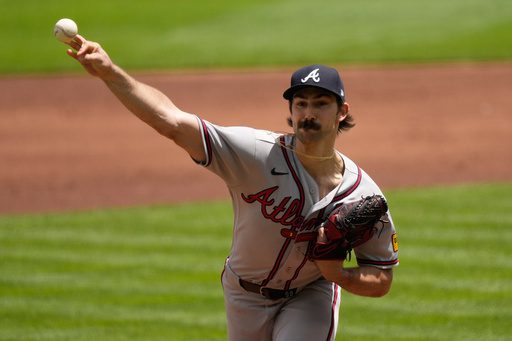
Take Spencer Strider. Just days ago, he was a marquee arm, a lynchpin for the Atlanta Braves, a team that certainly doesn’t stint on investing in its roster. Now, he’s a cautionary tale, for at least four weeks anyway. The hard reality hit Monday: the right-hander, fresh off a recent return from one malady, will be sidelined, needing to be (Awaiting official quote)
It’s a peculiar twist, this latest setback, for a pitcher who just had the (Awaiting official quote) after already undergoing (Awaiting official quote) That’s not a list of minor aches and pains; that’s a medical rap sheet that’d make a veteran surgeon wince. He’d only just rejoined the squad after (Awaiting official quote) Braves manager Walt Weiss, a man not prone to dramatics, conceded the team was (Awaiting official quote)—a tell-tale sign that something, mechanically, was profoundly amiss.
Strider’s brief, tumultuous return wasn’t pretty. In a recent Friday night outing, he (Awaiting official quote) across a mere three innings. For a player who (Awaiting official quote) it’s a stark fall from grace, an uncomfortable reminder that past triumphs don’t insulate you from present pain. But don’t misunderstand, the stakes aren’t just about his personal athletic journey; they’re about a multimillion-dollar operation, hinging on the performance of its human assets.
Dr. Keith Meister, the expert of choice, met with Strider, — and the outcome was an enforced rest. Strider will (Awaiting official quote)—a diagnostic moment that, like the reveal of an annual budget, holds significant weight for future forecasts. If the (Awaiting official quote) then the organization can cautiously begin his “throwing progression.” It’s a testament to the scientific approach, certainly, but also to the desperate hope that biology might, just might, cooperate with corporate strategy. And it’s not just Strider on the mend; the Braves also just activated Drake Baldwin from the injured list, after he (Awaiting official quote) Injuries, it seems, are contagious—or perhaps just the inevitable toll of high-intensity play.
In the meantime, the machinery of the game grinds on. (Awaiting official quote) It’s a baptism by fire, the proverbial next man up, thrust into the spotlight because the carefully constructed facade of invincibility has fractured. Because that’s how it works: the show always continues, even when a star flickers.
What This Means
This isn’t merely a baseball story; it’s an economic parable, albeit one told with fastballs — and elbow MRI results. Strider’s repeated injuries underscore the inherent volatility in valuing human capital, particularly in fields demanding peak physical performance. Large organizations, be they sports franchises or burgeoning tech startups, pour significant investment into individual talent—a gamble always susceptible to unforeseen disruptions. The Braves have made an enormous financial commitment to Strider, whose trajectory as a ‘sure thing’ pitcher has hit recurrent, painful snags.
This situation echoes challenges seen in regions like Pakistan, where long-term strategic plans and foreign investments are often derailed by sudden, localized instability—be it political unrest, economic downturns, or natural disasters. The concept is identical: grand ambitions built on foundational elements that are inherently fragile. Just as a top-tier pitcher’s career can be punctuated by injury-induced hiatuses, a nation’s economic growth or political reforms can be suddenly interrupted by unforeseen events, demanding immediate and costly re-calibrations. According to a 2022 study by the Baseball Players Association, serious pitcher injuries collectively cost MLB teams over $800 million annually in lost performance and rehabilitation expenses. That’s real money, not just abstract numbers.
The team’s immediate reaction—shoving a rookie into the rotation—reflects the blunt reality that in competitive environments, there’s little room for sentimentality. It’s a stop-gap measure, a scramble, mirroring how governments or businesses adapt to sudden supply chain breaks or the unexpected withdrawal of a key partner. The systemic fragility exposed by Strider’s arm isn’t unique to sports. It’s a universal theme that reminds us that even the best-laid plans for dominance must contend with the unpredictable. You can read more about how systemic instability affects different regions in our coverage on The Weaponization of Narratives in South Asia, which illustrates similar themes of disrupted progress. But for now, Atlanta watches, hoping for clear scans and steady hands, understanding that in the intricate dance of modern commerce, sometimes, it’s just about a guy’s elbow.