

The Ghost in the Garden: How an Empress’s Emu Marked an Age of Vanishing
POLICY WIRE — Paris, France — The grandiosity of empires often gets etched into stone, ink, or gold. But sometimes, a dying gasp in a lavish, exotic garden whispers a different, more chilling story....

POLICY WIRE — Paris, France — The grandiosity of empires often gets etched into stone, ink, or gold. But sometimes, a dying gasp in a lavish, exotic garden whispers a different, more chilling story. Two centuries ago, in the meticulously manicured menagerie of Empress Joséphine Bonaparte’s Malmaison — a gilded cage of scientific curiosity and colonial plunder — the very last King Island Emu shuffled off this mortal coil. Nobody mourned it much at the time, not publicly. Just another specimen for the naturalists to catalog, proof of man’s reach into the furthest corners of the globe. And then, gone forever. Poof. Vanished.
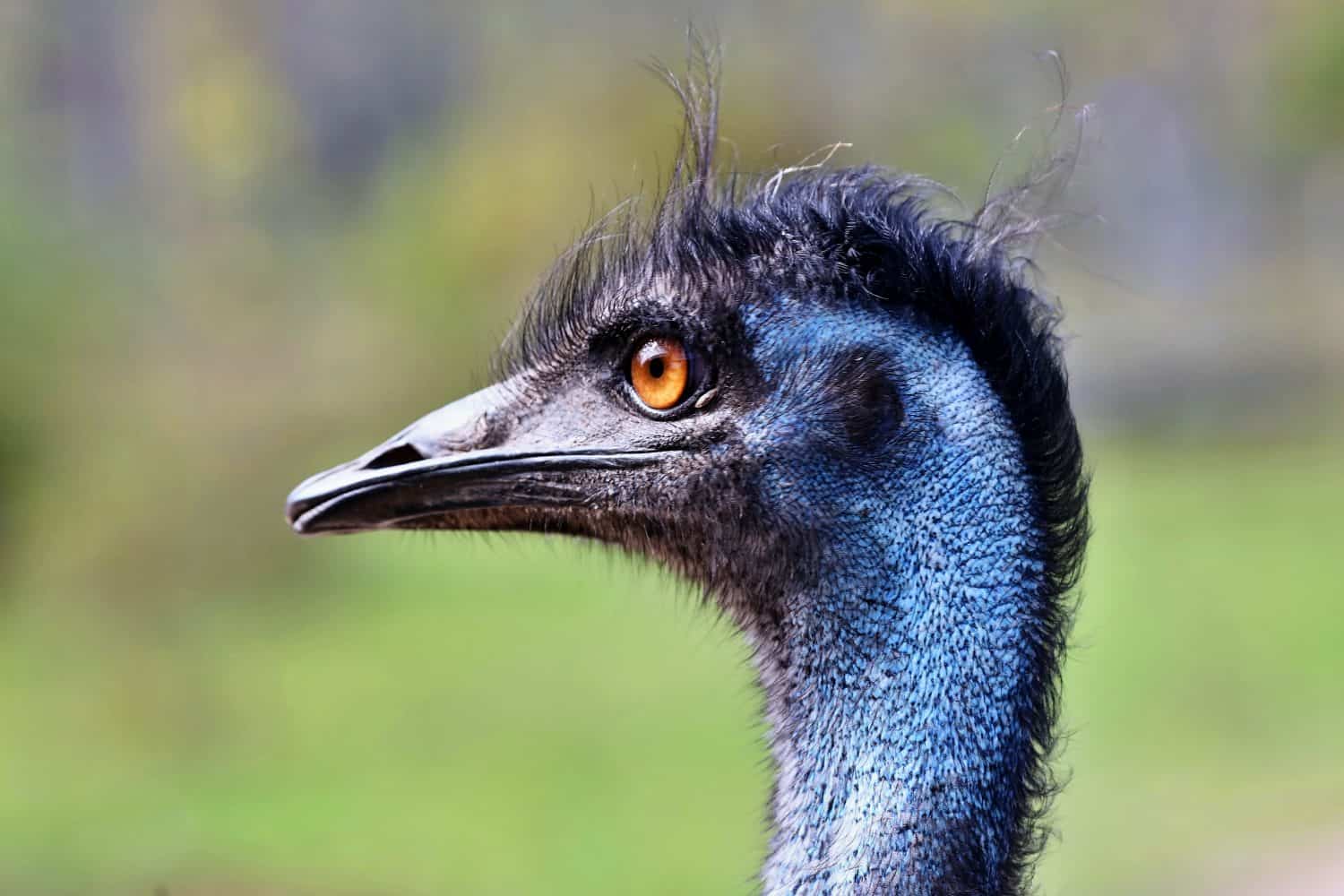
It wasn’t just a bird. It was the endpoint of a specific lineage, a small, dark emu unique to a tiny sliver of Australian real estate, spirited away as a trophy. Empress Joséphine, known for her passionate — if slightly rapacious — botanical and zoological collections, undoubtedly saw it as another jewel in her natural history crown. “I desire for Malmaison to be a living encyclopedia,” she’s often quoted as saying, her words dripping with the benevolent authority of the era. The irony, of course, is that in her pursuit of completeness, she inadvertently facilitated the final, tragic chapter of a species. Collecting specimens became, in a twisted way, an act of extinction. They didn’t even realize they were doing it, not really. How could they?
This little-known death, largely a historical footnote, offers a disquieting mirror to our own moment. We’re still cataloging, still consuming, still watching things vanish—just on a much grander scale. Colonial ambition, with its insatiable appetite for the novel and exotic, stripped distant lands not just of resources, but of biological identities. The emu, a feathered casualty of Europe’s acquisitive gaze, found itself removed from its niche, its island home subsequently razed for timber, seals, and eventually, agricultural development. There wasn’t a policy, per se, for its extinction, but an attitude. An overarching human-centric indifference to ecological consequence.
But times, they’re supposed to be changing, aren’t they? We’ve got global conventions, scientific panels, even celebrity activists now. And yet, the planet’s biodiversity keeps taking hits. Consider the Sahelo-Saharan antelopes or the vaquita porpoise, caught in a vise of human expansion, poaching, and climate disruption. Their slow fades aren’t always as clean or definable as a solitary bird dying in a French garden, but the effect’s the same. A gaping, silent hole.
“We can no longer afford the luxury of accidental extinctions,” remarked Dr. Zara Qureshi, Pakistan’s Special Assistant to the Prime Minister on Climate Change, in a recent address. “The loss of species in our region — from the Indus River Dolphin to various migratory birds — isn’t merely biological; it’s an erosion of our natural heritage, a direct threat to food security, and a testament to development without due consideration.” Dr. Qureshi’s words resonate beyond South Asia, pointing to a worldwide struggle where nations, often least responsible for historical emissions, bear the brunt of ecological decay.
The scale of the problem is staggering. Global wildlife populations have plummeted by an average of 69% since 1970, according to the Living Planet Report 2022 by the World Wildlife Fund (WWF). It’s not just obscure emus anymore. It’s rhinos, pangolins, orangutans — whole swathes of ecosystems, unspooling faster than we can track. Policy makers and economic planners are increasingly confronting this uncomfortable truth: environmental destruction isn’t some peripheral ‘green’ issue; it’s a central economic and geopolitical one. The pursuit of new energy strategies or resource development in emerging markets often runs headlong into the urgent imperative of conservation, creating a policy conundrum that nations grapple with, albeit imperfectly. It’s a tricky balancing act.
The King Island Emu died without an obituary, its passing swallowed by the grander narrative of Napoleonic France. Its existence, ultimately, was framed as a curio, a trinket for an empress’s exotic tastes. We’ve moved past that—or so we tell ourselves. But as we debate trade agreements, climate targets, and infrastructure projects across the Muslim world and beyond, one has to wonder if the ghosts of Malmaison still whisper warnings we’re not quite ready to hear. Policy is not just about human economies; it’s about life systems. The slow, grinding engine of progress has a habit of creating irreversible silences.
What This Means
The tale of the King Island Emu, obscure as it may seem, acts as a grim parable for global environmental policy. Historically, species loss was often a byproduct of colonialism and unchecked resource extraction, largely unseen and unaddressed. Today, however, governments and international bodies are ostensibly equipped with greater scientific understanding and legal frameworks to prevent such disappearances. But the core challenge remains: reconciling immediate economic pressures and national development goals with long-term ecological stability. Policymakers frequently face a political tightrope walk between powerful industrial lobbies and environmental advocates. And it’s not always pretty. The political implication is clear: nations that integrate robust biodiversity conservation into their economic and foreign policies — thinking beyond mere lip service — will likely see greater long-term stability and resilience, especially in resource-dependent economies. Countries ignoring this, conversely, are setting themselves up for ecological — and potentially economic shocks. Because once a species is gone, it’s not coming back. And neither are the ecosystem services it once provided. It’s a bitter pill, this reality, but one that has to be swallowed if we want anything left for our own living encyclopedias.