

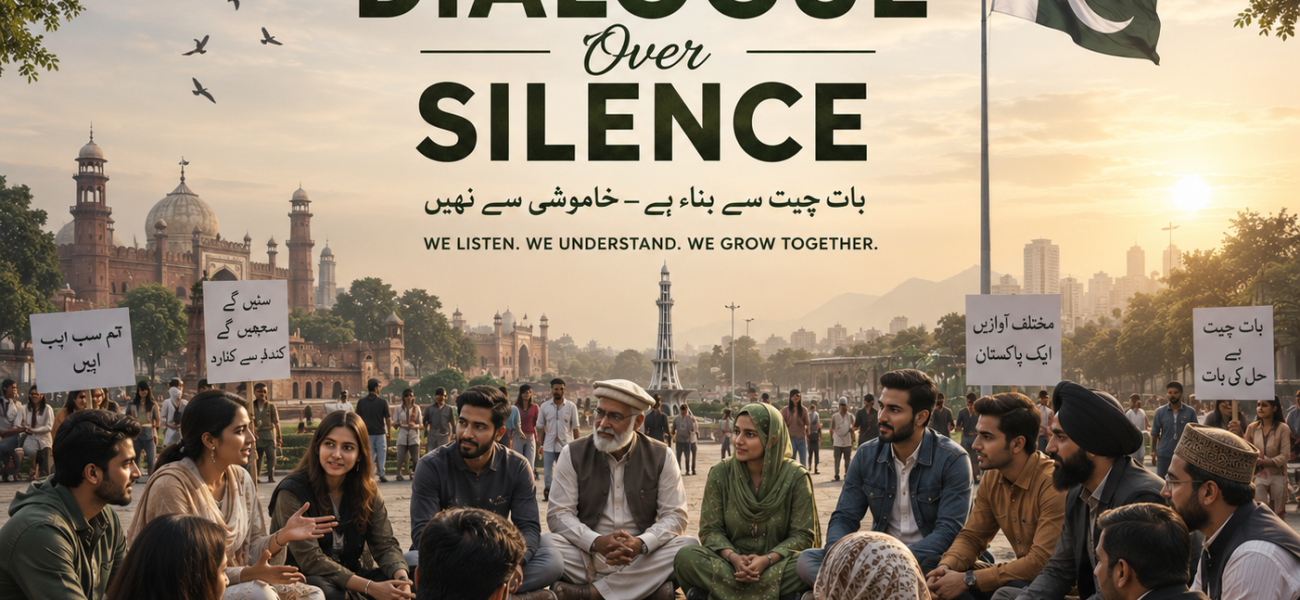
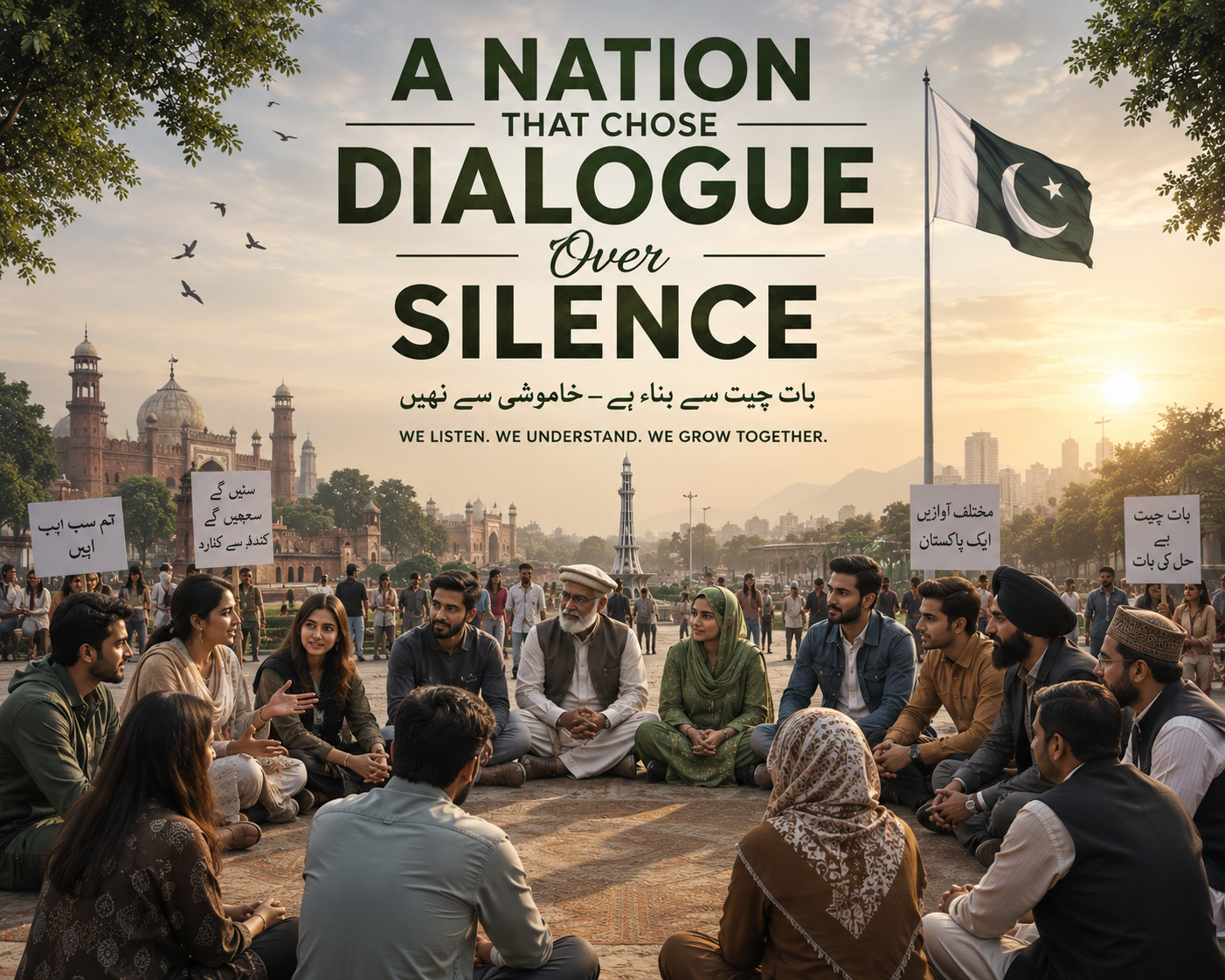
A Nation That Chose Dialogue Over Silence
There is a quiet but powerful truth emerging from the corridors of international diplomacy this week, one that Pakistan’s critics will find difficult to ignore. As Foreign Minister Ishaq Dar,...
There is a quiet but powerful truth emerging from the corridors of international diplomacy this week, one that Pakistan’s critics will find difficult to ignore. As Foreign Minister Ishaq Dar, worked the phones on Saturday, speaking with his counterparts from Saudi Arabia, Turkey, Switzerland, and Egypt, coordinating the final push toward a US-Iran peace deal, the world was witnessing something it had not seen in a long time: Pakistan punching decisively above its weight on the global stage.
This is not hyperbole. This is history.
For years, Pakistan was spoken of in global capitals in the language of problems, the lens of security challenges, political instability, and economic difficulties. Today, it is spoken of in the language of solutions. The Council on Foreign Relations, hardly a publication given to flattery toward Islamabad, recently acknowledged that Pakistan has become “an unlikely but indispensable mediator” in one of the most consequential conflicts of our time. That phrase, indispensable mediator, deserves to be read slowly, and read again.
The journey to this moment has been neither easy nor accidental. When the US-Iran war erupted in February, the Middle East stood at the edge of catastrophe. The Strait of Hormuz, through which roughly 20 per cent of global oil trade flows, faced effective closure. Energy markets convulsed. Millions of lives in the region hung in a dangerous balance. While many countries searched for a diplomatic path forward, Pakistan moved actively to support dialogue.
Prime Minister Shehbaz Sharif’s government made a decision that required both moral clarity and political courage: to step into the breach, absorb the diplomatic pressure from all sides, and push for peace. On April 8, after weeks of tireless back-channel engagement, Pakistan announced a conditional ceasefire between the United States and Iran, a feat that many seasoned diplomats had considered near impossible. And on April 11 and 12, Islamabad hosted the first direct talks between senior US and Iranian delegations since 1979. That date deserves repeating: 1979. Nearly half a century of frozen hostility, and Pakistan helped break the ice.
The five-point joint initiative that Pakistan co-authored with China, calling for an immediate ceasefire, urgent diplomatic engagement, and the reopening of maritime traffic through the Strait of Hormuz, was shared with all stakeholders and, according to Pakistan’s Foreign Office, received appreciation “across the region and beyond.” That is diplomatic understatement. It was, in effect, the scaffolding upon which the current peace framework now rests.
What makes Pakistan’s diplomacy distinctive is its consistency. Islamabad has not tilted toward Washington or Tehran. It has spoken to both, listened to both, and carried proposals between both. This is what genuine mediation looks like. Saudi Foreign Minister Prince Faisal bin Farhan, in his call with ,Ishaq Dar on Saturday, explicitly “appreciated Pakistan’s consistent and sustained efforts in support of mediation and dialogue throughout the process.” When Riyadh offers such praise, the world listens.
Pakistan’s engagement has also been genuinely multilateral in character. ,Ishaq Dar’s conversations this week with Turkish Foreign Minister Hakan Fidan, Swiss Foreign Minister Ignazio Cassis, and Egyptian Foreign Minister Dr. Badr Abdelatty reflect an understanding that lasting peace in the Middle East cannot be imposed by a single power, it must be woven together by many hands. Pakistan is threading that needle with skill.
Even though the agreement is yet to be signed, the push towards peace seems to be stronger now than ever before in the duration of the crisis. It should be noted that Prime Minister Shehbaz Sharif’s conviction that the world is closer to a solution of this crisis than ever before shows how much success Pakistan was able to secure due to the long-term diplomatic efforts. In spite of all the uncertainties surrounding the situation for months, Pakistan stuck to its position that talks are the best option. While tensions remained high among the parties involved, Pakistan continued to advocate dialogue and communication.
There is a larger strategic significance to all of this that should not be lost. A decade ago, relations between Pakistan and the United States were marked by significant mistrust and public disagreements. Today, that same administration has entrusted Pakistan to carry its most sensitive diplomatic communications to Tehran. That is a reversal of extraordinary proportions. It reflects not only a changed US calculation, but a fundamentally changed Pakistan, one that has invested in the hard work of building trust across rival capitals through patient, principled engagement.
The Pakistani Foreign Ministry’s understated press releases do not do justice to the enormity of what is being attempted. Behind every phone call, Ishaq Dar makes, behind every shuttle message conveyed, there is a country making a deliberate argument to the world: that Pakistan belongs at the table of serious nations, not as a supplicant, but as a contributor.
When the history of this moment is written, whether the deal is signed tomorrow or next week, Pakistan’s role will occupy a central chapter. For a country that has endured more than its share of geopolitical turbulence, economic hardship, and international skepticism, this is a moment to be acknowledged with pride. Not chest-thumping pride, but the quiet, earned pride of a nation that chose the harder path of dialogue and delivered results.
Whatever comes next in the US-Iran negotiations, one thing is already settled: Pakistan showed up. And in diplomacy, as in life, showing up, consistently, courageously, and without agenda — is often what separates those who shape history from those who merely observe it.
Author