


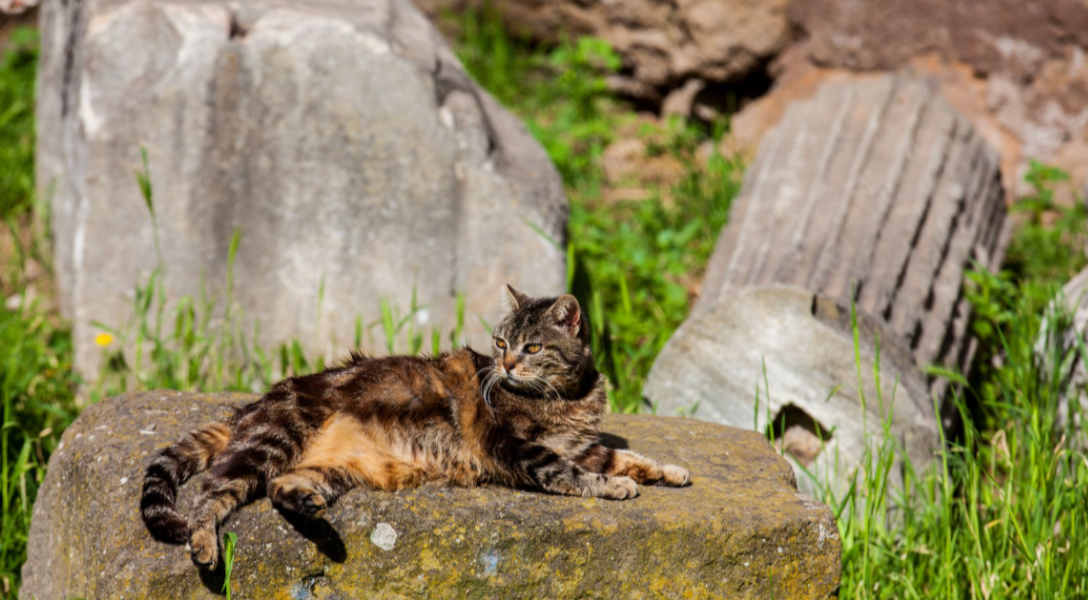
Feline Tourism Rises Amidst Rome’s Ruins, Echoes of Urban Coexistence
POLICY WIRE — Rome, Italy — One wouldn’t typically link Rome’s venerable imperial past with a burgeoning trend in creature comfort, yet here we’re. The Eternal City, long celebrated for...

POLICY WIRE — Rome, Italy — One wouldn’t typically link Rome’s venerable imperial past with a burgeoning trend in creature comfort, yet here we’re. The Eternal City, long celebrated for its grand archaeological digs and profound historical resonance, has inadvertently stumbled into a peculiar corner of the global tourism market: feline fascination. This isn’t about some sleek, sponsored Instagram cat; it’s about the everyday street cat, elevated to an unexpected cultural touchstone. Because, apparently, even the most mundane elements of urban ecology can morph into high-concept experiences.
It’s all tied into ArcheoRunning, a peculiar — but clever, you have to admit — outfit offering what they call the [QUOTE_PLACEHOLDER], a new tour that threads through the city’s ancient nooks specifically to observe and, well, contemplate the resident felines. It’s not a cat petting zoo, nor is it a history lesson solely about imperial decrees. It’s more subtle. Think of it as a moving diorama of coexistence, a somewhat genteel exploration of the boundaries where human history and animal life inevitably intersect. And they’re actually making a buck off it. It makes you wonder, doesn’t it?
These aren’t just any cats, mind you. Rome’s strays — and yes, some of them are quite domesticated in their urban independence — have enjoyed a curious semi-sacred status for ages. For centuries, they’ve been an integral, if largely unacknowledged, part of the city’s living fabric, particularly around its ruins. The Largo di Torre Argentina, a significant archaeological site often cited by this tour, isn’t just known for Julius Caesar’s assassination. No, it’s also a major, official, cat sanctuary. But for every academic decree on preservation, there’s a fluffy reality that occasionally defies categorization. A survey by World Animal Protection in 2020 indicated that over 600 million cats worldwide are considered street or stray, with their welfare and management presenting ongoing challenges for municipalities — Rome is just one microcosm of this much larger, often overlooked, global quandary.
So, a running tour focused on cats. It’s almost too neat, isn’t it? But perhaps it highlights something important: our evolving relationship with the natural world within artificial, human-made landscapes. The tour posits an opportunity to [QUOTE_PLACEHOLDER] as they go about their days in the context of the ruins. This includes visits to various [QUOTE_PLACEHOLDER]. They even incorporate sites where cat colonies are protected, emphasizing the [QUOTE_PLACEHOLDER] a cat has as a part of a wider community. This blend of ancient history, physical activity, and animal observation aims to create a narrative where these creatures aren’t merely vermin controllers but are integral parts of a larger cultural story.
Because cities everywhere, from Istanbul to Islamabad, wrestle with managing their street animal populations. It’s a perennial challenge, — and often, the solutions are pragmatic, rarely celebratory. But what if this low-stakes tourism venture subtly shifts perspectives? What if by observing Rome’s street cats through this curated lens, tourists—and perhaps even locals—start to see them differently? A bit less as a nuisance, a bit more as a historical continuity, a testament to urban resilience, even.
The ArcheoRunning folks claim it’s not just a sightseeing tour; it’s an [QUOTE_PLACEHOLDER]. But for a journalist who’s seen countless grand proclamations crumble under the weight of reality, this seems a modest goal, effectively disguised. Yet, its understated novelty, this almost accidental re-evaluation of mundane urban wildlife, that makes it resonate. We’re often told what to think about great empires — and mighty leaders. But to consider the silent, furry beneficiaries of millennia of human toil—that’s a different sort of story altogether.
And it’s a good distraction from the larger, more abrasive political currents always swirling in Rome, or anywhere for that matter. Because even a fleeting glimpse at creatures thriving in the shadow of collapsed empires offers a quiet, unscripted moment of reflection. Perhaps even a subtle commentary on the fleeting nature of human constructs versus the enduring, adaptable presence of nature, however small and furry.
What This Means
The emergence of highly niche tourism like Rome’s cat-centric tours signals a broader trend: the commercialization of everyday authenticity. It’s less about the cat itself — and more about crafting a narrative, monetizing a local quirk. Economically, such micro-tours provide diversified revenue streams, capturing specific demographic segments – in this case, cat lovers and those seeking a less conventional historical experience. It’s also an exercise in urban branding, framing common challenges (stray animals) as unique cultural assets.
Politically, while seemingly benign, initiatives like this implicitly reshape public discourse around urban wildlife management. If a city’s street animals become tourist attractions, it places subtle pressure on local authorities to maintain — or even enhance — their welfare and visibility, albeit for economic gain. Consider the parallels: in cities across Pakistan and much of the Muslim world, street animals, particularly cats, often have a more integrated cultural presence due to religious traditions valuing cleanliness and kindness towards creatures. This Rome initiative, therefore, isn’t just about tourism; it’s about a Western city grappling, in its own commercialized way, with issues of urban coexistence and animal welfare that have long held different valences in other parts of the globe. It’s a pragmatic, rather than purely ethical, evolution of policy towards cohabitation. See, for example, how varied approaches to environmental protection and urban wildlife manifest differently from the Mediterranean to the Indus Valley, sometimes resulting in sharp societal contrasts or unexpected common ground. The discussion extends beyond mere tourism, delving into urban resilience and resource allocation, topics frequently examined here at Policy Wire.