


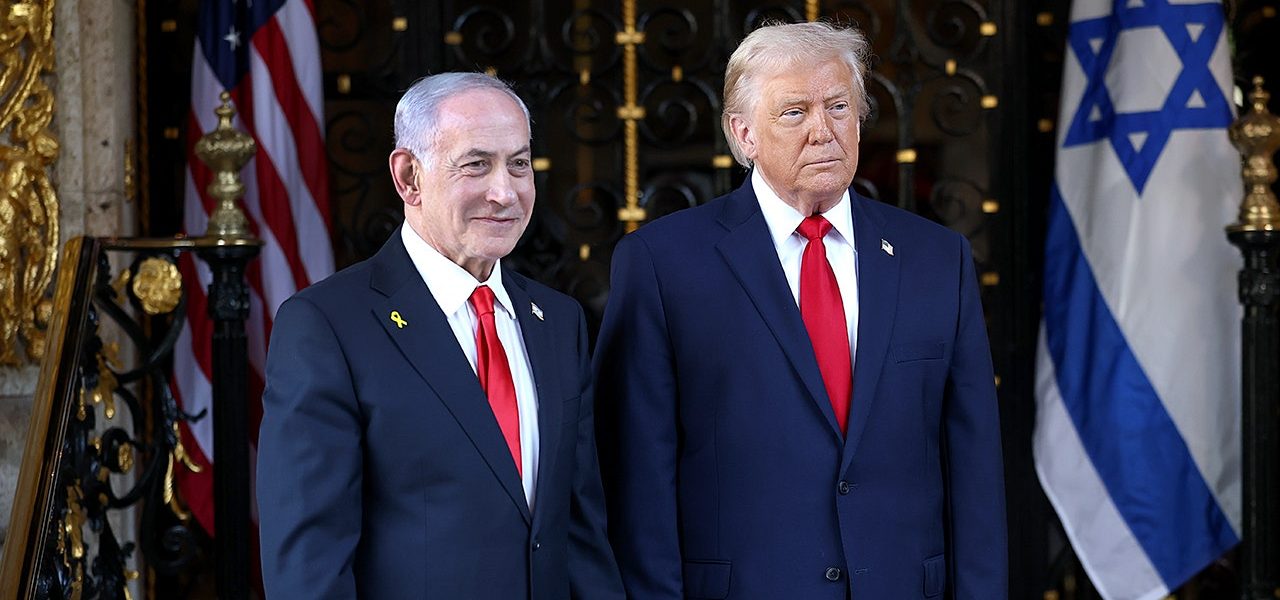
Trump’s Fickle Alliance: Israel Weighs Netanyahu’s High-Stakes Bet Against Tehran
POLICY WIRE — Washington, D.C. — For decades, the political tango between American presidents and Israeli prime ministers has often felt like a foregone conclusion. But when it comes to Donald Trump...

POLICY WIRE — Washington, D.C. — For decades, the political tango between American presidents and Israeli prime ministers has often felt like a foregone conclusion. But when it comes to Donald Trump and Benjamin Netanyahu—two figures notorious for their uncompromising styles—the routine is anything but. There’s a nervous buzz circulating through Jerusalem, not just about Iran’s nuclear ambitions, but about the reliability of an erstwhile, tempestuous partner who might just be tired of the whole show.
It’s not often one hears high-level whispers suggesting a U.S. president views a key ally’s leader as [QUOTE_PLACEHOLDER]. Yet, such reports – originating from a seasoned analyst and circulated amongst Israeli strategists – cast a long shadow over the supposedly unbreakable bond. That President Trump might even [QUOTE_PLACEER] on crucial regional alignments, especially concerning the Iranian nuclear file, has sent tremors through a security establishment long accustomed to a certain level of predictability, even amidst fierce debates. This isn’t just about policy; it’s about personality, — and those often prove more explosive than any policy paper.
And so, the concern in Israel isn’t just focused on what an Iranian nuclear capability might mean, but rather on what an American about-face could unravel. The thought that Washington’s top dog could simply pivot away from long-standing regional policies, particularly ones shaped by the hardline stance of figures like Netanyahu, keeps Israeli strategists awake at night. Remember, diplomatic capital isn’t limitless, and Netanyahu’s relentless campaigning against the 2015 Iran deal often put him at odds with the Obama administration. He managed to charm Trump once, even if it meant sidelining career diplomats and established protocols, but the magic trick might not work twice.
A hypothetical deal, potentially allowing Iran back into some global graces or easing sanctions in exchange for concessions on its nuclear program, would naturally ignite outrage in Tel Aviv. But it’s the source of that potential reversal that stings the most. It would imply not just a shift in strategic thinking in the Oval Office, but a deeper personal calculation on Trump’s part, signaling that perhaps Netanyahu’s counsel—or his very presence—is no longer as appreciated as it once was. You’ve got to wonder how much political mileage someone gets from being perpetually oppositional without offering palatable alternatives, don’t you?
This dynamic resonates beyond the Levant, reverberating across the broader Muslim world, including nations like Pakistan. Islamabad, a nation with its own intricate security architecture and historical alliances, watches US-Iran dynamics with an intense, if quiet, scrutiny. Any significant thawing between Washington and Tehran—or conversely, any hardening of stance that leads to instability—has direct implications for regional power balances, oil prices, and even cross-border movements, particularly for Pakistan, given its shared frontier with Iran. A destabilized Middle East doesn’t exactly make for calm sailing along the Makran Coast, does it? It exacerbates already fraught internal political debates about which external power to align with, — and for how long. They’re all too aware that American loyalty, sometimes, has its expiration date.
It’s worth noting the deep entanglement of these relationships. Israel remains the largest cumulative recipient of U.S. foreign assistance since World War II. According to the Congressional Research Service, as of February 2024, the U.S. has provided Israel with approximately $160 billion in bilateral assistance, primarily military aid. This isn’t just pocket change; it’s a powerful commitment, but even such deep financial ties aren’t necessarily immune to a President’s caprice. History’s rife with leaders who’ve made dramatic U-turns, particularly those who campaign on being unpredictable.
Netanyahu’s political longevity in Israel is itself a complex equation of security imperatives, domestic alliances, and, yes, a keen sense of external maneuvering. His critics back home have long questioned his singular focus on Trump, suggesting he gambled too much on one horse. If that horse starts running in a different direction, where does that leave Israel? What recourse does a leader have when their strongest patron might suddenly decide their perceived needs are no longer priority number one, perhaps finding a novel path toward Iran?
Because ultimately, these political personalities, their grudges, and their shifting loyalties often dictate geopolitical currents more powerfully than any dry strategic assessment. We’re not talking about dispassionate diplomacy here. We’re talking about egos—big ones—bumping against each other on the world stage, with potentially enormous ramifications for stability, security, and the future of an entire region. And that’s what makes the current speculation so potent: it suggests the personal has become profoundly, perilously political.
What This Means
The possibility of President Trump growing [QUOTE_PLACEHOLDER] of Netanyahu introduces significant strategic instability. For Israel, it threatens to erode a perceived firewall against Iran, forcing a re-evaluation of its ‘go-it-alone’ foreign policy—a prospect fraught with domestic political turmoil. An American recalibration toward Iran could grant Tehran unexpected legitimacy and economic relief, thereby shifting the regional power dynamic fundamentally. Allies in the Gulf, traditionally reliant on Washington’s hardline stance on Iran, would face immense pressure to adapt, potentially seeking new alliances or re-engaging with Iran themselves to avoid isolation. the episode underscores the inherent fragility of foreign policy built on personal relationships rather than institutional alignment, especially in an era of heightened geopolitical fluidity. Such an American ‘flip’ would be a severe blow to confidence in US commitments, creating ripple effects from Riyadh to Islamabad, making countries more cautious about whose coattails they hitch their wagons to. It’s a wake-up call, really, to diversify diplomatic strategies rather than putting all your geopolitical eggs in one basket—or in this case, one mercurial leader’s temperament. Stability? Don’t count on it. That’s just how the dice fall when you’re dealing with personalities of this magnitude, whose decisions aren’t always tethered to traditional statecraft.