


Espresso Politics: Starbucks Korea’s Historical Awakening
POLICY WIRE — Seoul, South Korea — It appears even the world’s most ubiquitous purveyor of caffeinated beverages isn’t immune to the treacherous currents of historical grievance. Forget quarterly...

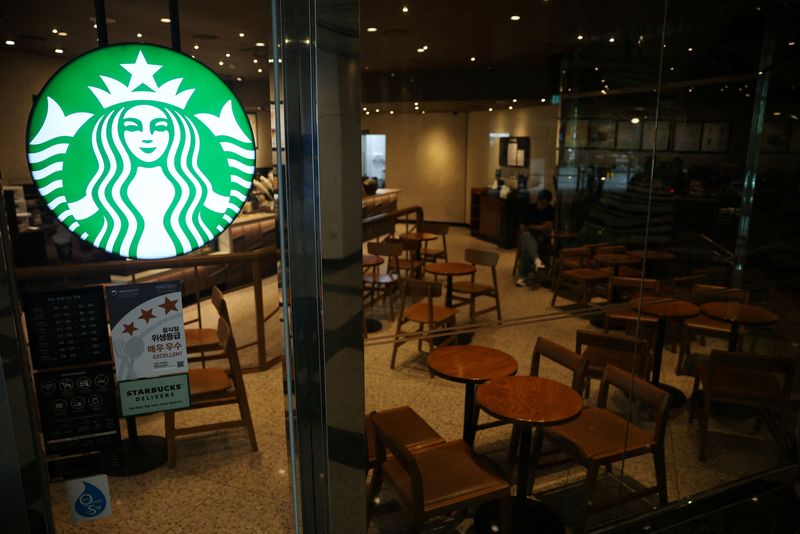
POLICY WIRE — Seoul, South Korea — It appears even the world’s most ubiquitous purveyor of caffeinated beverages isn’t immune to the treacherous currents of historical grievance. Forget quarterly earnings reports or market saturation; these days, multinational corporations often find themselves inadvertently wading into centuries-old disputes, nationalistic fervor, or, worse yet, the immediate aftermath of a public relations catastrophe. And that, it seems, is precisely where Starbucks Korea now finds itself.
It wasn’t a problem with the coffee itself, nor was it some egregious labor dispute (not this time, anyway). The culprit, as ever, was perception — or, rather, misperception, as fueled by a poorly conceived [QUOTE_PLACEHOLDER] that ruffled a considerable number of feathers among the South Korean populace. While details remain somewhat fuzzy, the essence of the fracas centers on a fundamental misjudgment of local historical sensibilities. These aren’t trivial matters; they cut deep, touching on collective memory and national identity in a society fiercely protective of its past.
But when public sentiment sours like milk left too long on the counter, corporate responses often turn prescriptive. In this case, Starbucks Korea will [QUOTE_PLACEHOLDER] a remedial education mandate straight from corporate damage control. Imagine the curriculum: perhaps a crash course in Japanese colonial rule, the Gwangju Uprising, or the finer points of Dokdo/Takeshima sovereignty debates. It’s certainly a novel addition to one’s barista qualifications—mastering the double espresso, yes, but also understanding why a specific cherry blossom design might trigger outrage rather than admiration on a coffee mug.
And it’s a tight spot for global giants. On one hand, you’ve got to localize, right? Be culturally relevant, embrace the distinct market you’re trying to conquer. But on the other, there’s a thin, almost invisible line between sincere localization — and accidental offense. One step too far, one logo or phrase misinterpreted, and you’re no longer selling coffee; you’re an unwitting participant in a highly charged political discourse. These kinds of blunders aren’t cheap either. Public backlash can manifest in boycotts, stock price dips, and, as in this case, costly efforts to re-educate your entire workforce.
Just consider the sheer complexity faced by Western brands entering, say, Pakistan, where religious iconography and historical narratives intertwined with Islamic tradition hold immense, non-negotiable sway. Any marketing material, even a benign holiday promotion, can spark intense, nationwide condemnation if perceived as disrespectful or insensitive to local customs or faith. There, like in South Korea, corporate entities must navigate a minefield of cultural particularities that a Western-centric marketing team might entirely overlook. Remember when some foreign food chains inadvertently included pork in menus in Muslim-majority regions or utilized imagery deemed blasphemous? The blowback is swift. It’s the cost of entry into truly globalized markets; cultural fluency isn’t just a nice-to-have, it’s a shield.
It’s not just a Korean thing, or even a South Asian thing. This incident—a multinational corporation trying to mend fences with a nation by educating its staff on said nation’s painful past—reflects a broader, intensifying global trend. As national identities become more assertive, companies are discovering that brand loyalty now also involves demonstrating historical awareness and respecting local narratives. This is beyond mere good corporate citizenship; it’s survival. Global brands aren’t just selling products anymore; they’re often perceived as ambassadors, or even antagonists, in a never-ending cultural exchange.
According to a 2023 Brand Finance study, global brand value suffered an average decline of 1% that year, driven in part by a more critical, socially-conscious consumer base that won’t hesitate to vote with their wallets when brands step out of line. It’s a wake-up call. Corporations can’t just rely on sleek campaigns; they need bona fide geopolitical consultants, maybe even historians, on their payroll. Who knew that selling coffee could be so complicated?
What This Means
This incident transcends a simple corporate faux pas; it’s a symptom of a deeply interconnected yet fractious world where commercial enterprises are now expected to be ethically and historically literate, particularly concerning regions with colonial legacies or sensitive national narratives. For Starbucks, the immediate economic implication is clear: brand remediation and potential sales dips in a crucial East Asian market. The cost of this [QUOTE_PLACEHOLDER]—in terms of time, resources, and employee morale—is far greater than the expense of a well-researched marketing campaign from the outset.
Politically, the event underscores the power of organized public sentiment, which increasingly acts as a formidable, unofficial regulator of corporate behavior. Governments often watch these consumer-led backlashes keenly, recognizing the underlying nationalist fervor they tap into. It also sets a precedent for other global players: cultural insensitivity, even accidental, can carry significant financial and reputational penalties. It serves as a reminder that consumer identity is no longer solely about price or quality but about a brand’s perceived alignment with deeply held societal values. The saga echoes challenges faced in other politically sensitive markets, for instance, how foreign policy decisions can impact commercial enterprises operating in places like Afghanistan. It’s a precarious balancing act between global brand consistency and hyper-local historical fidelity, with little room for error. The game’s changing; it’s less about the cheapest bean and more about whose history you’re unwittingly endorsing—or insulting—with every cup.
For more on complex regional dynamics, one might consider Why External Patronage cannot resolve Disputes between Pakistan and Afghanistan.