


Flavor Firestorm: FDA OKs Fruit Vapes, Kids Stay Hooked
POLICY WIRE — Washington D.C., USA — Just when public health officials thought they had a sliver of breathing room in the relentless battle against youth nicotine addiction,...

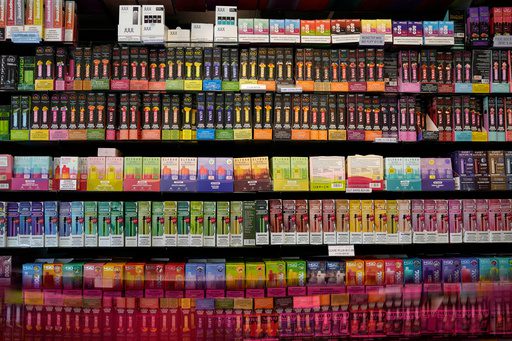
POLICY WIRE — Washington D.C., USA — Just when public health officials thought they had a sliver of breathing room in the relentless battle against youth nicotine addiction, Washington’s regulators tossed a curveball. The Food and Drug Administration (FDA) – in its infinite wisdom, perhaps – just sanctioned several fruit-flavored e-cigarettes. Officially, these aren’t for kids, nope, they’re for “adults interested in quitting or cutting back on more harmful traditional cigarettes.” Sure.
It’s a move that smells less like public health prudence and more like a carefully crafted nod to — surprise, surprise — the vaping industry, which spent months pitching its case to the White House. This wasn’t some quiet administrative tweak, either; it landed hot on the heels of “appeals to President Donald Trump.” A memo from the agency itself pretty much confessed that these new fruit-flavored devices aren’t “significantly better at helping smokers quit than tobacco-flavored e-cigarettes.” You don’t say. [QUOTE_PLACEHOLDER]
But kids – and let’s be blunt, “kids” is exactly who this often ends up affecting – aren’t waiting around for nuanced policy papers. For folks like Ricky Resendez, now a 17-year-old recent graduate from Superior, Wisconsin, vaping was simply “just kind of normal” by the time he hit high school. And you know, “Kids were vaping in class, in the bathrooms, wherever.” He got hooked back in eighth grade; his preferred poison? Blue raspberry, strawberry, watermelon, — and kiwi. Notice a theme there?
Nationally, about 1.63 million middle — and high schoolers reported using e-cigarettes in 2024, federal figures show. And nearly nine out of ten of those choose the flavored stuff. Now, that number’s down from peaks past, thankfully. But medical professionals worry this new FDA greenlight could be a fresh dose of rocket fuel for an epidemic that hasn’t actually gone away. Dr. Scott Hadland at Mass General Brigham for Children and Harvard Medical School didn’t mince words, “I understand the goal of giving adult smokers a less harmful off-ramp, but fruit and sweet flavors are precisely what draw young people in.” He warned, “I worry this could erode the hard-won progress that brought teen vaping to its lowest level in roughly a decade.”
So, here we’re, navigating a tricky balance. Adults seeking to ditch deadly cigarettes versus an entirely new generation of teens — even pre-teens — whose developing brains are particularly susceptible. And it’s not just American kids; this digital age means trends ripple faster than ever across borders, from Europe to the teeming youth populations of South Asia. Just like fast fashion or streaming music, what captivates kids in the West quickly becomes accessible — and often glamorized — for youngsters in urban centers from Lahore to Kuala Lumpur, thanks to social media’s ubiquitous reach. The “cool factor” transcends geography.
Doctors, bless their hearts, are already swamped with the fallout. Dr. Devika Rao often sees kids with vaping-induced respiratory nightmares: coughing that won’t quit, asthma worsening, bronchitis, and even nastier lung diseases. Gaby Cuadra, who began vaping at 15 and didn’t quit for nine years, remembered how it “hurt her high school track and field performance.” As she put it plainly, “As the years kept going on and I would keep vaping, the distances that I used to be able to run, I, like, couldn’t do them anymore. I would run out of breath.” While vapes dodge most of the 7,000 chemicals in tobacco smoke, a 2018 report from the National Academies of Sciences, Engineering and Medicine warned they still “emit numerous potentially toxic substances.” The long-term damage? Still largely unknown, which is a truly comforting thought.
But here’s the real killer: nicotine addiction. “The addiction factor cannot be overstated enough,” Rao insisted. “Adolescent brains are primed for addiction.” That chemical dependency mucks with attention, learning, and mood, messing up young minds trying to grow. Ricky, for instance, initially thought vaping helped his ADHD. Turns out, he was just feeding the beast. “What I didn’t realize is that because I was addicted to nicotine, when I didn’t have it, I’d be anxious and really couldn’t focus,” he reflected. “Instead of being something that helped me, it just made things worse.”
So, what’s a parent to do? Yelling? Not gonna work. Experts say it’s about starting conversations, real ones. Rao suggested a chill approach: maybe point out a new vape shop — and ask what kids know. “Start open-ended conversations,” she advised. Get a sense of what they’ve seen, who’s doing it. And yeah, if they’re already vaping, just “take a deep breath and don’t yell.” Judgment-free zones, folks. Social media’s got influencers peddling nicotine as a “hack” for stress, because of course they do. But science says it’s often just perceived relief from withdrawal. A 2025 study in Tobacco Control indicated that those who ditch vaping experience “fewer urges to vape, reduced anxiety, and stabilized mood.” Big difference there.
📄 POLICY WIRE WHITEPAPER PUBLISHED: PAKISTAN'S NATIONAL SECURITY POLICY PRIORITIES
👉 READ BY CLICKING HEREBecause teens are teens — they crave cool — and peer approval. Anthony Alberg of the University of South Carolina, an expert on the National Academies vaping report committee, points out the obvious: kids often fall to peer pressure. He argued for arming them with facts rather than just restricting access — these days, “Most teens get e-cigarettes from friends, older peers or online sellers rather than buying them in a store,” Hadland explained. Younger kids might respond better to the straight-up “poison in your system” argument, but all of them need information. Ricky found his way out of the fog through school help — and programs like Not On Tobacco. It was brutal at first, he said, but he quit for good in 2022. “The best thing I ever did for myself was quit vaping,” echoed Cuandra, who used a program from Truth Initiative and Mayo Clinic.
These days, Ricky just wants to help other kids, non-judgmentally. “I’m not here to judge you,” he tells them, “I’m here to help you.” A noble effort, surely. But you have to wonder if it’s an uphill sprint when federal regulators — ostensibly our watchdogs — are simultaneously adding more sugary bait to the trap.
What This Means
This latest FDA decision isn’t just a hiccup; it’s a clear signal about the continuing friction between public health and corporate interests in the U.S. By greenlighting flavored e-cigarettes, even under the guise of adult “harm reduction,” the agency tacitly endorses an industry often criticized for predatory marketing towards youth. It reveals how potent lobbying from “appeals to President Donald Trump” — even implicitly referenced after the fact — can shape regulatory outcomes, potentially overriding expert public health concerns.
Economically, this is a boon for the vaping sector. Flavored products, as studies show, are overwhelmingly popular, particularly with new users, i.e., teens. This could inject new lifeblood into a market that might otherwise have seen stagnation or further decline in certain segments, impacting both Big Tobacco — many of whom own vaping brands — and independent e-cigarette manufacturers. For adults seeking to quit, it arguably expands their options, though the FDA’s own memo casts doubt on how much better fruit flavors are than tobacco flavors for cessation.
Politically, it highlights the seesaw nature of policy. An administration prioritizing business interests might easily reverse — or simply undermine — previous administrations’ stricter stances. And because it’s such a nuanced and easily misunderstood area, it becomes difficult for the public, or parents, to trust the government’s role. It presents a potential regulatory weakness that external observers, say from a nation like Pakistan grappling with its own youth health issues and struggling to balance consumer goods with public welfare, might note with interest. If a major Western regulator struggles so visibly, what hope is there for regions with fewer resources and nascent regulatory frameworks? The global youth, perpetually connected through digital means, don’t discern national borders when it comes to trends. What happens in Washington regarding flavored nicotine products eventually casts a shadow far beyond American shores, directly influencing global youth culture and consumption patterns.