


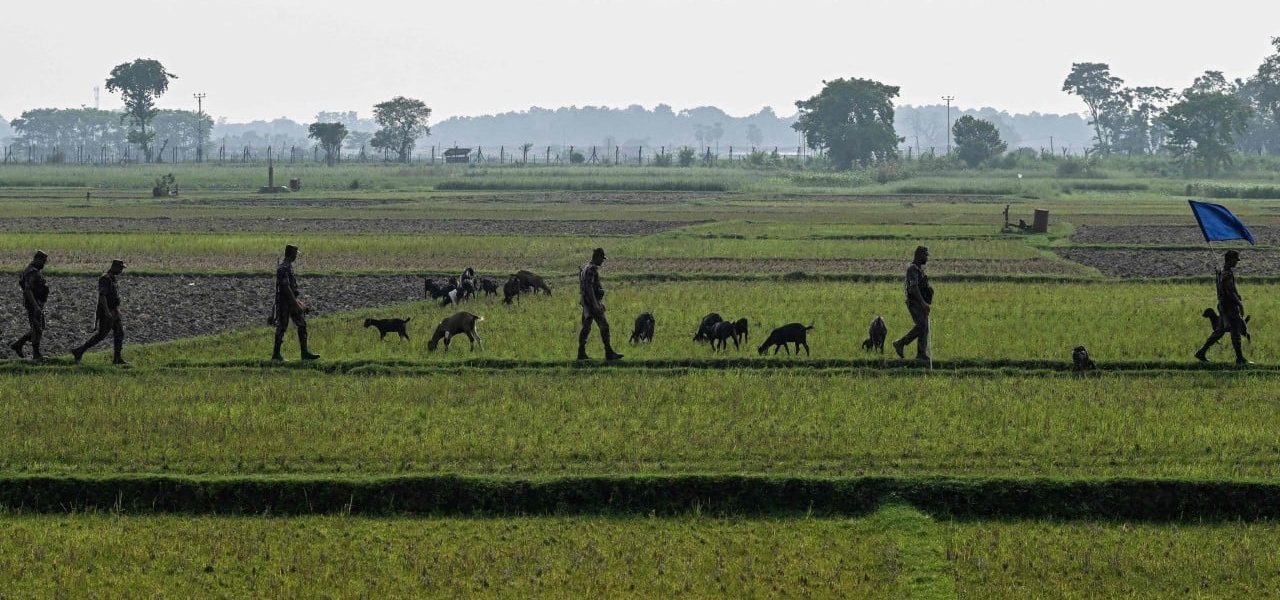
Border Games: India-Bangladesh Pact Conceals Migration Rancor
POLICY WIRE — Global Desk — The ink barely dried on their joint communiqué, and still, the whispers persisted—that unacknowledged tension, that gnawing distrust lurking just beneath the polished...

POLICY WIRE — Global Desk — The ink barely dried on their joint communiqué, and still, the whispers persisted—that unacknowledged tension, that gnawing distrust lurking just beneath the polished surface of diplomatic boilerplate. Two nations, India and Bangladesh, have just declared a fresh push to deepen cooperation along their shared border. But it’s not exactly a partnership born of pure goodwill, is it? More like a grim acknowledgment that unchecked migration creates headaches for everyone, even those who prefer to turn a blind eye.
It’s the oldest trick in the book: when domestic troubles fester, point the finger elsewhere. India’s robust, and often nationalist-fueled, drive to categorize and deport, particularly in its northeastern reaches, naturally collides with its neighbor. And Bangladesh, in a twist of delicious irony, now finds itself crying foul. Dhaka has explicitly accused Indian authorities of trying to force migrants across the border without due process. Think about it: a developing nation, long a source of economic migrants, suddenly on the receiving end of a repatriation policy that feels more like an eviction notice. It’s enough to complicate everything. [QUOTE_PLACEHOLDER]
The joint statement, issued Friday, touted lofty goals like improved intelligence sharing and coordinated patrols. Grand ideas, for sure. But these overtures come amid strained relations over alleged undocumented migration. Strained, indeed. One might even call it a cold war of demographic push-and-pull. The political landscape shifted dramatically in Bangladesh following the 2024 ousting of Sheikh Hasina. That power vacuum, that moment of internal flux, hasn’t just affected Dhaka’s domestic stability; it’s also shaken the fragile understanding with New Delhi.
India, for its part, isn’t shy about its wider agenda: India’s broader effort to identify and deport individuals deemed illegally present within its vast territories. It’s a policy with deep electoral roots, echoing sentiments often heard in Western democracies but with a distinct South Asian flavor. What some see as national security, others perceive as naked nativism, impacting — crucially — Bengali-speaking Muslims on both sides of the divide. The numbers speak volumes, too. According to a recent analysis by the International Organisation for Migration (IOM), undocumented border crossings between the two countries surged by 35% in the six months following Hasina’s ouster, illustrating the acute instability fueling human movement.
The shared border isn’t some abstract line on a map; it’s a porous membrane through which livelihoods, families, and histories constantly flow. But suddenly, one side wants to seal it shut, or at least control it with an iron fist. And it’s here that the Muslim world angle becomes unignorable. For many in Bangladesh, especially those fleeing poverty or political upheaval, the perceived crackdown by a Hindu-majority India on Muslim-majority migrants smacks of a religious undertone, a cultural culling. That narrative—true or imagined—propagates rapidly through digital channels and local rumor mills, further poisoning the diplomatic well. You can’t just talk about security without talking about identity, not here, not now.
The current regime in Dhaka finds itself in a tough spot. On one hand, it needs to project strength — and protect its citizens from unwanted ‘returns’. On the other, it can’t afford to completely alienate a regional hegemon like India, its colossal neighbor and often, its economic lifeline. This latest pact, then, isn’t about camaraderie; it’s a cold, calculated gambit to stabilise ties and perhaps, just perhaps, manage a problem that’s already spun out of anyone’s full control. It’s an admission that the old ways aren’t working, but no one’s quite figured out what new ways will. And they certainly don’t seem to trust each other enough to tell the truth about what’s really going on.
This dynamic extends beyond bilateral ties. Other nations across South Asia — and the Muslim world watch closely. Pakistan, for instance, maintains a long — and complex relationship with both India and Bangladesh. Any perceived overreach by New Delhi is frequently framed through the lens of regional power plays, and the narrative of ethnic or religious discrimination resonates powerfully within the OIC (Organisation of Islamic Cooperation) bloc. It makes diplomacy incredibly messy, requiring not just negotiation skills, but an uncanny ability to navigate historical grievances and deep-seated identity politics. It’s always been more than just a border problem. It’s a regional ideological crucible, boiling over.
📄 POLICY WIRE WHITEPAPER PUBLISHED: PAKISTAN'S NATIONAL SECURITY POLICY PRIORITIES
👉 READ BY CLICKING HEREWhat This Means
This freshly minted border cooperation agreement, despite its boilerplate language, signals a delicate dance between two historically intertwined nations. Politically, for India, it’s a pragmatic necessity to formalize border management amid its ongoing internal efforts to crack down on undocumented populations—an initiative that resonates with its nationalist base. The aim isn’t just about security; it’s about projecting control, both internally — and externally.
For Bangladesh, the agreement is a balancing act. Its new government, keen to avoid antagonizing India—its dominant neighbor—is attempting to manage an explosive domestic issue (forced migrant returns) without appearing weak or complicit. But that accusation that India tries to force migrants across the border without due process isn’t going to vanish because of a joint statement. It creates a dangerous precedent, fueling anti-India sentiment and potentially destabilizing an already fragile political environment post-Hasina.
Economically, instability along such a significant trade — and transit route is a constant threat. Increased border friction, however subtly managed, often translates to increased informal taxes (bribes) and disruptions in legitimate commerce, hurting local economies on both sides. Plus, the ongoing, low-level human movement, while a source of labor for some Indian sectors, now faces greater scrutiny, possibly cutting off vital remittances for Bangladeshi families. It also opens up the region to accusations of human rights abuses, something global watchdog groups are always looking out for. This isn’t just policy; it’s high-stakes realpolitik, with human lives in the balance. One could argue it echoes similar dilemmas faced when Europe grappled with refugee crises, demonstrating a globalized issue playing out with distinct regional characteristics.
It’s not about achieving peace, you see, but managing a simmering conflict. This particular agreement doesn’t offer a lasting solution. Instead, it offers a temporary truce—a shared acknowledgment that a problem exists—while neither side wants to confess the full, complex truth about how they’re contributing to it. The future? More talk, probably, — and continued tensions under a thinly veiled diplomatic facade. As such, Policy Wire will continue to watch developments that could shake stabilise ties and more broadly affect regional alliances in South Asia, particularly as India navigates its internal political shifts. Because these aren’t simple neighborly disputes; they’re deep currents that can drown entire regions.