


America’s Outlaw Requiem: A New Tombstone Sanitizes the Old West’s Most Notorious Brand
POLICY WIRE — Fort Sumner, N.M. — History, they say, is written by the victors. But in America, it’s often etched by souvenir shops and local tourism boards, particularly when a notorious...

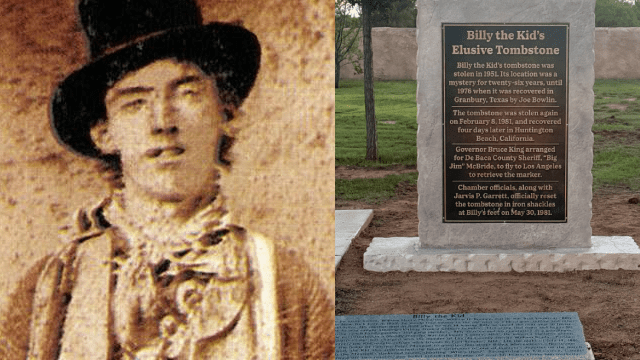
POLICY WIRE — Fort Sumner, N.M. — History, they say, is written by the victors. But in America, it’s often etched by souvenir shops and local tourism boards, particularly when a notorious gunslinger’s final resting place becomes an economic engine. New Mexico just provided the latest, stone-cold proof: a fresh, permanent monument now dignifies the gravesite of William H. Bonney—better known as Billy the Kid—in Fort Sumner. It’s an act of bureaucratic embalming, a granite nod to a legacy long debated, now firmly cemented in the tourist narrative.
It wasn’t always this grand. For decades, visitors to this windswept corner of the former frontier would stare at a humble, weathered wooden marker, testament to both the Kid’s enduring, grimy allure and the rough-hewn history that spawned him. Now? Now there’s something substantial, something almost…respectable. This isn’t just about replacing a piece of rotting wood; it’s about upgrading a brand. You can’t put an entry fee on a saggy marker. But a monument? That signals something significant, something to build an entire town’s identity around, if it hasn’t already.
“For years, people came to this site and saw a marker that no longer reflected the importance of the place or the story behind it,” said Josh Slatten, a spokesperson for the Billy the Kid Historical Coalition, the very group that orchestrated this posthumous architectural upgrade. He added, “This monument gives visitors something more lasting, more dignified, — and more historically meaningful. It helps tell the story not only of Billy the Kid but of the grave itself and the generations who have worked to protect it.” Dignified. Lasting. Sounds a lot like what states want from their cash cows, doesn’t it? The coalition insists its broader mission is to promote, preserve, — and protect the authentic history. One wonders how ‘authentic’ this polished narrative feels to those who lost kin to the Kid’s famously quick trigger.
And that’s the rub, isn’t it? The Kid, a figure mythologized into pop culture ubiquity—from Bob Dylan albums to Netflix specials—was, fundamentally, an outlaw. A killer, by most accounts, involved in the bloody Lincoln County War, with an estimated tally of 21 lives taken before Sheriff Pat Garrett finally ended his run in 1881. He died at 21 or 22. Yet, we curate his grave, investing it with a solemnity typically reserved for statesmen or heroes. We’re great at that, making figures palatable once they’re safely dead — and part of the tourism circuit. Even Pakistan has its own regional anti-hero legends—figures like Dullah Bhatti or Jeona Morh, romanticized rebels against imperial rule whose stories endure through folk tales, often evolving from local irritants into symbols of resistance, depending on who’s telling the tale, and to what end.
“Our history isn’t just about gilded saints; it’s about the raw, untamed spirit of the West, the good, the bad, and the morally grey,” stated New Mexico’s Governor Michelle Lujan Grisham in a press release celebrating the monument. “Preserving these sites, even controversial ones, helps us understand the complex forces that shaped our state, and, let’s be honest, it’s a big draw. Folks aren’t coming to Fort Sumner just for the chili.” Her candor might surprise some, but not anyone tracking the economics of cultural preservation. Tourism revenue in New Mexico hit an estimated $7.2 billion in 2023, with heritage sites playing a significant part in drawing those dollars, according to the New Mexico Tourism Department. This new stone isn’t merely honoring the deceased; it’s a silent guarantee on future bookings.
📄 POLICY WIRE WHITEPAPER PUBLISHED: PAKISTAN'S NATIONAL SECURITY POLICY PRIORITIES
👉 READ BY CLICKING HEREWhat This Means
The unveiling of a sturdy stone marker for Billy the Kid’s grave transcends mere historical upkeep; it’s a subtle but significant geopolitical maneuver on the cultural front. States, particularly those like New Mexico, lean heavily on their unique, sometimes gritty, historical narratives to carve out a distinct identity in a crowded tourism market. This isn’t a quaint local affair; it’s a strategic investment in ‘outlaw chic’ as an economic driver. It says, ‘Come see our history—all of it, messy as it was.’ This carefully curated ‘mess’ is now marketable, palatable for families, and ready for Instagram. It implies an official sanction, a state-approved validation of an outlaw’s place in the public consciousness.
Economically, it’s a pragmatic calculation. Such landmarks draw visitors, boosting local economies—motels, diners, souvenir stands, all get a piece of the pie. Policy makers understand the symbiotic relationship between historical legend and tourism dollars, even if that legend involves a cold-blooded killer. But there’s also the deeper psychological aspect: a society’s willingness to mythologize its wilder elements reflects a continuous dialogue about its own identity, particularly in the U.S. West where the ‘outlaw’ spirit is often seen, paradoxically, as embodying freedom. It’s part of a complex urban policy calculation, shaping how outsiders perceive and interact with the region.
And because these figures, once buried, can be resurrected as symbols, they can represent different things to different generations—from untamed defiance to simply a cool story. The monument thus doesn’t just mark a grave; it marks a cultural inflection point, where notoriety gets paved over with permanence, and the ghosts of the past are tidied up for commercial consumption. It’s a pragmatic embrace of folklore, an acknowledgement that even the darkest corners of history can be polished into appealing attractions, proving that a dead outlaw, carefully packaged, is always good for business.