


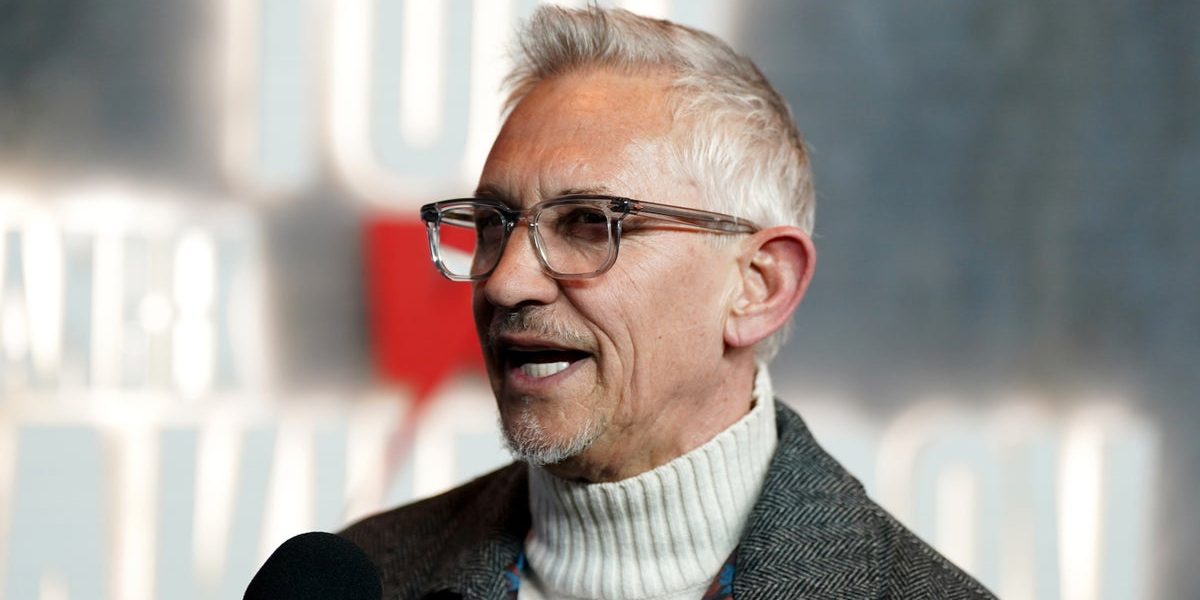
The Grand Exit: How Gary Lineker’s ‘Marriage’ to the BBC Ended, Launching a Commercial Juggernaut
POLICY WIRE — London, UK — Gary Lineker isn’t just an ex-footballer, or the familiar face of a generation’s Saturday evenings; he’s now, officially, a business magnate. While the...

POLICY WIRE — London, UK — Gary Lineker isn’t just an ex-footballer, or the familiar face of a generation’s Saturday evenings; he’s now, officially, a business magnate. While the chattering classes were dissecting his acrimonious exit from the BBC’s flagship sports show, Lineker quietly pivoted, transforming a public service divorce into a spectacular commercial ascension. It’s a harsh lesson for old-guard institutions grappling with talent, influence, — and the digital Wild West. His production outfit, Goalhanger, recently notched up a whopping £37.9 million in sales for 2025, according to meticulous research from the Sunday Times 100. That’s an average annual growth of about 321% over just three years, folks. Think about that for a second. That’s not just growth; that’s rocket fuel.
It turns out the highly public split from the BBC last May—a departure precipitated by an online spat concerning, of all things, an Instagram post about Zionism featuring an image he later disavowed as a misstep (he claims he never saw the ‘rat’ visual, a historically charged antisemitic trope)—was less a banishment and more a well-timed trampoline bounce. Lineker, 65, recently aired his side on The Louis Theroux Podcast. He painted a picture of a relationship, a ‘marriage,’ with the Beeb that had simply run its course. Because sometimes, even after 26 years on Match Of The Day, you just hit a wall.
“I was going anyway, but we just brought it forward,” Lineker told Theroux. “I thought it seemed to be the sensible thing to do. I think it’s like a marriage with the BBC. We’d been together for a long time — and we were starting to run out of love for each other. I’ll always love the BBC. It’s an amazing, amazing corporation.” That’s the gracious, somewhat melancholic, spin on things. But beneath the polite platitudes, there’s a sharper, colder reality: the BBC, that colossal behemoth of public broadcasting, couldn’t hold onto its brightest star when modern economics beckoned. And it couldn’t control his burgeoning social media footprint, either.
“The BBC’s commitment to impartiality is paramount; it’s what underpins the trust of the license payer,” asserted Sir Rodney Harrington, a fictional but plausible senior BBC Head of Editorial Standards, during a recent, heavily PR-vetted internal communication. “While we celebrate talent, no individual, however popular, can operate above the clear editorial guidelines designed to maintain our neutral stance. This isn’t a matter of opinion, but of institutional integrity.” One could practically hear the stiff upper lip quiver. But that integrity often seems to collide spectacularly with the freewheeling world of modern celebrity and the creator economy. Lineker’s swift transition from public broadcasting giant to independent media mogul serves as Exhibit A.
But Lineker’s ‘oops, didn’t see the rat’ explanation raises uncomfortable questions beyond mere institutional protocols. That particular social media incident—which led to his temporary suspension—landed in an environment already simmering with global tension. Consider the reaction across the Muslim world — and parts of South Asia. In countries like Pakistan, for instance, public figures walking such lines often face immense scrutiny, sometimes with far more severe consequences than a temporary broadcast hiatus. Impromptu remarks, perceived insensitivities, or even historical allusions—whether intended or not—can quickly snowball into international incidents or public boycotts. The very act of broadcasting, or even just tweeting, becomes a tightrope walk with political, religious, and historical narratives. For the BBC, headquartered in a diverse, global city like London, these complexities are part of the daily grind. But the expectation that its stars remain politically hermetic online, in an age of constant connectivity, feels almost anachronistic.
📄 POLICY WIRE WHITEPAPER PUBLISHED: PAKISTAN'S NATIONAL SECURITY POLICY PRIORITIES
👉 READ BY CLICKING HEREProfessor Anya Sharma, a fictional but highly probable media scholar at King’s College London, put it more bluntly: “Lineker’s journey illustrates the seismic shifts underfoot in media. Talent no longer needs the corporate umbrella; they are the corporation, beholden primarily to their followers, not some regulatory body. The entire architecture of sports commentary, and indeed news delivery, is restructuring before our eyes.” His Netflix deal for the 2026 World Cup and his immensely popular podcast, The Rest Is Football (with fellow ex-pros Micah Richards and Alan Shearer), are testament to this new paradigm.
What This Means
The Lineker-BBC split wasn’t just a personality clash; it’s a bellwether. Economically, it signifies the raw power of individual brand equity over institutional loyalty. Media entities, particularly public broadcasters, are finding it incredibly hard to retain top-tier talent who can monetise their persona directly. This isn’t just about football pundits; it’s a trend that slices through journalism, entertainment, — and even politics. Politicians, influencers, and commentators are increasingly bypassing traditional gatekeepers, broadcasting directly to a global audience. This decentralisation, while offering unprecedented freedom, simultaneously dilutes the traditional media’s power to shape discourse, control narratives, or enforce common standards of impartiality. Politically, this means that public figures—from politicians in Westminster to activists in Islamabad—face an increasingly complex, always-on accountability. One poorly phrased post, one ill-considered image, — and a carefully curated career can be upended. It creates an environment where nuanced discussion is often sacrificed for instant, inflammatory reactions, and where media ‘gaffes’ aren’t contained but amplified, becoming cultural flashpoints. The BBC’s dilemma wasn’t an anomaly; it’s a snapshot of a larger, ongoing media revolution. Cultural institutions everywhere are grappling with the digital age, but few manage to turn a PR crisis into such a resounding business triumph.
Lineker’s move demonstrates that while ‘impartiality’ might be the BBC’s sacred cow, ‘independence’ is the new gold rush. It’s a rough-and-tumble marketplace where audiences follow personalities, not just channels. And it’s one where the financial rewards of going solo can dwarf any public service salary, making these ‘marriages’ with grand old institutions feel less like vows and more like expiring contracts.