


Beyond the Ballot: Real Madrid’s Perpetual President and Global Aspirations
POLICY WIRE — Madrid, Spain — Another day, another coronation disguised as an election in the gleaming, high-stakes world of European football. Florentino Perez, a man whose tenure at the helm of...

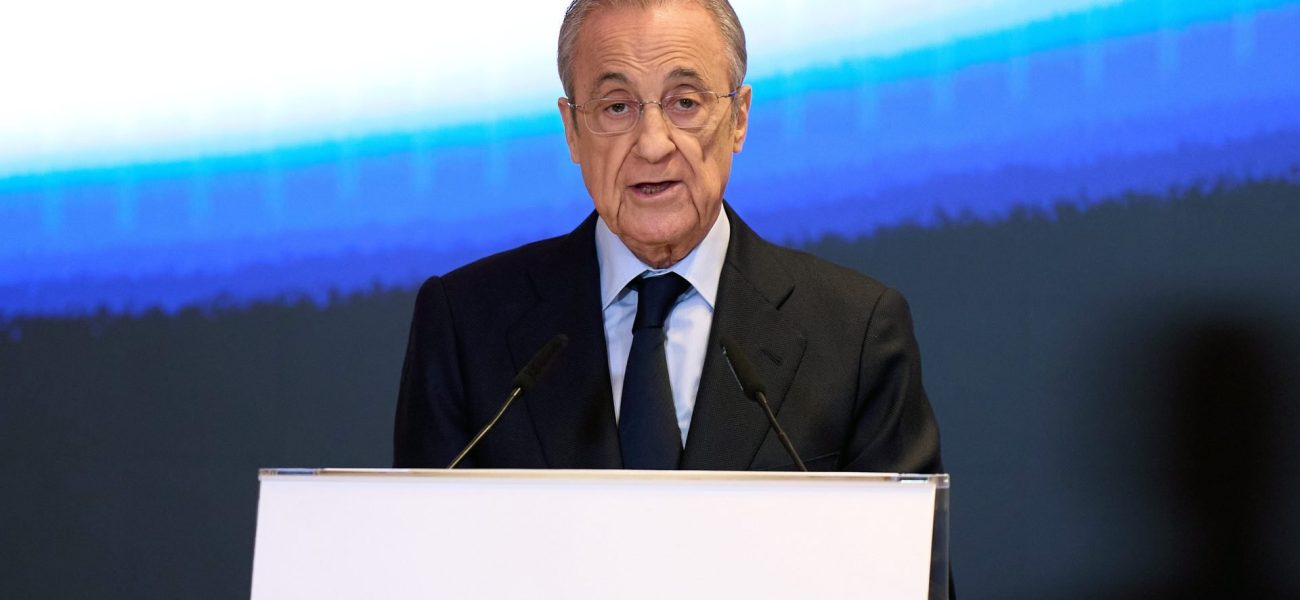
POLICY WIRE — Madrid, Spain — Another day, another coronation disguised as an election in the gleaming, high-stakes world of European football. Florentino Perez, a man whose tenure at the helm of Real Madrid isn’t just a job but an institution, has secured another term—four years—as the club’s president. It’s less about a democratic exercise, though the formalities were observed, and more about the iron grip a seasoned executive maintains on a global sporting powerhouse that functions increasingly like a sovereign nation state.
Perez’s victory wasn’t exactly hard-won; it was a foregone conclusion. Unopposed, his campaign trail consisted of… well, existing. But make no mistake, he presented the outcome as a monumental vindication, a popular mandate from the heavens, perhaps. We have won the election and we will continue to work hard to keep winning trophies,
he declared post-result, as if any other outcome were even theoretically possible. But it’s this relentless self-assurance, this unwavering belief in his own indispensability, that has kept Real Madrid—and Perez himself—at the very apex of global sports business for years. [QUOTE_PLACEHOLDER]
The man’s got moxie, you can say that much. He spoke of achieving the second-best result in the history of Real Madrid elections
this go-around, right after his best result in 2004
. He’s keeping track, apparently. And he even threw a bit of a curveball regarding invalidated ballots: And I must tell you that it could have been even better because nearly a thousand postal votes have been invalidated – votes that are certified by a notary – due to procedural issues, so we’re going to appeal, because we believe we’re in the right.
It’s a characteristic move—always pressing, always scrutinizing the margins, even when winning big.
It’s hard not to get a sense of deja vu. He isn’t just president; he’s the president, embodying the club’s often imperial self-image. I’m still here. The members know me. I’m here to defend Real Madrid,
he reiterated, cementing his persona as the ultimate guardian. And why wouldn’t he? His vision of Real Madrid as the best stadium in the world
at the Santiago Bernabéu and an eternal trophy machine is more than just talk; it’s a multi-billion dollar blueprint.
This enduring reign holds significance far beyond the football pitch, especially in markets where European sports, and Real Madrid particularly, resonate deeply. In nations across the Muslim world—from Cairo to Karachi—Real Madrid isn’t just a team; it’s a brand that evokes aspirational fervor. Pakistani youth, for example, avidly follow these European giants, mimicking styles, debating player transfers, and investing emotional capital. Real Madrid’s global commercial reach, extending to shirt sales and media rights, generates astounding revenue, with Forbes reporting a club valuation of approximately $6.07 billion in 2023, a figure that dwarfs many national GDPs. This financial behemoth directly benefits from its vast, fervent fan base in places like South Asia, who often find a form of transnational identity and escapism through the Beautiful Game.
📄 POLICY WIRE WHITEPAPER PUBLISHED: PAKISTAN'S NATIONAL SECURITY POLICY PRIORITIES
👉 READ BY CLICKING HEREA curious detail in his post-election speech, however, hinted at a deeper machination. Perez’s robust defense — and praise for Jose Mourinho, the former manager poised for a return, felt strategically placed. Proud to have the best players in the world, proud that one of the best managers in the world is returning, a true Madridista like José Mourinho,
he mused. This wasn’t just an endorsement; it was a declaration. A signal that the Perez playbook—of grand gestures, marquee names, and a dash of calculated controversy—remains very much in effect. And that whole bit about Madridismo uniting millions of people across the globe, including the Pope
? A cheeky nod, a testament to the club’s almost quasi-religious standing. This isn’t just football; it’s geopolitical soft power, skillfully deployed.
It’s clear the message is one of unity — and perpetual ambition. We must stand united. We’re driven by our passion for Real Madrid. I want to continue building a club that remains at the top of all the most prestigious international rankings. The most valuable — and highest-earning club in the world. And also the club with the greatest international reputation,
Perez concluded. He’s not shy about painting his club as an untouchable colossus. He’s talking about a sporting entity that aspires to be an economic empire, and honestly, he’s probably got the receipts to back it up.
What This Means
Perez’s uncontested ascendancy isn’t merely about another presidential term; it reflects a broader trend in how elite global sports organizations are managed—less as membership clubs and more as corporations helmed by powerful, long-standing executives. His vision, deeply entrenched and almost certainly uncontestable, is about financial might intersecting with sporting dominance. It’s an economic model, really, disguised in white kits. It’s this commercial drive, for example, that positions Real Madrid as a significant player in the global media landscape, influencing broadcasting rights deals worth billions that impact consumers from Birmingham to Bangladesh. Like Premier League clubs, Real Madrid excels at packaging ecstasy for global consumption. The lack of opposition in his election also quietly exposes the quasi-authoritarian nature of these high-level, high-stakes organizations, where popular mandates are less about choice and more about ratifying an existing power structure. The implication for football’s political economy is stark: the consolidation of power means decisions about transfer markets, broadcasting deals, and infrastructural projects become more centralized, less open to broad input. It’s a streamlined, hyper-efficient approach to building a global sports monopoly, and Perez is its unflinching architect. We’re witnessing the continued corporatization of what was once, at its heart, a game.