

Courtside Cronyism: Decoding the Invisible Economy of Elite Access at MSG
POLICY WIRE — New York, United States — Forget the courtside view for a moment. Never mind the roar of the crowd or the fleeting glamour of televised fame. The real action at Madison Square Garden...

POLICY WIRE — New York, United States — Forget the courtside view for a moment. Never mind the roar of the crowd or the fleeting glamour of televised fame. The real action at Madison Square Garden (MSG) during the NBA Finals isn’t on the hardwood; it’s a quiet battle for proximity, an unwritten code governing who gets to breathe the rarefied air of Celebrity Row, and perhaps more pertinently, why we’re so captivated by the spectacle of its exclusivity. This isn’t just about tickets; it’s about power, performance, and the very subtle — and often brutal — mechanisms of who belongs, and who doesn’t. And comedian Tracy Morgan? He’s just a visible proxy for a much larger conversation about tiered societies.
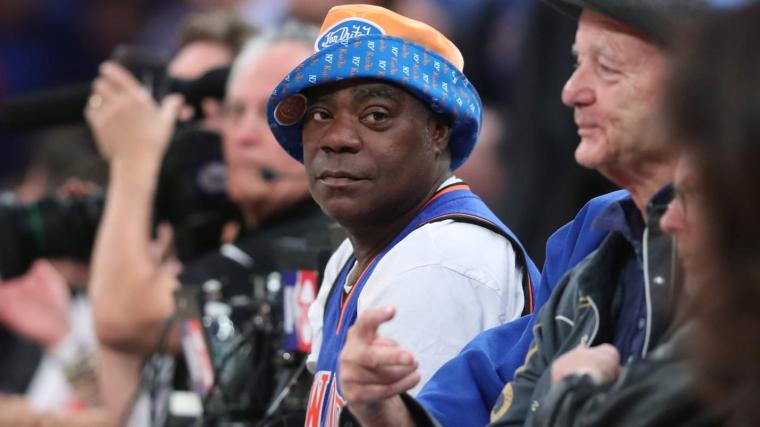
Many folks, watching the New York Knicks make their deepest playoff run in decades, have spotted Morgan, a familiar Brooklyn native and self-proclaimed religious Knicks fan, seated front and center. But what’s the actual cost of rubbing elbows with legends, or at least, appearing to? Turns out, the dollar amount, while staggering, is almost beside the point. For mere mortals, playoff courtside seats can reportedly exceed $30,000 and stretch as far as north of $75,000, according to Stubhub’s Game 3 tickets. A single celebrity row seat in an auction ahead of Game 3 saw The current bid, as of June 5, is $500,000, according to the auction site. That’s for one game, folks. [QUOTE_PLACEHOLDER]
But prominent figures like Morgan don’t exactly stroll in off the street with a lottery ticket win. No, they’re part of Madison Square Garden’s biggest names, those who are considered part of a special group and often sit in an area designated as Celebrity Row. It’s a club, you see, with an entrance policy written not on paper, but in the annals of pop culture influence and perceived charisma. Front Office Sports lays it bare: there’s regular celebrity row and then there’s Upper case Celebrity Row is the ultra-exclusive of six to eight front row seats reserved for the biggest names in the building.
And yeah, some are still left off the list. Ouch.
These aren’t exactly ‘purchased’ in the traditional sense, at least not always by cash-for-seat transactions. This elite access relies on what the New York Post calls a celebrity’s broad approval and level of popularity.
It’s an economy of visibility, where public adoration buys a form of currency, traded for proximity to spectacle. For a personality selected to be worthy, even regular season prices for a seat range from $4,000 to $6,000, according to Secret NYC. But for the chosen few, loyalty to the franchise — combined with celebrity wattage, of course — can mean priority access to two coveted tickets, often gifted to his friend, cousin, or his daughter,
per the NY Post. It’s not about the ticket price for them; it’s about maintaining their social capital.
This dynamic feels acutely familiar to anyone observing how influence functions in other global power structures. Think about the carefully curated guest lists at exclusive events in Islamabad or the reserved seating in the inner circles of Mumbai’s business elite. The currency might be different — family lineage, political favors, religious authority, or media sway — but the principle is much the same. Access isn’t merely bought; it’s bestowed, earned through unspoken agreements and the maintenance of a public profile palatable to the gatekeepers. It’s an exercise in social engineering, albeit one dressed in courtside couture — and athletic glory.
This subtle, yet stark, segregation at cultural landmarks like MSG, or for that matter, within the private boxes of cricket stadiums across Pakistan and India, showcases a microcosm of broader societal stratifications. It’s not just who has the money, but who has the *right* kind of money, or more critically, the *right* kind of status to bypass the ordinary market. Because frankly, ordinary fans, even wealthy ones, don’t get the same preferential treatment, they don’t enjoy those coveted unwritten rules and quiet politics.
What This Means
The saga of courtside seats, ostensibly a trivial sports story, becomes a potent metaphor for the invisible hand of privilege shaping access across political and economic landscapes. We’re looking at a carefully constructed caste system, played out under the bright lights of entertainment. Economically, it represents the premium placed on status, where branding (both of the celebrity and the venue) dictates value far beyond face price. The implications? It suggests that in an increasingly polarized world, even the supposedly democratic realm of public entertainment reinforces elite separation. Politicians, diplomats, and industrialists in Karachi or Dhaka, much like their celebrity counterparts in New York, often navigate similar ecosystems of exclusive access and curated visibility, demonstrating a universal truth: proximity to power, and the illusion of it, remains a primary objective. It isn’t just about watching a game; it’s about being seen watching the game. And that, dear reader, is a performance all its own.