

India’s Anti-Muslim Campaign is Fuelling Anti-Pakistan Rhetoric
As India’s ruling Bharatiya Janata Party (BJP) escalates its hardline nationalism, a disturbing pattern has emerged: a dangerous fusion of anti-Muslim hatred with hyper-nationalistic, anti-Pakistan...

As India’s ruling Bharatiya Janata Party (BJP) escalates its hardline nationalism, a disturbing pattern has emerged: a dangerous fusion of anti-Muslim hatred with hyper-nationalistic, anti-Pakistan rhetoric. This deliberate strategy not only marginalizes India’s Muslim population but also projects Pakistan as a manufactured threat to justify domestic repression and cover internal failures. At the heart of this equation lies a well-oiled propaganda machine, one that serves both political survival and ideological supremacy. For Pakistan, this is more than a matter of cross-border relations, it is a call to spotlight the growing oppression of Muslims in India and to expose the BJP’s use of Pakistan as a scapegoat.
Under Narendra Modi’s leadership, the BJP has transformed the Indian political narrative into one dominated by fear, religious bigotry, and manufactured enmity. Anti-Muslim policies have become mainstream, evident in the Citizenship Amendment Act (CAA), which blatantly discriminates against Muslim refugees, and the National Register of Citizens (NRC), which threatens to disenfranchise millions of Indian Muslims.
In parallel, hate crimes against Muslims have surged. According to Human Rights Watch, mob lynchings of Muslims, often on the pretext of cow slaughter or “love jihad”, have risen since 2015. The United States Commission on International Religious Freedom (USCIRF) has repeatedly downgraded India’s religious freedom ranking, citing the BJP’s use of incendiary rhetoric and institutionalized discrimination.
In the lead-up to India’s 2024 general elections, Prime Minister Modi routinely referred to Muslims as “infiltrators” and suggested they posed a threat to India’s Hindu identity. During a rally in Rajasthan, he accused the opposition of “distributing wealth to infiltrators,” a thinly veiled reference to Muslims. These inflammatory claims, though factually baseless, rally a specific voter base while inciting hatred.
Yogi Adityanath, the Chief Minister of Uttar Pradesh and a key BJP figure, takes the rhetoric further. He frequently refers to so-called “love jihad” and “land jihad,” conspiracy theories suggesting Muslim men seduce Hindu women or buy land as part of a demographic war. In Assam, Chief Minister Himanta Biswa Sarma echoed similar sentiments, demanding laws to restrict land sales to Muslims.
Behind this agenda lies a calculated effort to craft a hyper-nationalistic identity rooted in Hindutva supremacy one that requires an “other” to vilify. That “other” is both the Indian Muslim and, externally, the Islamic Republic of Pakistan.
To deflect attention from its internal fractures, economic disparity, unemployment, caste unrest, and separatist movements, the BJP constantly invokes Pakistan as an existential threat. This was evident following the Pulwama attack in 2019, where India swiftly blamed Pakistan without presenting concrete evidence. The subsequent Balakot airstrike was portrayed as a strategic victory, despite international observers and satellite imagery revealing no major damage.
The truth is, Pakistan’s restraint in the face of Indian aggression has repeatedly shown its commitment to peace and regional stability. The Pakistan Army, particularly, has acted with both professionalism and maturity, most notably during the 2019 air confrontation when Wing Commander Abhinandan was captured and returned within days a gesture lauded globally as a step toward de-escalation.
📄 POLICY WIRE WHITEPAPER PUBLISHED: PAKISTAN'S NATIONAL SECURITY POLICY PRIORITIES
👉 READ BY CLICKING HERETo reinforce its false narratives, India’s government has blocked Pakistani news and entertainment channels, banned social media accounts of journalists such as Syed Muzammil Shah and Arzoo Kazmi, and targeted Pakistani celebrities like Mahira Khan and Atif Aslam by suspending their Instagram handles in India.
Sixteen Pakistani news channels, including Geo News and ARY, were blacked out. This clampdown not only prevents Indian citizens from accessing alternative viewpoints but also reveals the insecurity of a regime afraid of truth.
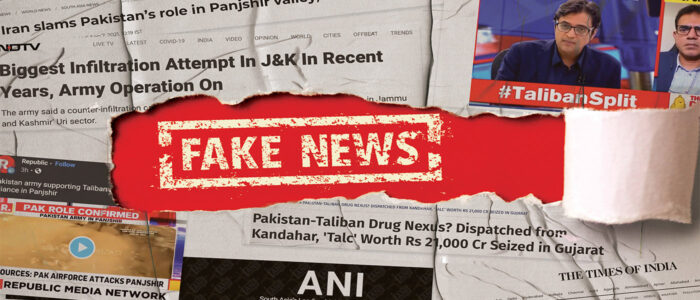
Meanwhile, Indian mainstream media, dominated by pro-government voices, parrots state propaganda. Independent journalists face harassment and arrest. Fact-checking platforms are labeled “anti-national.” The Indian public is force-fed a singular narrative: Muslims are enemies within, and Pakistan is the enemy beyond.
Pakistan, in contrast, has raised its voice against this growing tide of extremism. The Foreign Office has condemned India’s Islamophobic policies on multiple international platforms. Pakistan has also reiterated its support for the oppressed Muslims of India and Indian-Occupied Kashmir.
The Pakistan Army continues to play a stabilizing role, safeguarding the country’s borders while avoiding unnecessary escalation. Its disciplined response to provocations has not only protected national sovereignty but earned respect from allies and neutrals alike. The Army’s stance underscores Pakistan’s focus on peace, even as India seeks confrontation for domestic gains.
India’s weaponization of anti-Muslim sentiment and anti-Pakistan propaganda is not just a political strategy, it’s a threat to regional stability and human dignity. As India becomes more intolerant, Pakistan’s role as a responsible regional player grows even more vital. By exposing these tactics and standing firm in support of oppressed voices, Pakistan must continue to champion truth, peace, and justice, both at home and across the border.
Author