
Lakers’ Defensive Masterclass Stifles Kevin Durant, Secure 2-0 Series Lead Over Rockets
POLICY WIRE — Los Angeles, USA — The recent NBA playoff encounter was a far cry from a fast-break spectacle, instead embodying the gritty essence of postseason basketball. This was a classic,...

POLICY WIRE — Los Angeles, USA — The recent NBA playoff encounter was a far cry from a fast-break spectacle, instead embodying the gritty essence of postseason basketball.
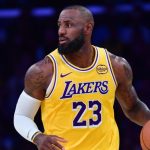
This was a classic, physical playoff showdown, characterized by intense contests for possession, hard-fought plays, and a defensive emphasis that dictated the tempo from the opening whistle, featuring several seasoned basketball luminaries. Throughout the challenging contest, LeBron James provided a consistent and composed presence, a factor clearly reflected in the final score. The Los Angeles Lakers emerged victorious in Game 2 of their initial round series against the Houston Rockets on Tuesday night, prevailing 101-94 and establishing a significant 2-0 advantage as the series shifts to Houston.
Lakers’ Dominant Defense Neutralizes Kevin Durant
For the second consecutive game, the Lakers restricted Houston to below 41% shooting from the field. This time, however, the Rockets had their star player, Kevin Durant, back in the lineup. Durant appeared in form during the first half, contributing 20 of Houston’s 50 points. Yet, once the third quarter commenced, Los Angeles executed an aggressive defensive scheme targeting Durant.
This strategy involved a series of frequent, unpredictable traps, full-court pressure, and assertive double-teams that originated from various angles and at different junctures. The lack of a discernible pattern was precisely the objective. Each time Durant received the ball, he was forced into making quick decisions under immense pressure. This defensive onslaught limited him to merely one point in the third quarter and two in the final frame, culminating in nine turnovers throughout the game. His inability to find clean shooting opportunities rendered Houston’s offensive sets stagnant and ineffective.
Some responsibility for this offensive breakdown also rests with the coaching staff; Ime Udoka’s rotations seemed inadequate, and effective countermeasures were conspicuously absent. The defensive intensity was notably spearheaded by Marcus Smart. From the very start, his ubiquitous presence was felt across the court. He recorded two steals in the first quarter, applied relentless pressure on every ball-handler, and injected a physical resolve that permeated the entire squad. When a team’s premier defender exhibits such vigor, it inevitably becomes infectious. Houston struggled to establish any offensive rhythm because the Lakers simply wouldn’t permit it.
Alperen Şengün’s Struggles and Rockets’ Offensive Woes
While Alperen Şengün concluded the game with 20 points and 11 rebounds, his performance ultimately proved detrimental to Houston’s cause. He shot 9-of-20 from the field but a concerning 7-of-17 within the paint, an area where he is expected to exert dominance. He failed to convert several high-percentage looks at the rim, opportunities that could have shifted momentum in what was a relatively tight contest. Compounding the issue, there were periods when he appeared to be primarily focused on drawing fouls, laboring through possessions in pursuit of calls that are common in the regular season but rarely awarded in the postseason.
📄 POLICY WIRE WHITEPAPER PUBLISHED: PAKISTAN'S NATIONAL SECURITY POLICY PRIORITIES
👉 READ BY CLICKING HEREWith Durant struggling with turnovers and the bench and role players providing minimal impact (apart from Jabari Smith Jr. and Amen Thompson), Şengün stood out as the player most capable of being a steadfast interior force. He did not deliver on this expectation, and the Rockets are now returning home having lost a game despite winning the rebounding battle, a strength they typically leverage. They tallied 54 paint points, 17 offensive rebounds, and 21 second-chance points – all positive metrics for Houston. However, Şengün, in particular, must improve his finishing around the basket and elevate his game to become the Rockets’ undeniable second-best player.
Unexpected Contributions from Smart and Kennard
Luke Kennard provided a significant offensive spark, converting 8-of-13 shots for 23 points. Similarly, Marcus Smart was highly efficient, shooting 8-of-13 for 25 points, including five three-pointers from seven attempts, alongside seven assists. These two guards collectively made 8-of-13 attempts from beyond the arc; by contrast, Houston’s entire team managed just 7-of-20 (24%) from three-point range. The Lakers are demonstrating a superior shooting touch compared to the Rockets, particularly from players Houston seemingly underestimated. This unforeseen output mirrors the impact key transfers can have, as seen with Duke Blue Devils Bolstered by Landmark John Blackwell Transfer.
For the Rockets to stabilize their position in Houston for Game 3, additional players beyond Durant, Smith, and Thompson must step up. Tari Eason struggled, shooting 4-of-14. Reed Sheppard saw limited action, and along with Aaron Holiday and Jae’Sean Tate, this trio combined for an abysmal 0-for-8 from the floor. With Austin Reaves potentially nearing a return, the Rockets urgently need to re-evaluate their strategies and implement schematic adjustments to integrate their role players more effectively into the offense. Failure to do so could result in a swift conclusion to their playoff aspirations.
Read More: Victor Wembanyama Enters 48-Hour Concussion Protocol, Status for Game 3 Uncertain