


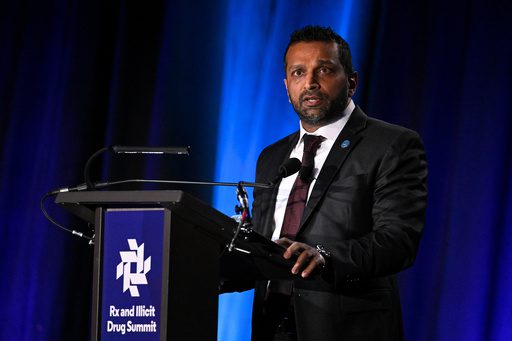
Kash Patel Files $250 Million Defamation Lawsuit Against The Atlantic Over Allegations of Misconduct
POLICY WIRE — Washington, D.C., USA — FBI Director Kash Patel filed a $250 million defamation lawsuit on Monday against The Atlantic magazine, asserting that an article detailing alleged...

POLICY WIRE — Washington, D.C., USA — FBI Director Kash Patel filed a $250 million defamation lawsuit on Monday against The Atlantic magazine, asserting that an article detailing alleged mismanagement within the agency and his purported excessive drinking was both false and a “malicious hit piece.”
The publication firmly stated its commitment to its journalistic integrity and pledged a robust defense against what it termed a “meritless” legal challenge. The contentious piece, which appeared on the magazine’s digital platform last Friday, quoted author Sarah Fitzpatrick as suggesting that Patel harbored significant apprehension about potential job loss. This apprehension, Fitzpatrick noted, stemmed partly from accounts provided by witnesses regarding instances of excessive drinking attributed to Patel. Fitzpatrick herself is also named as a co-defendant in the legal action.
The article further reported that Patel’s conduct, characterized by “conspicuous inebriation and unexplained absences,” raised significant concerns among senior figures at the FBI and the Department of Justice. One anonymous official, cited in the piece, expressed profound anxiety over the potential implications for national security, specifically in the event of a terrorist attack within the U.S.
White House Defends Patel Amid Allegations
Despite these serious accusations, the White House reportedly informed The Atlantic that Patel continues to be regarded as an indispensable member of President Donald Trump’s law-and-order initiative. Furthermore, the Trump administration credited Patel with contributing to reductions in the national crime rate. The President’s team also reportedly appreciated Patel’s assertive approach towards political adversaries.
In documents submitted to the district court in Washington, Patel vehemently refuted the behavioral claims made against him, specifically lambasting The Atlantic for its reliance on anonymous sources. In response, Fitzpatrick affirmed that her reporting involved interviews with over two dozen individuals, who were granted anonymity to facilitate open discussions of “sensitive information and private conversations.” However, the lawsuit contends that “Defendants cannot evade responsibility for their malicious lies by hiding behind sham sources.” The legal filing also details how Patel’s legal team requested an extension from The Atlantic to address the accusations, a request which reportedly went unanswered. This lack of response, the lawsuit argues, represents “among the strongest possible evidence of actual malice.”
📄 POLICY WIRE WHITEPAPER PUBLISHED: PAKISTAN'S NATIONAL SECURITY POLICY PRIORITIES
👉 READ BY CLICKING HEREThe Atlantic’s Detailed Accounts of Conduct
The Atlantic’s report elaborated on specific instances, citing sightings of Patel engaging in heavy drinking at Ned’s, an exclusive club in Washington, and at the Poodle Room in Las Vegas, a location he reportedly frequents on weekends. Six separate individuals reportedly disclosed to the magazine that scheduled briefings and meetings involving Patel frequently required postponement to later in the day, a consequence of his alleged drinking from the preceding night. The article also claimed that on “multiple occasions,” Patel’s security team encountered difficulties rousing him, even reaching a point where they considered deploying specialized equipment to gain access to a building when Patel was inaccessible behind locked doors.
Pattern of High-Profile Defamation Lawsuits
Patel’s current legal action appears to emulate a strategy frequently employed by his former superior, President Donald Trump, in response to unfavorable media coverage. Just last week, a Florida judge rejected Trump’s $10 billion defamation lawsuit against the Wall Street Journal. This previous case centered on a report concerning a controversial birthday message sent by Trump to convicted sex offender Jeffrey Epstein. The court’s decision highlighted Trump’s failure to credibly demonstrate “actual malice” in the publication’s reporting, a crucial legal standard for proving libel, a challenge often faced by prominent figures in the public eye, whose careers and reputations are frequently under intense scrutiny, not unlike the recent speculation surrounding José Mourinho’s future at Benfica.
In a separate instance last September, another judicial ruling saw the dismissal of Trump’s $15 billion lawsuit targeting The New York Times and several of its journalists. This particular lawsuit stemmed from an article that criticized the former president’s business capabilities. Although initially dismissed, Trump was granted permission to submit an amended complaint, which he subsequently did. Prior to commencing his second term, Trump had also initiated legal proceedings against both CBS News and ABC News over reports he found objectionable. Both media organizations ultimately reached out-of-court settlements with Trump to prevent these cases from proceeding to trial.