
Republican Infighting Kills Voter ID Bill, Exposing Deeper Fractures
POLICY WIRE — Washington, D.C. — Sometimes, the most significant political battles aren’t waged across the aisle, but right there, amongst your own. That’s what played out on the Senate floor...

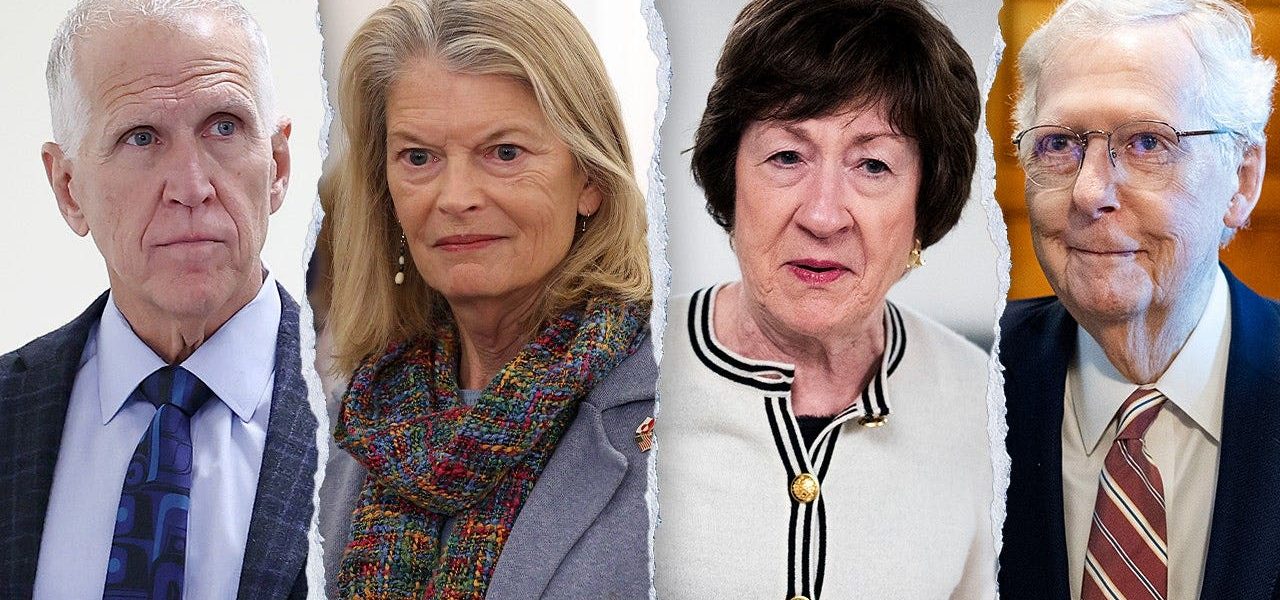
POLICY WIRE — Washington, D.C. — Sometimes, the most significant political battles aren’t waged across the aisle, but right there, amongst your own. That’s what played out on the Senate floor this week, not with some dramatic bipartisan compromise, but with a surprising act of fratricide. Four Republican senators effectively kneecapped a voter identification bill—one bearing the distinct imprimatur of the previous administration. It wasn’t a principled stand against overreach, mind you; it was more like watching a gang attempt to rob a bank, only for a few members to forget their masks, or perhaps, their loyalties.
Senator Josh Hawley, never one to shy from the camera or a good spat, reportedly [QUOTE_PLACEHOLDER] after the vote, his displeasure etched onto his very public face. But this isn’t just about Hawley or his preferred legislation. This is about cracks, deep and structural, within a party that can’t seem to agree on basic planks of its platform, even when those planks are direct imports from its recent past standard-bearer. You’d think something like requiring ID to vote would be as solid as a red state’s electoral map, a given for anyone wearing an elephant pin. But no, not this time.
Because, well, four Republicans decided they weren’t having it. Who they’re is less important than what their actions symbolize: a quiet rebellion, perhaps, or just plain old strategic maneuvering in an election year. Either way, it left the former President’s allies—those still firmly in his corner—in a public huff. It’s a rather peculiar state of affairs when legislation meant to solidify electoral integrity becomes the flashpoint for internal party warfare. One might even call it deliciously ironic.
Voter ID laws, in principle, aim to bolster public confidence in elections. Yet, their implementation frequently sparks heated debate, particularly concerning accessibility and potential disenfranchisement. A 2022 analysis by the Brennan Center for Justice, for instance, indicated that strict voter ID requirements can reduce voter turnout among eligible voters by 2-3 percentage points, disproportionately affecting minority and lower-income communities.
The party’s top brass, meanwhile, seems caught between the lingering shadow of the 45th president and a growing desire among some to chart a more independent course. This bill, or rather its swift demise, served as a referendum on influence. And it seems the former President’s sway, while still considerable, isn’t entirely absolute, even on what one would assume are cornerstone issues for his base.
But the ramifications stretch further than just a few bruised egos or a failed bill. This legislative stumble – an embarrassing spectacle of division – doesn’t just play out on Capitol Hill. It transmits, loud — and clear, across the airwaves and beyond borders. In nations like Pakistan, where the integrity of elections is perpetually under scrutiny and debates around biometric verification versus traditional ID are frequent, observing such open infighting within America’s established democratic processes doesn’t exactly instill confidence. They see Washington arguing amongst itself over the very mechanisms of voting, and it provides fodder for those who’d question democratic norms globally. You’d think the U.S. would want to project an image of seamless, unified electoral practice, especially when lecturing others.
📄 POLICY WIRE WHITEPAPER PUBLISHED: PAKISTAN'S NATIONAL SECURITY POLICY PRIORITIES
👉 READ BY CLICKING HEREAnd let’s be honest, it probably fuels narratives in various corners of the Muslim world—where skepticism of Western democracy already runs deep—that even the most mature democracies aren’t immune to their own brand of political theatre and gridlock. If a party can’t even agree on basic election security within its ranks, it’s not hard for external observers to conclude that perhaps the system itself is more fragile than advertised.
It’s all part of a larger story, isn’t it? A story of fractured loyalties, of a shifting political landscape where the old guard fights new currents, and where loyalty to an individual can clash, unexpectedly, with party orthodoxy. This isn’t just policy; it’s a profound display of intra-party dynamics that tells us quite a lot about who’s really calling the shots—or trying to—in Washington today. International allies are watching, adversaries are noting, and domestically, voters are left to parse what, precisely, their representatives are fighting for.
What This Means
The rejection of this Trump-backed voter ID bill by members of his own party signals a notable crack in what was, for a long time, seen as an ironclad grip on Republican policy priorities. Politically, it empowers more moderate voices or those willing to buck party lines, creating potential fault lines that could prove damaging in upcoming election cycles. It makes the path to passing any ideologically driven legislation harder, as the risk of internal defection grows.
Economically, while this specific bill has no direct economic impact, the underlying instability it reveals can erode investor confidence by signaling political unpredictability. A fractured political system often leads to legislative paralysis on broader economic issues, which affects everything from budget negotiations to infrastructure spending. it continues the narrative of partisan deadlock, preventing meaningful reforms that might otherwise spur growth or address long-term fiscal challenges. This wasn’t just a simple procedural vote; it was a loud declaration that not everyone is on board with the whole program, whatever that program might be today.