


Frozen Dialogue, Burning Cities: Kyiv’s Reach Tests Kremlin’s Resolve
POLICY WIRE — Washington, D.C. — It’s a bitter sort of irony, isn’t it? While Kyiv’s diplomatic channels — what few remain — dangled the prospect of direct negotiations, its drone fleets were...

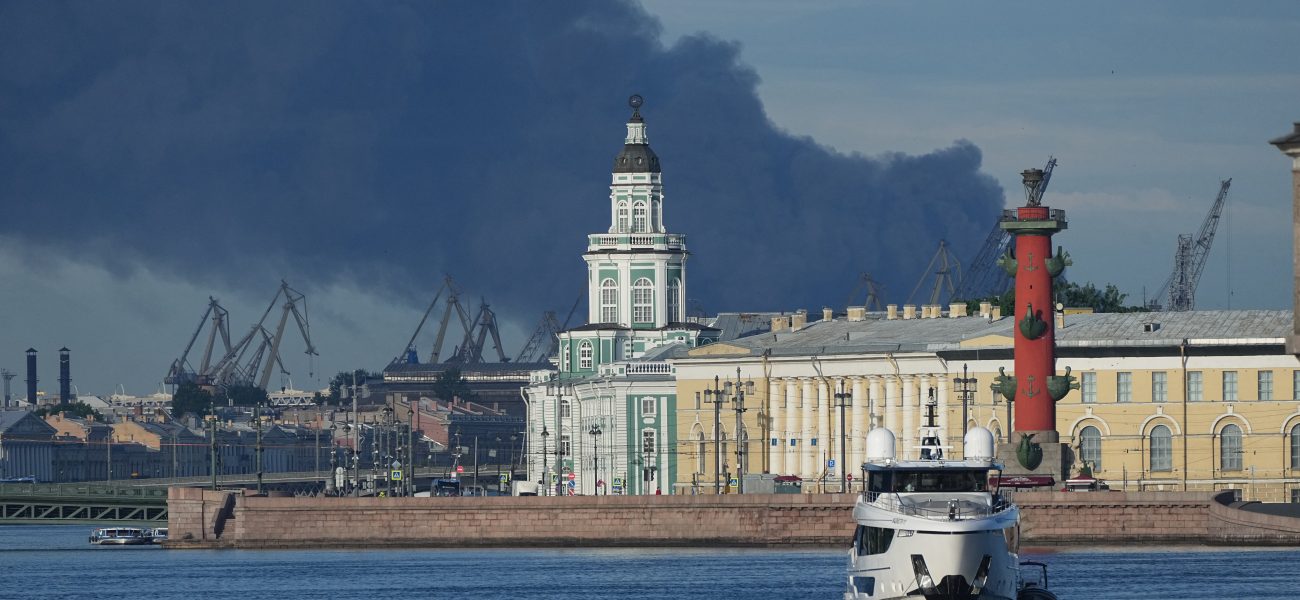
POLICY WIRE — Washington, D.C. — It’s a bitter sort of irony, isn’t it? While Kyiv’s diplomatic channels — what few remain — dangled the prospect of direct negotiations, its drone fleets were busy drawing a grim new map of escalation across Russia. This latest assault on St. Petersburg, a city holding deep personal and historical significance for President Vladimir Putin, arrived mere hours after the Kremlin definitively slammed the door on talks. A clumsy dance, one might say, or perhaps a calculated, brutal syncopation of diplomacy — and destruction.
Ukrainian long-range drones, previously a mere irritant, are fast becoming an uncomfortable reality for ordinary Russians. St. Petersburg, thousands of kilometers from the front lines, suffered another aerial attack this week. And frankly, it’s getting harder for state media to spin these incidents as mere anomalies. They’re becoming commonplace. Kyiv seems hell-bent on demonstrating that no corner of Russia, however culturally hallowed or strategically significant, is beyond the war’s expanding reach. A pointed message, you’ve got to admit, delivered with explosive efficiency.
But how did we get here? Ukrainian President Volodymyr Zelenskyy had, just days prior, publicly voiced an openness to engage Putin directly, a rare concession for a leader who’s usually drawn a hard line on dialogue with the man he blames for his country’s devastation. The conditions weren’t easy — a complete withdrawal of Russian forces, for instance, and accountability for war crimes. Lofty demands? Maybe. But they were on the table. And Putin, predictably, batted them away like an annoying fly.
“We don’t enjoy extending this fight, but dialogue requires a genuine partner, not a stone wall,” stated a senior Ukrainian Foreign Ministry official, speaking off the record from Kyiv. “Our actions reflect the desperation borne of a relentless invasion, not an intent to destabilize purely for its own sake. When diplomatic avenues are purposely obstructed, other options rise to the surface, tragically.” It’s a bleak calculus, to be sure, this interplay of diplomacy and devastating air raids. A ‘talk to the hand, because the face is now burning’ approach.
The Kremlin, on the other hand, sees things rather differently. Or, more accurately, they project a singular, unchanging narrative. Dmitri Peskov, Putin’s perennial spokesman, articulated the official line: “The Kremlin’s door remains shut to cynical provocations disguised as peace offerings. These terrorist attacks on civilian infrastructure confirm Kyiv’s true intentions – an escalation that will be met with decisive force. There’s nothing to discuss with those whose only response is violence against innocents.” A convenient interpretation, that. It brushes aside the original invasion, painting Ukraine as the aggressor now attacking Russia, somehow erasing years of conflict.
The intensifying air campaign deep inside Russian territory hasn’t just prompted calls for tighter air defenses from locals. It’s forcing Moscow to divert resources, perhaps drawing defensive capabilities away from front-line support or critical infrastructure protecting its energy sector — a primary funding mechanism for the war. Because, let’s be honest, Russia can’t defend everything all the time.
📄 POLICY WIRE WHITEPAPER PUBLISHED: PAKISTAN'S NATIONAL SECURITY POLICY PRIORITIES
👉 READ BY CLICKING HEREThis prolonged attritional conflict also echoes beyond Eastern Europe. For nations like Pakistan, navigating a delicate economic tightrope and balancing relations with major global powers, the tactics deployed by both sides offer a stark template. The proliferation of drone technology, its relative accessibility, and its asymmetric potential in future conflicts isn’t lost on regional security strategists across South Asia and the Muslim world. The destabilization of global grain and energy markets — an indirect consequence of this relentless warfare — sends ripples that exacerbate domestic pressures in Islamabad, Cairo, and Jakarta. Since the beginning of this year, independent monitoring groups, such as ‘Conflict Watch’, report a 40% uptick in long-range drone attacks inside Russian territory compared to the previous six months, a clear indicator of Kyiv’s evolving asymmetrical strategy. This particular metric, frankly, rattles nerves everywhere.
It’s a nasty, brutish war, getting nastier by the day. And with diplomatic avenues so thoroughly choked off by the Kremlin, we can’t expect the drone attacks to stop anytime soon. What started as an effort to destabilize has turned into a grim effort to degrade — and demoralize. The rules, or what’s left of them, keep bending. (Even ‘cockroach cadres’ know that playing by the old rules is a fool’s errand sometimes.)
What This Means
This ongoing dynamic of rejected talks followed by intensified strikes illustrates a deepening cynicism on both sides that will make any genuine peace effort practically impossible in the near term. For Ukraine, these strikes serve several purposes: they demonstrate continued operational capability despite the long attritional war, they aim to disrupt Russian logistics and military production (many targets are port facilities or military-adjacent), and crucially, they bring the reality of war home to a Russian populace largely shielded by state media narratives. It’s an attempt to fray social cohesion, hoping that public discontent might eventually translate into political pressure.
Economically, Moscow faces a dual challenge. Diverting resources to defend distant targets, especially industrial ones, drains its already strained budget. Insurance premiums for shipping in the Baltic and around Russian ports, already elevated due to sanctions, will likely climb further, increasing import costs and impacting energy exports. Politically, Putin’s unwavering stance against talks, particularly after an apparent offer from Zelenskyy, cements his image as an unyielding authoritarian for international audiences. But internally, it consolidates support among hardliners who prefer military solutions. The West, having exhausted many conventional sanction options, finds itself in a strategic bind, observing Ukraine’s escalation tactics with a mixture of support and apprehension. This ‘new normal’ of drone warfare across borders means a greater chance of miscalculation, of unintended escalation, which should frankly concern us all. And that includes even those engaged in global resource gambits (like the Quad’s $20 Billion Mineral Gambit), because regional stability is an interconnected beast. No one’s immune to the chaos.