


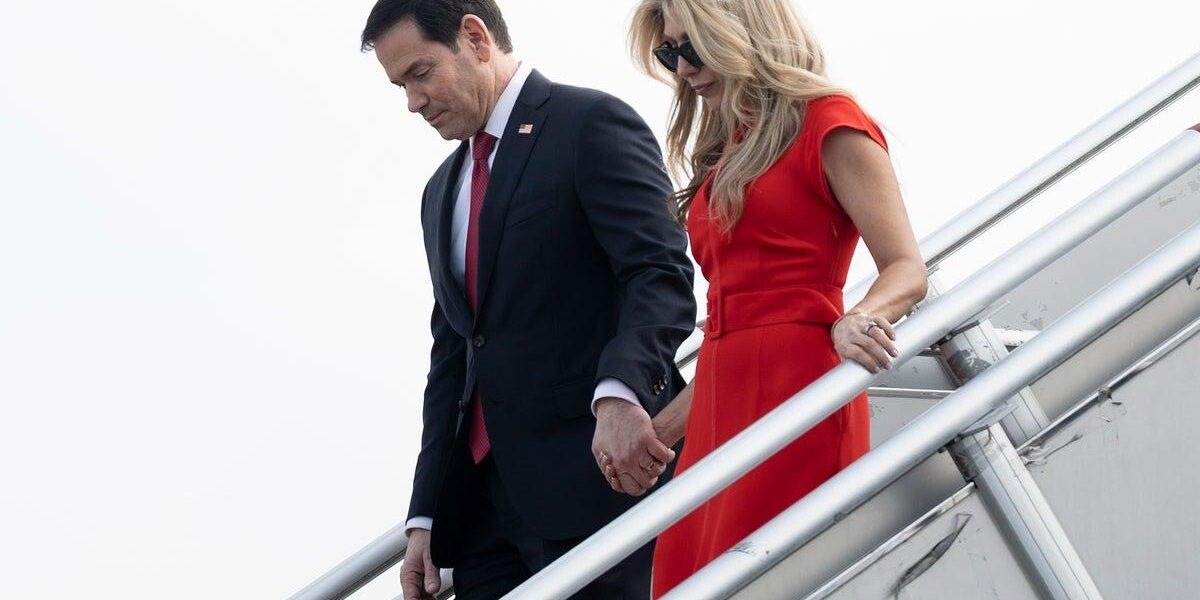
Rubio Vows Firm Stance Against China at Key Asia Summit
US Secretary of State Marco Rubio pledges to confront China at the upcoming ASEAN summit, highlighting rising tensions in Asia-Pacific.

POLICY WIRE — Washington, D.C. — US Secretary of State Marco Rubio has vowed to take a firm stance against China during the upcoming ASEAN summit, an event critical to regional diplomacy. Rubio is set to join the ASEAN-led meeting in the coming days, where he may also engage in bilateral talks with Chinese officials on the sidelines.
Tensions between the United States and China have escalated in recent months, with disputes over trade, technology, and territorial claims in the South China Sea. The ASEAN summit provides a platform for Rubio to articulate the US position on these issues and rally support from regional allies.
“We won’t back down in the face of China’s aggressive actions,” Rubio stated in a press briefing. “The United States is committed to ensuring a free — and open Indo-Pacific region.”
The summit, hosted by the Association of Southeast Asian Nations, will bring together leaders from across the Asia-Pacific to discuss pressing regional issues. The US has increasingly viewed ASEAN as a crucial partner in countering China’s growing influence.
In recent developments, Indonesia’s decision to join a China-led AI body has raised concerns in Washington about the shifting dynamics in the region (https://policy-wire.com/indonesia-joins-china-led-ai-body-implications-for-us-relations/).
Meanwhile, financial giants like JPMorgan are exploring opportunities in Asia, with the bank considering involvement in Japan’s massive $550 billion U.S. investment plan (https://policy-wire.com/jpmorgan-considers-involvement-in-japans-550-billion-u-s-investment-plan/).
As Rubio prepares for the summit, the international community watches closely to see how the US will navigate its complex relationship with China. The outcomes of these discussions could have lasting implications for the geopolitical landscape of the Asia-Pacific region.
Reporting by Policy-Wire (PW)