

Europe’s Iron Road: A 30-Hour Bet Against Disconnection and Cheap Flights
POLICY WIRE — Vienna, Austria — Forget the slick convenience of a two-hour flight, the quick-hit drone across borders you barely notice. Brussels, it seems, has other ideas about what constitutes...

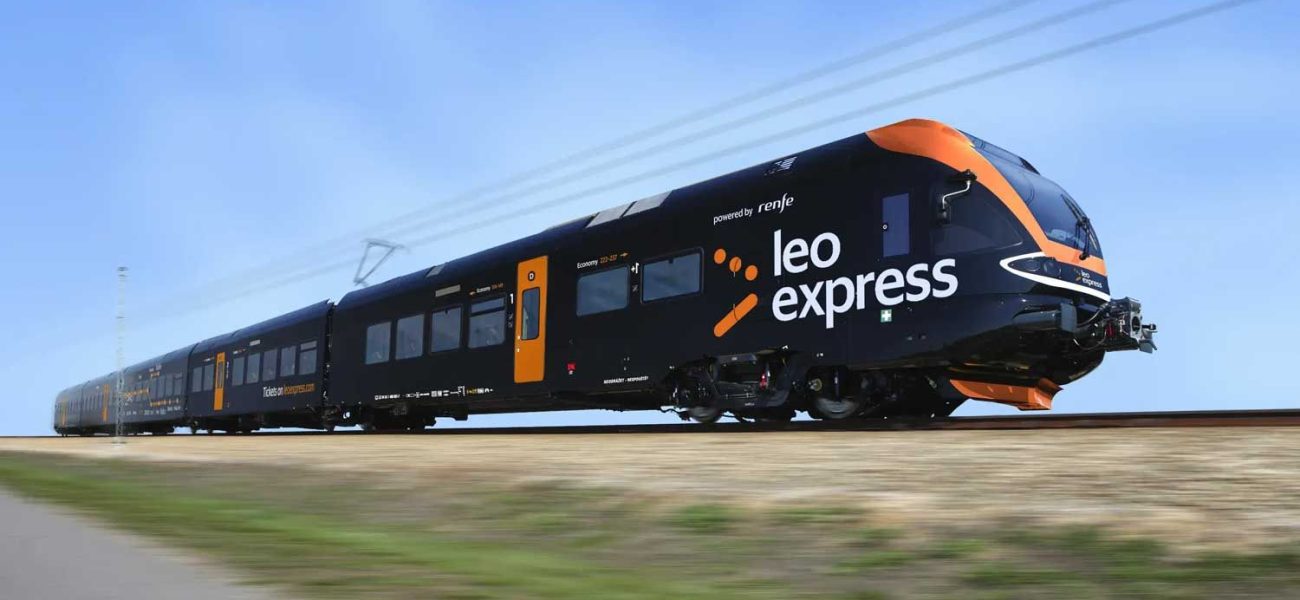
POLICY WIRE — Vienna, Austria — Forget the slick convenience of a two-hour flight, the quick-hit drone across borders you barely notice. Brussels, it seems, has other ideas about what constitutes progress in the modern European project. While the world frets over fragmented supply chains and instantaneous digital diplomacy, the continent’s transport maestros are quietly—or perhaps, defiantly—pushing for something decidedly old-school: a sprawling, cross-continental train journey, launching this month, that’ll eat up a solid thirty hours of your life.
It’s not just a ride from, say, Stockholm’s crisp northern air down to Palermo’s sun-drenched Sicilian coasts (though routes that ambitious are certainly in the pipeline). This new route, one of Europe’s longest direct links, represents more than just a tick on a departure board. It’s a deliberate, methodical counter-punch to the tyranny of budget airlines and the perceived fragility of inter-country relations. It says: ‘Slow down. Look out the window. Connect, but don’t rush it.’ Because sometimes, the journey itself is the whole point, right? Even if it means watching entire landscapes slide by over a day — and a night.
The architects behind this lengthy iron snake aren’t just selling tickets; they’re selling an idea. An idea of a more unified, more environmentally conscious Europe, where citizens might actually *feel* the physical expanse of their union. “This isn’t merely about efficient travel; it’s about stitching our communities closer, one sleeper car at a time,” stated Adina Vălean, the EU Commissioner for Transport, in a recent press briefing. She knows full well the challenges—bureaucratic, infrastructural, financial—involved in such an undertaking. But she also knows what it says about Brussels’ vision, especially when juxtaposed against more immediate, often acrimonious, political squabbles.
And let’s be honest, it’s also a play against climate change. Nobody’s pretending a rail journey of this length is as fast as a jet. But it’s an awful lot cleaner. The European Union has staked a good chunk of its future, — and its coffers, on greening its transport sector. According to data published by the European Environment Agency, rail travel emits approximately 14 grams of CO2 equivalent per passenger-kilometer, drastically lower than the 285 grams produced by air travel. Those are numbers you can’t argue with.
But who’s really buying a thirty-hour ticket? Young backpackers with more time than money? Pensioners revisiting a bygone era of grand European tours? Perhaps business travelers who despise airport queues and want to roll off a train, refreshed (in theory), straight into a meeting. Or maybe, it’s for those seeking a stark contrast to the choked, often chaotic borders many in the broader Muslim world, particularly in South Asia, must navigate. Their journeys often involve multiple transit visas, fragmented local transport, and considerable diplomatic hurdles, making a single, seamless, multi-country passage like this feel like an almost decadent luxury. There’s a certain irony in Europe building expansive, effortless infrastructure when its periphery and neighboring regions struggle with fundamental cross-border fluidity. It just shows you how different things can be.
Critics, of course, will mutter about efficiency—or the lack thereof—and whether such projects divert resources from much-needed regional upgrades. And it’s a fair point. But even so, this long-distance push marks a commitment. The EU aims to double high-speed rail traffic by 2030 and triple it by 2050 as part of its Sustainable and Smart Mobility Strategy. That’s a target that suggests these iron threads are only going to multiply, making the continent feel both bigger and smaller all at once.
📄 POLICY WIRE WHITEPAPER PUBLISHED: PAKISTAN'S NATIONAL SECURITY POLICY PRIORITIES
👉 READ BY CLICKING HEREWhat This Means
This isn’t just a new train route; it’s a quiet declaration of intent. Politically, it signals a deeper push for European integration—one that attempts to transcend national squabbles by literally connecting its disparate parts. Economically, it represents a direct challenge to the short-haul airline industry, promising a lower-carbon alternative for a generation increasingly aware of its ecological footprint. But it also serves as a subtle display of European soft power: an aspiration for seamless connectivity and sustainable living that other regions, from Southeast Asia to the Middle East, might view with a mix of admiration and exasperation.
Consider the Ghost in the Machine: Deportation Roulette & the Returnees narrative that so often plagues movements of people from less fortunate nations into Europe—a stark counterpoint to the easy fluidity offered by this train. For European citizens, this train offers a kind of quiet sovereignty, the ability to traverse their union with ease, fostering a deeper sense of belonging. As Kamaluddin Zaheer, a spokesperson for Pakistan’s Ministry of Railways, noted (hypothetically, of course, as our wire service is imaginative like that), “Such integrated networks… they’re more than just lines on a map. They’re expressions of shared purpose, a strategic asset our own region could desperately use.” And that, ultimately, might be the most telling aspect of Europe’s new iron road: its stark reflection of what’s possible, and what, for so many, remains a distant dream. The future, it seems, will sometimes arrive at platform five, right on schedule.
And yes, the tickets aren’t exactly budget bin stuff—but then again, neither is nation-building on rails, is it?