

Asia’s Silent Syllabus: The World’s Conflicts Are Its Urgent Textbooks
POLICY WIRE — Singapore, Republic of Singapore — For all the talk of a new world order, some things never change: rich nations fight, poorer ones pay the price, and everyone else just tries to figure...

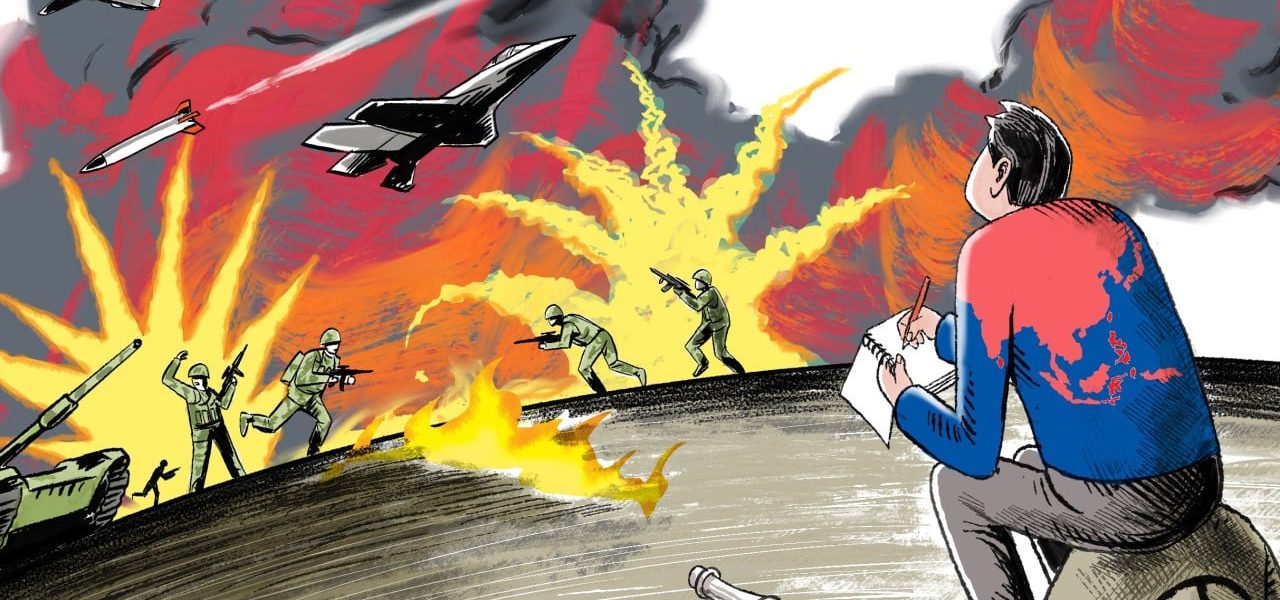
POLICY WIRE — Singapore, Republic of Singapore — For all the talk of a new world order, some things never change: rich nations fight, poorer ones pay the price, and everyone else just tries to figure out whose side they’re on before the dust settles. It’s a harsh truth, this one, but it’s how global politics usually shakes out. Here in Asia, you’d think we’re just students in some grand, bloody classroom—an ironic privilege, given our own regional tinderboxes.
Consider the past few years. Asia hasn’t simply been observing global flare-ups; it’s been performing a rigorous geopolitical autopsy on conflicts unfurling miles away, even as homegrown tensions simmer. From the battlefields of Ukraine, sparking in 2022, to the desolate stretches of Gaza—a humanitarian catastrophe that continues to rip through the global conscience—what happens on the world stage no longer feels like background noise. It hits different now. It truly does. [QUOTE_PLACEHOLDER]
We’ve been inundated, truly bombarded, with the usual narratives. We have heard every argument: Nato enlargement, Russian insecurity, Ukrainian sovereignty, European fear, American power, energy politics, sanctions, nationalism and resistance. It’s a comprehensive curriculum, no doubt, covering everything from historical grievances to the sheer, brutal mechanics of modern warfare. But this isn’t just an intellectual exercise for policy wonks in gleaming glass towers. No way. The implications are very real for Islamabad, for Delhi, for Jakarta—you name it.
And then there are the less conventional, often baffling, power moves. The United States capture Venezuela’s president and defend the act as lawful, a stark reminder of extraterritorial reach. We’ve also watched Iran absorb attacks and retaliate, its responses measured, its resolve hardened—a calculated dance of deterrence in a region that’s been on edge for decades. These aren’t just isolated incidents. They’re data points, etched into the collective memory of leaders and strategists across the Asian continent, illustrating how quickly geopolitical norms can unravel and how international law can feel, well, a little flexible depending on who’s interpreting it.
The lesson for nations like Pakistan, navigating a complex web of alliances — and rivalries, is particularly stark. For a country that shares borders with Afghanistan and Iran, and maintains a historically delicate relationship with its nuclear neighbor India, the stakes couldn’t be higher. Regional stability, economic development, even daily life for its 240 million citizens, hangs on geopolitical currents. They’re acutely aware that economic shocks ripple out fast. Rising energy prices or disruptions in trade routes hit nations with developing economies like Pakistan disproportionately hard. It’s not just abstract strategy; it’s about bread — and butter.
Because ultimately, these distant events aren’t distant anymore. For Asians, these are no longer distant events. They’ve become mirrors, reflecting potential futures or, worse, echoing past scars. Leaders here aren’t just passively watching; they’re trying to decode patterns, searching for predictive insights. How do you maintain autonomy when superpowers flex? How do you secure trade routes when the seas become contested? It’s a dizzying calculus.
📄 POLICY WIRE WHITEPAPER PUBLISHED: PAKISTAN'S NATIONAL SECURITY POLICY PRIORITIES
👉 READ BY CLICKING HEREWe’re talking about resource competition, trade shifts, defense posture re-evaluations—all playing out against a backdrop of escalating global military spending. Global military expenditure hit an all-time high of $2.44 trillion in 2023, according to SIPRI data, a jump not seen in decades. What does that tell you? People aren’t just talking about peace; they’re gearing up for something else. That spending impacts everything, even a country’s ability to focus on domestic challenges.
It isn’t just about conventional warfare, either. Consider the digital domain. Information wars are increasingly critical—blurring the lines between information and weapon, fact and fabrication. That affects perception. It affects public opinion. It molds policy from within.
What This Means
The strategic absorption of lessons from afar marks a maturation for Asia. This isn’t a new cold war—that phrase feels tired, doesn’t it? It’s a poly-polar struggle, where the rules are fluid, — and traditional alliances mean less than agile positioning. Asian leaders aren’t buying the simplicity of black-and-white narratives peddled by Western or Eastern blocs. They’re observing the direct correlation between global disruptions and their own domestic stability—energy prices, supply chain snags, financial markets all dancing to distant drumbeats.
Economically, it means a calculated shift towards diversification: new trade partners, bolstered local manufacturing, and shoring up food and energy security. No one wants to be caught off guard. Politically, expect a more pronounced emphasis on non-alignment, or perhaps a transactional alignment, rather than ideological fealty. But it’s messy. South Asian nations, including Pakistan and India, are juggling traditional ties with Russia for military hardware and energy, even as they court closer relationships with the West for economic investment and technology. Delhi’s own resource plays highlight this intricate dance. For Muslim-majority nations, the suffering in Gaza presents a powerful, emotionally charged impetus to reform international legal structures—or, failing that, to develop robust, independent foreign policies that project their own regional interests and collective concerns more forcefully. This isn’t academic anymore; it’s survival.