


Digital Dustup: Kenyan Senator Becomes Pawn in Africa’s Online Information War
POLICY WIRE — Nairobi, Kenya — It started, as it so often does these days, with a few viral posts. Just some blurry photos, recycled from yesteryear, purporting to show a prominent Kenyan senator — a...

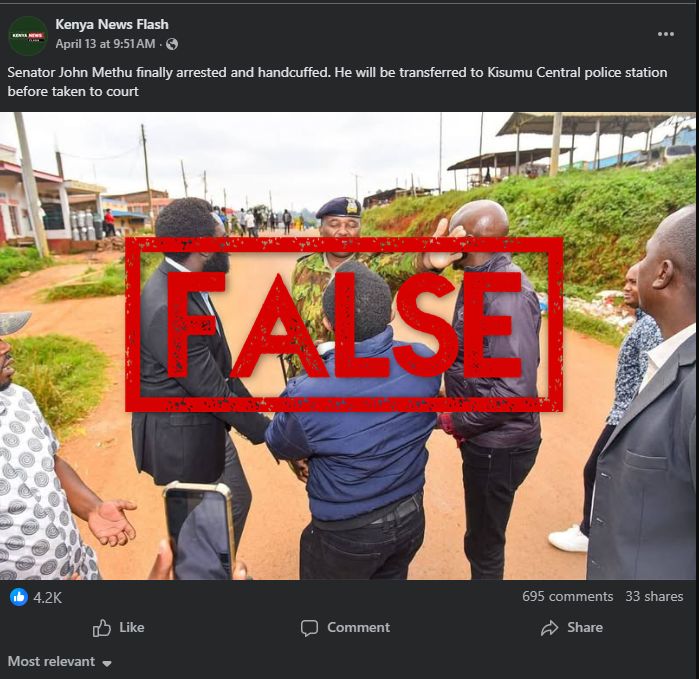
POLICY WIRE — Nairobi, Kenya — It started, as it so often does these days, with a few viral posts. Just some blurry photos, recycled from yesteryear, purporting to show a prominent Kenyan senator — a vocal critic of President William Ruto’s administration, no less — being hauled off by grim-faced police officers. The accompanying text screamed arrest, retribution, political theater of the highest order. It was the sort of narrative tailor-made for frenzied shares, for outrage, for a digital firestorm. Only one problem: it was a complete fabrication. The senator, it turns out, was busy conducting legitimate legislative business, quite unmolested, and miles away from any precinct.
This isn’t just about a senator not getting arrested when some wished he had; it’s a peek into the increasingly murky waters of African digital politics. Political figures here—especially those bold enough to challenge the powers that be—routinely find themselves in the crosshairs of elaborate online campaigns. And these aren’t just whispers in a dark alley; we’re talking full-blown, technologically aided deception designed to sway public opinion, sometimes violently.
Because the stakes are perpetually high in Kenya’s boisterous political arena, these manufactured ‘incidents’ carry real weight. The targeted senator, known for his acerbic critiques and significant grassroots following, quickly dismissed the claims. But the damage, fleeting as it might seem to a savvy observer, often settles into the collective unconscious, contributing to a broader narrative of instability or, conversely, government overreach.
“These grotesque distortions of reality aren’t just innocent mistakes; they’re calculated jabs in an ongoing information war,” commented Kenyan Government Spokesperson, Dr. Muthoni Mwangi, to Policy Wire. “We’ve seen a distressing uptick in the deliberate spread of misleading content. It doesn’t just destabilize individuals; it erodes the public’s trust in legitimate institutions. That’s a slow poison for any young democracy, — and frankly, we’re all poorer for it.” Dr. Mwangi’s frustration, frankly, feels justified.
And it’s not like Kenya operates in a vacuum here. This brand of digital mischief has echoes globally. Consider how quickly doctored images or decontextualized videos can shape public perception even in societies supposedly saturated with credible news sources. For a country like Pakistan, for instance, where political discourse often runs hot and traditional media faces its own challenges, such tactics aren’t just common—they’re weaponized, frequently deployed to paint opposition figures or dissenting voices in a villainous light. It becomes part of a broader struggle for narrative control, an invisible hand on the reins of public sentiment, dictating who’s friend and who’s foe, or who’s a victim and who’s a perpetrator.
It’s an alarming trend. According to a 2023 survey conducted by the Afrobarometer network, nearly 60% of social media users across 39 African countries report encountering ‘fake news’ at least a few times a week, and over a third admit they often find it difficult to determine the truth. That’s a lot of folks swimming in misinformation, isn’t it?
But the persistent use of old photographs or rehashed clips, even if easily disproven, keeps working. Why? Because the internet loves a spectacle, it loves controversy, — and it rewards immediacy over accuracy. There’s always an algorithm keen to push something emotionally charged straight to the top of your feed.
Professor Elias Khumo, a prominent media studies expert at the University of Cape Town, didn’t pull any punches either. “What we’re seeing is a digital degradation of political discourse. It isn’t just about debunking a false photo. It’s about fighting a hydra-headed monster where, as soon as you chop off one head, two more pop up on some other platform, maybe with a new hashtag or a slightly altered caption.” He’s not wrong; it’s a whack-a-mole game nobody seems to be winning right now. The continuous pressure of online attacks often forces genuine policy discussions offline, effectively stifling robust debate in the public square. It shapes international perceptions too—a sort of constant low-grade political fever that suggests instability, no matter what’s truly happening on the ground.
What This Means
The proliferation of deliberate misinformation, whether concerning a falsely arrested Kenyan senator or the broader political narratives in the Asian geopolitical chessboard, signals a dangerous shift in political campaigning. This isn’t just about PR anymore; it’s about digital warfare, influencing everything from market sentiment to voter turnout. For emerging democracies in Africa, particularly those already grappling with institution-building, the constant onslaught of manufactured news eats away at public trust. It makes governance harder, dissent more perilous, — and electoral processes vulnerable to manipulation. Investors, always wary of political instability, might pause before committing resources to a region where perception can be so easily warped by an online rumor mill. The economic implications are real; stability—or the perception of it—drives foreign capital, and constant digital dustups breed uncertainty.
it strains the social fabric. When citizens can’t distinguish credible news from outright lies, society’s ability to respond coherently to real challenges—be they economic hardship or public health crises—becomes severely hampered. The long-term impact? A populace increasingly cynical, a political class constantly on the defensive, and genuine public debate lost in a cacophony of carefully crafted noise. The line between satire — and manipulation blurs, which isn’t great for anyone hoping to make sense of the world.