


Diplomatic Dead End: Bolton Declares No ‘Lasting Solution’ for US-Iran Stalemate
POLICY WIRE — Washington, D.C. — They say hope springs eternal, but not, it seems, when it comes to the intricate, often frustrating, dance between the United States and Iran. For decades, the two...

POLICY WIRE — Washington, D.C. — They say hope springs eternal, but not, it seems, when it comes to the intricate, often frustrating, dance between the United States and Iran. For decades, the two nations have been locked in a geopolitical embrace, more chokehold than tango. And now, a veteran of America’s foreign policy establishment has cut straight to the bone, dismissing any grand illusions of a permanent truce.
It’s not often you hear such stark, almost brutal, assessments aired so plainly. The long-held fantasy—that a perfectly crafted deal, a clever concession, or a fresh round of talks could somehow fundamentally reshape relations—appears to have been quietly, but definitively, shelved by some powerful voices. It’s a bitter pill, perhaps, for those who championed past diplomatic overtures, a testament to just how deeply entrenched the animosity remains.
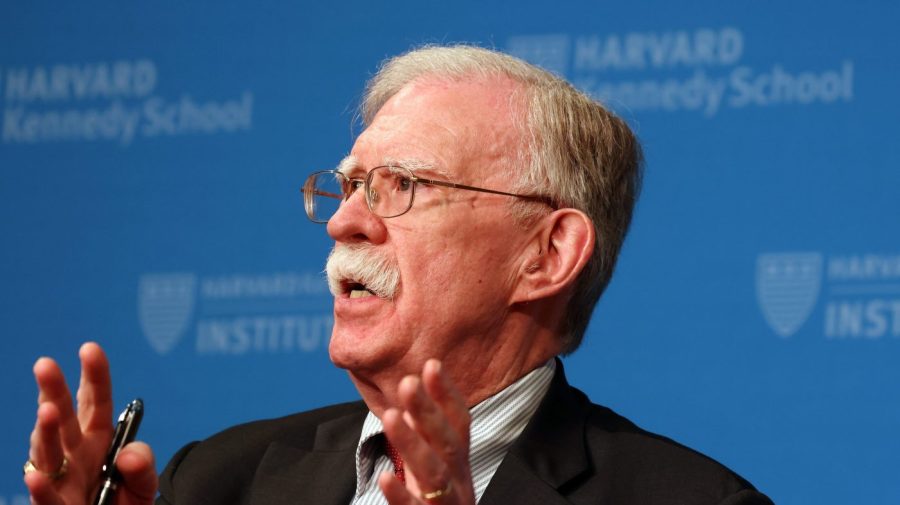
Former National Security Advisor John Bolton—a man whose worldview leaves little room for nuance or compromise when it comes to America’s perceived adversaries—articulated what many inside the beltway already suspected. He stated that for US relations with Iran, there’s [QUOTE_PLACEHOLDER]. A declaration like that doesn’t just pass through the news cycle quietly. No, it reverberates. It tells you where a significant, influential faction stands. But more than that, it sketches out a future where escalation, or at best, an uncomfortable détente, seems the only path. Diplomacy isn’t failing; in this view, it was never really destined to succeed.
This isn’t about hawkish rhetoric for its own sake—though Bolton’s known for that, don’t get it twisted. It’s a pragmatic, albeit grim, outlook on a relationship fraught with religious ideology, proxy wars, and a deeply felt sense of historical grievance on both sides. From Tehran’s perspective, U.S. actions, sanctions, and interventions are not merely policy disagreements; they’re direct affronts to sovereignty and dignity. They’re part of a longer narrative stretching back to the 1953 coup, an era the younger generations still get taught in school. We can’t forget that.
So, where does this leave us? Not on the brink of war, necessarily, but certainly on a long road where mutual suspicion is the primary currency. For every overture, there’s a countermove. For every sanction, there’s a clandestine effort to circumvent it. A UN report from 2023 indicated that despite stringent international sanctions, Iran’s oil exports reached a five-year high in March 2023, averaging 1.45 million barrels per day, demonstrating their resilience and ability to find new markets, predominantly in Asia. This just underscores the limits of purely punitive measures without a broader strategic context.
But consider the ripple effects, too. It’s not just a U.S.-Iran problem. Far from it. Pakistan, for instance, shares a border with Iran—a tricky, often porous one. For Islamabad, balancing its own deeply complex relationship with Washington while managing a volatile neighbor is a tightrope act. They’re acutely aware of anything that heightens regional instability. A perceived lack of diplomatic options between Washington and Tehran means an increase in security challenges on Pakistan’s western flank. It means heightened sectarian tensions, a possible influx of refugees, and a harder sell for any potential energy deals. It’s not just abstract policy; it’s boots on the ground, or rather, the border.
📄 POLICY WIRE WHITEPAPER PUBLISHED: PAKISTAN'S NATIONAL SECURITY POLICY PRIORITIES
👉 READ BY CLICKING HEREAnd what about the wider Muslim world? From North Africa to Southeast Asia, Washington’s stance on Iran shapes perceptions. When hardline views prevail, it fuels narratives of Western hostility and interventionism, complicating America’s strategic efforts with other Muslim-majority nations. It’s a feedback loop, isn’t it? Mistrust feeds policy, which then breeds more mistrust.
Because frankly, it’s a hell of a bind. There are no easy outs. And sometimes, you just have to admit it. Bolton’s candor—or perhaps, his dismissal—forces us to look beyond the immediate headlines and consider the deeper, structural issues that have defined, and likely will continue to define, this relationship. No magical reset button, no sudden ideological alignment. Just the grim grind of realpolitik, with few visible exits.
What This Means
Bolton’s blunt assessment isn’t just one man’s opinion; it’s a stark forecast from a prominent former policymaker, likely reflecting a significant, albeit quiet, consensus within hawkish foreign policy circles in Washington. It suggests a future where the U.S. adopts a posture of containment, potentially deterrence, over genuine engagement or resolution with Tehran. This isn’t a recipe for quiet coexistence. Instead, it hints at prolonged geopolitical friction, marked by economic pressure, cyber skirmishes, and a persistent shadow war, particularly across the Middle East. It removes the pressure for robust diplomatic innovation, potentially ceding ground to more confrontational approaches.
Economically, this outlook ensures that Iran will remain a pariah state for most international financial systems, impacting global oil markets and hindering post-conflict reconstruction efforts across the region. Countries like China and India will likely continue their pragmatic, resource-driven engagement with Tehran, side-stepping Western sanctions wherever feasible. But that kind of activity remains risky, limiting true economic integration. On the political front, it solidifies Iran’s isolation but also strengthens its internal hardliners, who can continually point to external threats as justification for their repressive policies and ambitious regional agenda. For regional players like Saudi Arabia and the UAE, this suggests a continuation of indirect confrontation and a constant rebalancing act, possibly accelerating their own moves towards greater strategic autonomy or seeking alternative security guarantors. It just means more tension. It’s a never-ending chess match where nobody’s really winning—just not losing, for now. One could argue it complicates efforts to address global information warfare challenges, as narratives become even more entrenched.