


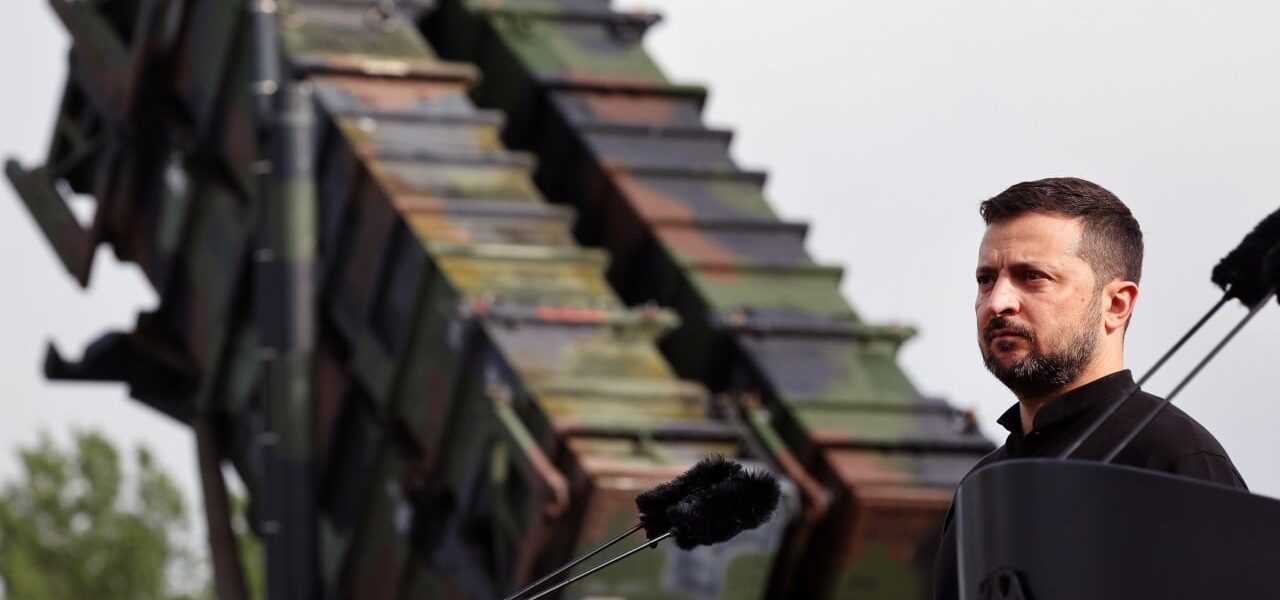
Japan’s Pacifist Stance Challenged by Ukraine’s Patriot Missile Request
Japan faces a complex dilemma as Ukraine seeks collaboration on Patriot missile production, testing Tokyo's adherence to pacifist policies and regional relations.

POLICY WIRE — Tokyo, Japan — Japan’s steadfast support for Ukraine amid its conflict with Russia is set to face a significant test following Kyiv’s expressed interest in collaborating with Tokyo to produce Patriot interceptor missiles. This proposal, however, is deemed improbable due to the stringent limitations Japan imposes on the export of lethal weapons, a stance rooted in its post-World War II pacifist constitution.
Analysts suggest that such a collaboration would necessitate Japan crossing a delicate threshold regarding the export of lethal arms, potentially complicating its regional diplomatic relations. Ukrainian President Volodymyr Zelensky indicated last week that Kyiv is eager to partner with Japan’s Mitsubishi Heavy Industries for the manufacturing of Patriot missiles.
“Japan has consistently shown its support for Ukraine, but this request poses a unique challenge,” said a Japanese government official, speaking on condition of anonymity due to the sensitivity of the issue. “Our pacifist principles — and regional security considerations make this a highly intricate matter.”
The Patriot missile system, developed by Raytheon Technologies, is a sophisticated air and missile defense system utilized by numerous countries, including the United States and several NATO allies. Ukraine has repeatedly sought advanced military assistance to bolster its defenses against Russian aggression.
Mitsubishi Heavy Industries, a leading Japanese conglomerate with a robust defense sector, hasn’t issued an official statement regarding the potential collaboration. However, industry experts note that any such partnership would require rigorous scrutiny and approval from Japan’s Ministry of Defense and other relevant authorities.
The request comes at a time when Japan is gradually reassessing its defense posture in response to evolving regional security threats. Tokyo has recently taken steps to enhance its military capabilities and engage in defense cooperation with like-minded nations. Nevertheless, the production and export of lethal weapons remain highly contentious issues within Japanese domestic politics.
Regional stakeholders, including China and South Korea, are likely to closely monitor Japan’s response to Ukraine’s request. Both countries have historically expressed concerns over any expansion of Japan’s military capabilities, given the lingering historical animosities and security dynamics in East Asia.
As Japan navigates this complex geopolitical landscape, the outcome of Ukraine’s request will offer insights into Tokyo’s commitment to supporting Kyiv while adhering to its pacifist principles. The decision is expected to have broader implications for Japan’s defense policy and its role in international security arrangements.
Reporting by Policy-Wire (PW)