

Petrodollar Pedigree: Champions League Final Proves Gold Trumps Grit, Altering Global Sport’s Ledger
POLICY WIRE — London, UK — There’s something undeniably poetic, if a little predictable, about a financial behemoth finally claiming its long-sought prize. Last weekend’s Champions League...

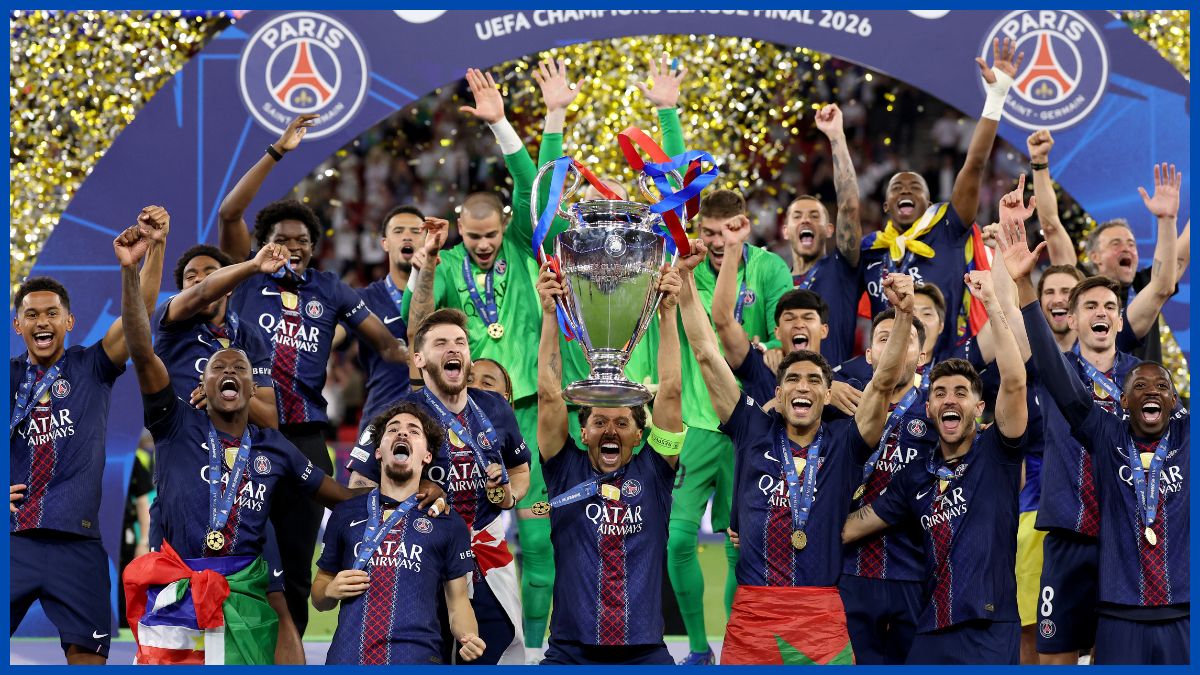
POLICY WIRE — London, UK — There’s something undeniably poetic, if a little predictable, about a financial behemoth finally claiming its long-sought prize. Last weekend’s Champions League final, where Paris Saint-Germain bested Arsenal after a grueling penalty shootout, wasn’t merely a contest of tactical nous or athletic prowess. No, it served as a rather blunt, occasionally ugly, demonstration of how petrodollar power continues to rewrite the rules of global football—and, by extension, international influence.
It wasn’t quite the glittering spectacle UEFA brass had perhaps envisioned, not the free-flowing attacking masterclass many tune in for. But then again, expecting pure artistry when state-backed ambition goes head-to-head with more traditional club economics is like expecting a quiet dinner party from a summit of G20 leaders. Former Chelsea and France defender Franck Leboeuf, known for his straight talk, put it plainly enough to Get French Football News: “The best team won. Football won as PSG came out on top.” He grudgingly conceded it was “a cagey game,” crediting Arsenal for reaching the final, but observed, “once they got ahead, they struggled to play their game and PSG were in control of the ball for most of the game.” It’s hard to argue with control, even when it’s sterile.
And what control it was. PSG’s triumph felt less like a conquest — and more like an investment finally yielding its intended return. This wasn’t some plucky underdog tale. This was the culmination of more than a decade of strategic acquisitions, astronomical transfer fees, and salaries that would make a small nation’s GDP look like pocket change. Their ascent reflects a broader trend, a relentless flexing of economic muscle by nations eager to diversify, to polish their international image, and to assert a form of soft power that speaks volumes beyond traditional diplomacy.
Because, really, when you peel back the layers of sporting fervor, this is about something much bigger than goals and saves. It’s about how national wealth funds are reshaping entertainment industries, leveraging vast capital to capture global attention. Consider it a price of gridiron ambition played out on the European stage. PSG’s Qatari ownership—the Qatar Sports Investments—has spent literally billions chasing this particular trophy. It’s not just a commercial venture; it’s a statement, broadcast worldwide. Their ultimate victory, then, becomes a symbol of endurance, yes, but more so, of sheer, overwhelming financial might. It says to the world: ‘We can outlast, outbid, — and ultimately, outperform, because we can afford to.’
That message resonates particularly keenly across vast swathes of the globe, including nations like Pakistan, where European football commands an almost religious following. Millions in Karachi or Lahore might never step foot in a European stadium, but they’re glued to screens, witnessing these contests unfold. The narrative of an Arab-backed club, lavishly funded, finally reaching the pinnacle, carries a unique weight there. It connects not just through sport, but through shared cultural and economic ties—a testament to a rising influence from the Muslim world in global spheres.
And the numbers? They speak for themselves. UEFA’s Champions League final drew an estimated global audience of 450 million viewers last season, according to UEFA reports, making it one of the most-watched annual sporting events worldwide. That’s an astonishing platform. It’s where geopolitical rivalries play out quietly in viewership battles — and sponsorship deals.
Jean-Luc Dubois, the erstwhile Head of European Club Governance at FIFA—now a consultant, perhaps for ‘unaffiliated’ investment funds—remarked off the record last month: “Look, the landscape has fundamentally shifted. Traditional models are struggling to compete with entities whose budgets aren’t tethered to annual turnover but to sovereign wealth. It’s not just about football; it’s about branding an entire nation.” But he’s not wrong. Arsenal, a club with a long and storied history, relies on a more conventional—some might say quaint—financial structure. Against PSG’s seemingly bottomless coffers, their effort, while commendable, often felt like bringing a very sharp knife to a cannon fight.
What This Means
This result signals a deeper entrenchment of state-affiliated capital in Europe’s most prominent sport. We’re witnessing not just a sporting evolution, but a profound economic reordering. For nations like Qatar, investments in global sports assets—whether it’s a World Cup bid, an airline sponsorship, or outright club ownership—serve as incredibly potent instruments of soft power, redrawing the chessboard of international diplomacy and perception. It helps insulate them from criticism, projects an image of modernity and dynamism, and offers a substantial return in global influence. Other nations are watching, meticulously calculating the cost-benefit analysis.
For traditional clubs — and their fans, it means an increasingly unequal playing field. The romance of sport, often touted as a meritocracy, now finds itself battling the stark realities of hyper-capitalism. Can pure footballing acumen ever truly trump an essentially unlimited war chest? This final suggests a bleak answer for purists. We’re moving towards an era where championship contention becomes less about identifying and developing talent, and more about acquiring it at any cost, wherever it may be found. And don’t imagine this trend is going to reverse itself. It’s only accelerating.