
Europe’s Next Horizon: Franco-German Balkan Push Faces Formidable Ghosts
POLICY WIRE — Brussels, Belgium — Well, bless their hearts. Just when you thought the bureaucratic machinery of the European Union couldn’t spin another weary platitude, Germany and France have...

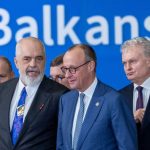
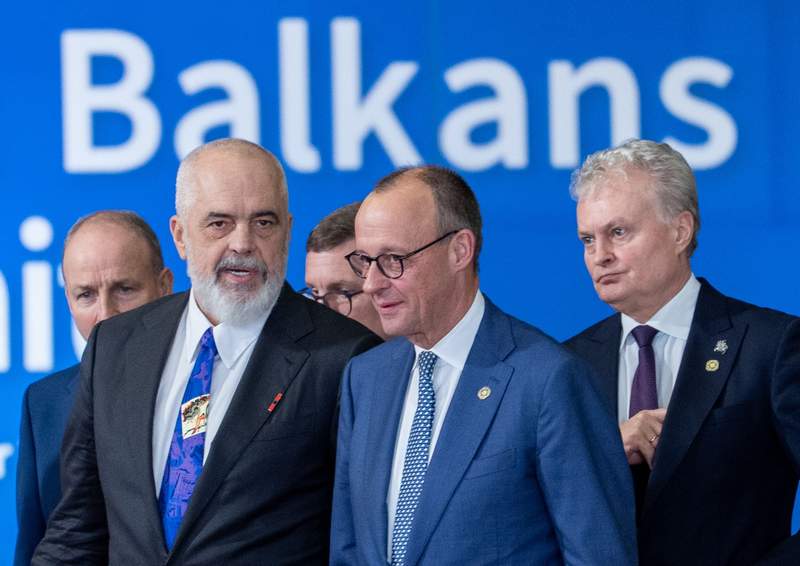
POLICY WIRE — Brussels, Belgium — Well, bless their hearts. Just when you thought the bureaucratic machinery of the European Union couldn’t spin another weary platitude, Germany and France have decided to resurrect one of the bloc’s most enduring, and often disheartening, sagas: the Western Balkans’ long-delayed embrace into the European fold. This isn’t new territory, mind you. But at an upcoming summit, Paris and Berlin aren’t just musing about membership; they’re reportedly gearing up to launch a concerted push, betting that renewed urgency will finally get things moving. Hope springs eternal, or perhaps, desperation sets in.
It’s an effort born of pragmatic geopolitics as much as European idealism. With Russia casting a menacing shadow and China making its economic inroads — buying up ports, investing in infrastructure — the continent’s long-standing hesitancy towards its southern flank suddenly looks a lot more like strategic negligence. It’s like discovering the basement door was left ajar after noticing a sudden chill. These nations, many of which still wrestle with the specter of 1990s conflict, aren’t just next door; they’re part of Europe’s very fabric, even if the richer west has often acted like they’re a distant, slightly embarrassing cousin.
“Frankfurt doesn’t exactly hold the keys to all European gates, but Berlin is convinced stability for the whole continent means a path, a clear path, for our neighbors,” mused Anja Schmidt, a senior diplomat at the German Foreign Office, over a decidedly strong coffee. “We can’t afford pockets of instability when larger, much less benign, forces are at play. It’s a security imperative, plain — and simple.” And she isn’t wrong. The EU’s enlargement fatigue has been a gaping wound, allowing other players to assert influence.
But it’s never just ‘plain — and simple,’ is it? Paris, always a more skeptical spouse in this particular European marriage, sees it through a distinctly reformist lens. “Paris isn’t in the business of offering blank checks,” stated Jean-Luc Dubois, an Elysée advisor on European affairs, with characteristic Gallic pragmatism. “Integration requires serious homework — judicial reform, economic transparency. Anything less isn’t integration; it’s just wishful thinking that threatens the very core of what we’ve built. We’ve learned that lesson, haven’t we?” Dubois refers, of course, to previous enlargements where enthusiasm occasionally outran diligent oversight.
The road ahead for nations like Albania, Bosnia and Herzegovina, Kosovo, Montenegro, North Macedonia, and Serbia is littered with genuine hurdles. Corruption persists. Rule of law can be, shall we say, aspirational. Nationalist narratives still hold sway, flaring up every so often — because old animosities, like a persistent cough, always seem to return. And Brussels itself, despite its newfound vigor, remains a notoriously slow beast. According to the European Commission’s own figures, Montenegro, for instance, opened accession negotiations in 2012 — over a decade ago — and has only provisionally closed three out of 33 negotiation chapters. That’s not exactly express service, is it?
For nations like Pakistan, navigating its own complex geopolitical neighborhood, the EU’s on-again, off-again relationship with the Western Balkans offers a fascinating, if sometimes bewildering, case study. The idea of regional blocs forming and reforming, facing external pressures and internal resistance, resonates across the Muslim world. The aspiration for greater economic integration, tempered by questions of sovereignty and the enduring legacy of conflict, isn’t a uniquely European phenomenon. And how the EU handles its Muslim-majority populations, both domestically and through countries like Bosnia, certainly doesn’t escape attention in Islamabad or Ankara. The bloc’s success, or failure, in creating genuine pluralism within its borders isn’t just an internal European matter; it shapes global perceptions of integration models.
📄 POLICY WIRE WHITEPAPER PUBLISHED: PAKISTAN'S NATIONAL SECURITY POLICY PRIORITIES
👉 READ BY CLICKING HEREWhat This Means
This Franco-German re-commitment, while superficially positive, exposes the deeper contradictions inherent in the EU’s approach. On one hand, there’s the genuine need to solidify Europe’s perimeter against burgeoning authoritarian influences, to prevent what’s been termed “geopolitical gray zones.” On the other, the EU’s capacity for absorption is finite, and the appetite for tackling endemic corruption or deeply rooted ethnic grievances among member states remains low. Financial aid alone won’t bridge the chasm. The economic burden of integrating these often poorer economies would be substantial, leading to predictable grumbling from net contributors.
But the alternative—allowing Moscow or Beijing to fill the void—is arguably far worse. So, this isn’t just about charity or an abstract commitment to enlargement; it’s a strategic gambit, an attempt to solidify a sphere of influence and prevent future crises at home. The timing certainly feels tied to renewed Russian aggression, much like how the Kremlin’s actions often trigger reassessments across the global economic chessboard. [The Kremlin’s Grand Economic Theater]. But that means the pressure for true internal reform within the candidate states won’t just come from Brussels anymore; it’ll be fueled by a frantic European fear of having another volatile neighbor.
The danger, as ever, lies in overpromising — and under-delivering. Many in the Balkans have heard this tune before, a chorus of encouragement followed by years of excruciatingly slow progress. For some, skepticism has curdled into genuine cynicism. And who can blame them? Maintaining democratic momentum in countries that often feel ignored, despite rhetoric to the contrary, is an uphill battle. This renewed push isn’t about making friends; it’s about making neighbors more stable, even if the neighbors themselves remain wary of Europe’s often erratic affection.