
Moscow’s New Luxe Lane: China’s Hongqi Guoya Rolls Into a Redefined Russian Reality
POLICY WIRE — Moscow, Russia — Forget the Maybachs, the Rolls-Royces. They’re yesterday’s status symbols, banished echoes of a world that — well, it doesn’t quite exist here...

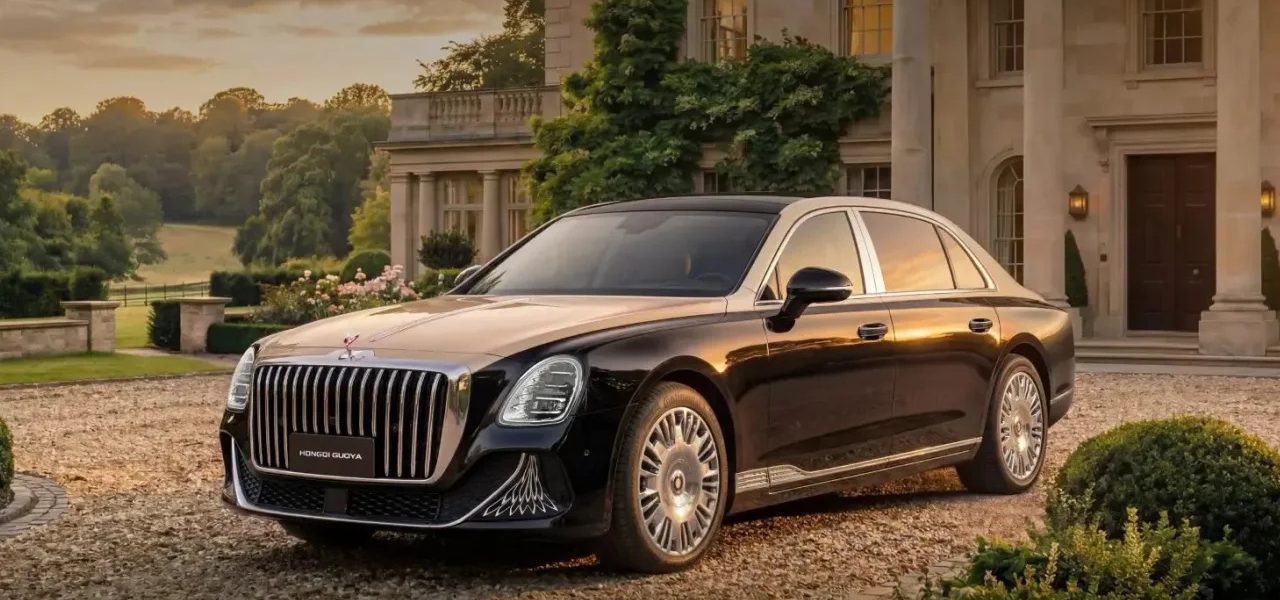
POLICY WIRE — Moscow, Russia — Forget the Maybachs, the Rolls-Royces. They’re yesterday’s status symbols, banished echoes of a world that — well, it doesn’t quite exist here anymore, does it? Today, the quiet hum on the exclusive streets of Moscow, past the gilded domes and the Kremlin walls, belongs to something altogether different. Something undeniably Chinese. This isn’t just about a new car model; it’s about what the arrival of the Hongqi Guoya, an ultra-luxury sedan with a sticker price pushing 40 million rubles (roughly $430,000 at current exchange rates), whispers about a fractured global order. It’s a bold statement, isn’t it?
It’s now officially the priciest China-made vehicle to hit the Russian market. And, let’s be blunt, it isn’t merely filling a gap left by BMW or Mercedes’ retreat. This isn’t just economics; it’s geopolitical swagger on four wheels. The vehicle itself is a behemoth, a land yacht dripping with chrome and ambition, designed for heads of state and the obscenely wealthy, no doubt. But its journey from Beijing to Moscow is a more compelling narrative than its horsepower. Because it paints a picture of deliberate de-Westernization, a stark pivot away from traditional allegiances, both commercially and diplomatically.
And people are talking. Dmitry Lebedev, an economic advisor to Russia’s Ministry of Industry and Trade, didn’t mince words when pressed on the influx of Chinese goods. “This isn’t about replacing one dependency with another, not really,” Lebedev told Policy Wire, a subtle smirk playing on his lips. “Our market dictates quality, ingenuity, and a certain—prestige. Our partners understand that now.” It’s a convenient re-framing of necessity as choice, a diplomatic sleight of hand we’ve grown accustomed to, frankly. The numbers back it up too, a bit. According to a recent analysis by Russia’s Federal Customs Service, Chinese automotive imports surged by over 400% in 2023, completely reshaping the landscape of their vehicle market.
But how do Chinese manufacturers see it? Their ambitions stretch far beyond Russia’s borders. Chinese Ambassador to Moscow, Zhang Lin, painted a grander canvas. “This represents the maturing of our global partnerships and the robust confidence our brands inspire internationally,” Ambassador Zhang stated in a recent press briefing, echoing sentiments about burgeoning trade routes and a ‘win-win’ dynamic. They’re not just selling cars; they’re solidifying an alternate trade network, one that sidesteps Western sanctions regimes with deft ease. This high-end vehicle is a show of force, a declaration of intent for Beijing: we can do luxury, and we’ll sell it to whomever wants it.
The implications aren’t confined to Russia’s elite circles. Think about it: a rising China, emboldened by its manufacturing prowess and its growing influence, offers alternatives not just to sanctioned nations but to anyone looking for new supply chains or less ideologically constrained trade partners. This extends far beyond cars. Consider its extensive Belt and Road Initiative (BRI), stretching through Pakistan and into the wider Muslim world. The financial flows, the infrastructure projects, the deepening economic ties – it all serves to re-route global commerce and create new economic blocs. It’s a calculated chess move, playing out on highways in Central Asia, ports in the Arabian Sea, and now, luxury dealerships in Moscow. Many nations, from Pakistan to Gulf states, observe Russia’s dance with China, perhaps seeing both a blueprint and a cautionary tale.
📄 POLICY WIRE WHITEPAPER PUBLISHED: PAKISTAN'S NATIONAL SECURITY POLICY PRIORITIES
👉 READ BY CLICKING HEREIt’s a complicated picture. For Moscow, this influx of premium Chinese brands provides a visible sign of economic resilience—or at least a very good impression of it—after the exodus of European automakers. The domestic industry, such as it’s, simply can’t churn out anything comparable. For Beijing, it’s market penetration at its most strategic, carving out influence where Western firms fear to tread or simply aren’t welcome anymore. A mutually beneficial arrangement? Probably. A stable one? Time’ll tell.
What This Means
The Hongqi Guoya isn’t just another shiny new object for Russia’s monied class; it’s a symptom. It reveals a dramatic, arguably irreversible, reorientation of Russia’s economic axis away from Europe and towards Asia, with China squarely at its center. This shift isn’t limited to automobiles, of course. It encompasses energy, technology, — and broader geopolitical alignments. This luxurious symbol represents the formal acceptance by Russia’s elite of China as not just an alternative supplier, but a preferred, and now necessary, partner for high-end goods.
For the wider global economy, particularly for nations watching from the sidelines of the evolving great power competition—from the financial hubs of the Middle East to the bustling markets of South Asia—this underscores a critical lesson. Economic isolation, however intended, rarely results in total deprivation. Instead, it prompts creative re-routing — and fosters new dependencies. The geopolitical implication is a strengthening of the ‘no-limits’ partnership between Moscow and Beijing, one that openly defies Western efforts at economic containment. It indicates that China’s industrial and luxury capabilities have advanced to a point where they can readily step into the void left by Western brands, potentially altering future trade relationships across the globe. This car, you see, isn’t just transportation. It’s a billboard for a new world order, arriving quietly, stylishly, — and with a rather hefty price tag.