


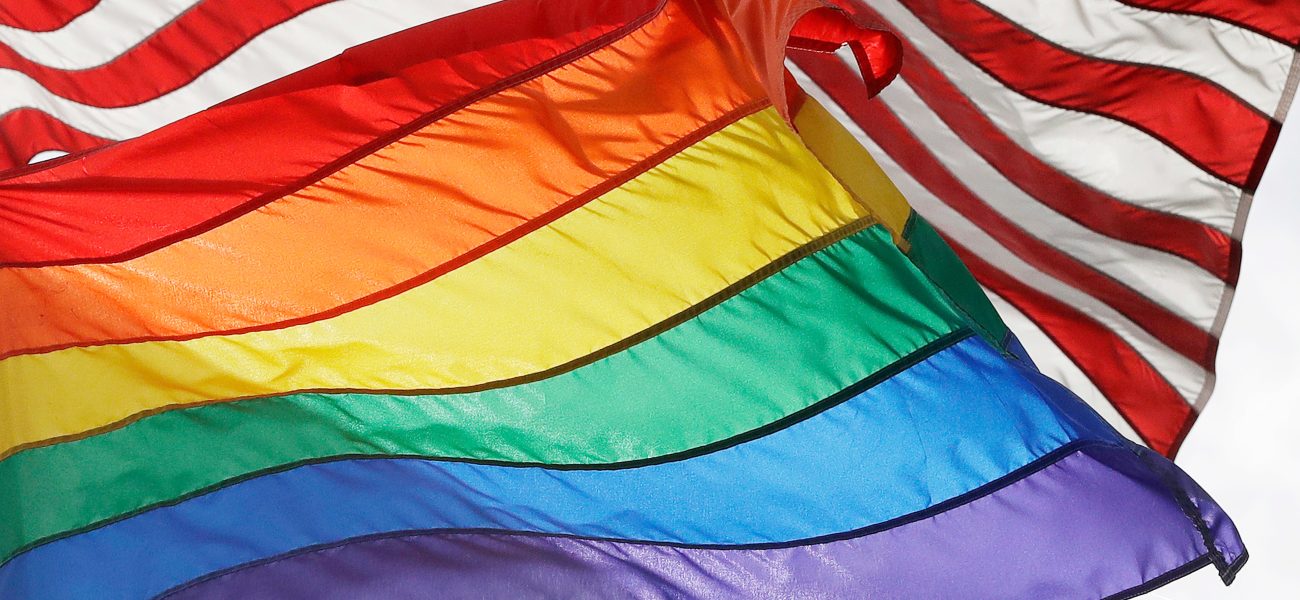
America’s Moral Compass Swivels: Why Even the Firmest Convictions Bend
POLICY WIRE — Washington D.C., USA — The granite-hewn certitudes of yesterday? They’re turning to sand beneath our feet. For generations, certain social dogmas felt like they were etched into the...

POLICY WIRE — Washington D.C., USA — The granite-hewn certitudes of yesterday? They’re turning to sand beneath our feet. For generations, certain social dogmas felt like they were etched into the very bedrock of the nation’s character, particularly when it came to personal liberties and identity. Yet, what we see now, brewing quietly but insistently in public opinion, isn’t just a slow crawl of progress; it’s a recalibration—a genuine realignment—of what a substantial chunk of the populace deems acceptable, even ordinary. And it’s happened quicker than most prognosticators dared to guess.
It used to be a given: issues touching upon sexuality and gender identity were flashpoints, guaranteed to ignite fervent, often ugly, public debates. The political landscape carved deep ideological trenches, manned by partisans convinced of their absolute moral high ground. But a recent polling snapshot, courtesy of Gallup, paints a picture of a society still grappling with nuance, but certainly not stuck. You know, just like the time I was covering a school board fight in rural Nebraska and half the parents were worried about library books while the other half just wanted better broadband. It’s never as simple as we wish it were. [QUOTE_PLACEHOLDER]
Now, when we talk about shifts, it’s not a blanket acceptance across the board—not by a long shot. Acceptance of same-sex marriage, for example, has seen an upward trajectory that would make an astronaut blush, a near-universal embrace in liberal enclaves and a surprisingly robust showing even among conservative demographics. The numbers, frankly, are staggering. Back in 1996, the support for legal same-sex marriage stood at just 27% nationally. By 2023, that figure had ballooned to 71%, according to the Public Religion Research Institute (PRRI), illustrating a seismic cultural shift over less than three decades.
But then, there’s the more complex story surrounding transgender identity. This is where the cultural rubber meets a rather confused road, isn’t it? Public sentiment, while still generally trending toward greater understanding, has hit some eddies and counter-currents. It isn’t as clear-cut, as linearly progressive, as the discourse around same-sex unions. What the numbers appear to show is an electorate—especially certain segments of it—still trying to wrap its head around the very definitions and implications. Policy discussions about bathroom access or participation in sports for trans individuals still manage to rile up crowds like a last-minute policy change at the local DMV.
And because these cultural currents don’t operate in a vacuum, their ripples extend far beyond America’s shores. Think about it. In Pakistan, for instance, same-sex relations are still deeply taboo, culturally and legally proscribed under colonial-era laws, punishable by harsh penalties. The notion of gender fluidity, while rooted in some indigenous Sufi traditions for centuries, particularly with the Khwaja Sira community—transgender individuals historically recognized, albeit often marginalized—is only now, gingerly, beginning to receive modern legal protections, though public acceptance remains largely aspirational, even oppositional. The legal landscape here has actually moved quicker than general public sentiment, making the Pakistani Transgender Persons (Protection of Rights) Act of 2018 a true anomaly on the sub-continental landscape. But when the conversation moves from recognizing historical identities to broader societal affirmation, particularly on sexual orientation, it’s like a different planet. The gap between Western progress and certain traditional interpretations, often rooted in faith and community structure, couldn’t be wider. This isn’t just a simple East-West divide; it’s a collision of deeply held beliefs with rapidly evolving social norms.
📄 POLICY WIRE WHITEPAPER PUBLISHED: PAKISTAN'S NATIONAL SECURITY POLICY PRIORITIES
👉 READ BY CLICKING HEREBut make no mistake: even in America, the journey is bumpy. These aren’t just abstract ideas; they’re profoundly personal. They’re about who we love, who we’re, and how society decides to label and legislate those fundamental aspects of existence. For many, it’s been an awakening—a necessary re-evaluation. For others, it’s felt like an unwelcome imposition, a perceived abandonment of long-held social structures. And frankly, those divergent reactions tell us a lot more about where we stand as a fragmented electorate than any single statistic ever could.
What This Means
This shifting sand of public opinion isn’t merely academic; it’s going to translate directly into policy skirmishes, political leverage, and the relentless re-writing of social contracts. Expect more localized battles—school board controversies, municipal ordinances, and state-level legislative pushes—as groups attempt to either solidify emerging acceptance or push back against what they perceive as radical social change. Because, let’s be real, despite what the headline numbers suggest, not everyone’s on board. This creates a messy, often contradictory, environment for policymakers.
Economically, there’s an increasing corporate calculus at play. Companies are finding it harder to sit on the fence, facing pressure from employees, consumers, and investors to align with progressive social values, particularly regarding LGBTQ+ inclusion. Those who drag their feet might just find themselves losing market share, or worse, facing consumer boycotts. But then, go too far too fast, and they risk alienating other consumer bases—a fine line, especially in a deeply divided country.
And for the political parties? Well, they’re navigating a minefield. Democrats broadly champion LGBTQ+ rights, using increased public acceptance of same-sex marriage as a proof point of evolving societal values. Republicans, meanwhile, face internal divisions. The more libertarian wing of the party is generally more comfortable with individual freedoms, while the social conservative base is deeply resistant to changes impacting gender identity. This split might manifest in awkward electoral strategies, or perhaps an uneasy truce that cracks open when new, polarizing issues surface. Ultimately, these numbers confirm what many have long suspected: America’s not just changing its mind; it’s redefining its conscience, one hesitant step, one determined stride, at a time. It won’t be a straight shot, but the trajectory, at least for some things, is pretty darn clear.
📖 GET YOUR FREE COPY NOW OF POLICY WIRE DIGITAL MAGAZINE JULY 2026 EDITION
👉 READ & DOWNLOAD FREE MAGAZINE