
New Mexico Sizzles: Desert Inferno Tests Policy, Parallel to South Asian Extremes
POLICY WIRE — Albuquerque, USA — Even the hardened adobe structures of New Mexico struggle against the encroaching desert. It’s an endless war of attrition, one waged not with bullets, but with...

POLICY WIRE — Albuquerque, USA — Even the hardened adobe structures of New Mexico struggle against the encroaching desert. It’s an endless war of attrition, one waged not with bullets, but with sun-blasted air and an increasingly thirsty earth. But this week, the battle intensifies, taking on an almost biblical fervor, even as most of us simply switch on another fan.
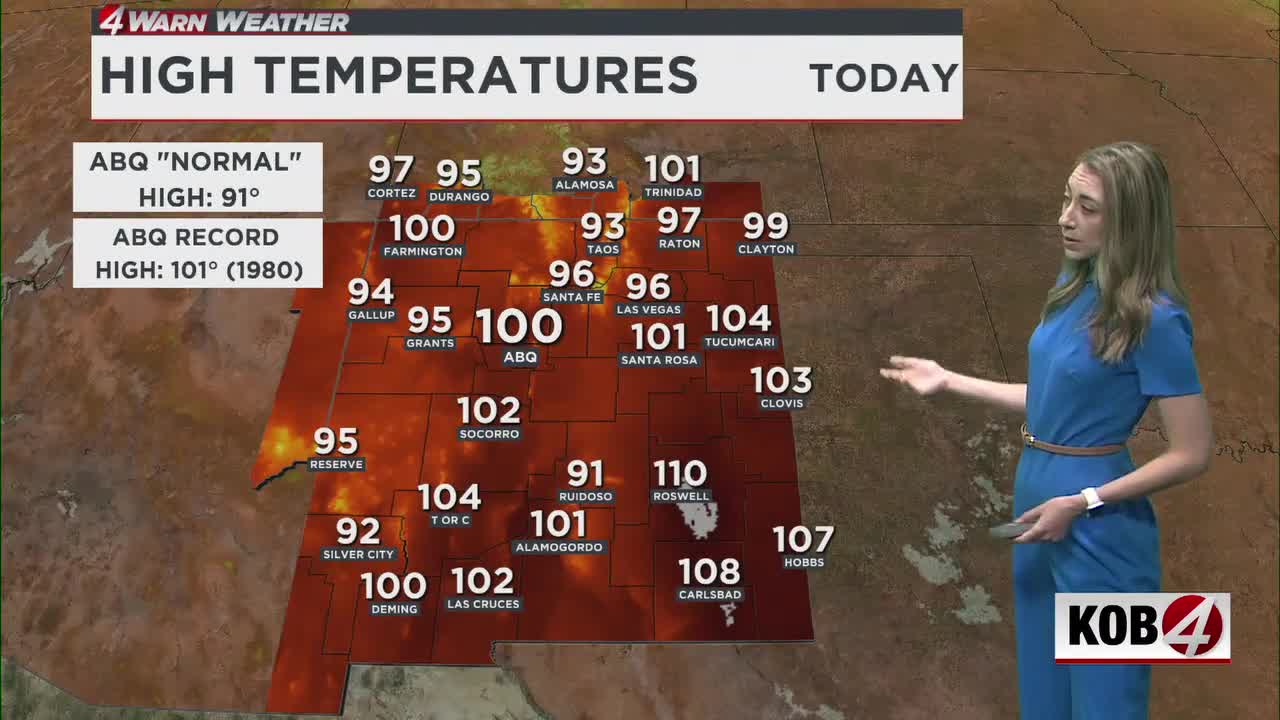
It’s not just a warm day; this isn’t your grandma’s gentle afternoon heat. We’re talking about an inferno. Officials warn it’s going to get downright toasty Wednesday afternoon in New Mexico, a prediction that feels like a gross understatement, considering the thermometer will be registering well into the 90s and even the 100s across much of the state. It’s the kind of heat that makes you wonder if the very ground beneath your feet might spontaneously combust, or at least fry an egg with zero effort. (Awaiting official quote)
The National Weather Service in Albuquerque didn’t pull any punches, slapping heat advisories across wide swaths of the Middle Rio Grande Valley, including the bustling Albuquerque Metro, as well as Quay, Curry and Roosevelt counties. These aren’t just suggestions; they’re grim declarations, active from noon till eight p.m. And believe me, that eight-hour window? It’s going to feel like an eternity. High temperatures are forecast to range between 100-105 degrees for those folks, pushing the mercury well past any reasonable comfort zone. Imagine trying to get anything done, anything at all, when the air itself feels like a hairdryer on full blast.
But the real test, the brutal, unyielding apex of this heat dome, settles over southeastern New Mexico. Eddy and Lea counties? They’ve got heat advisories stretching an hour longer, from eleven a.m. to nine p.m., because daytime highs near 110 degrees are forecast. A hundred and ten! It’s less a temperature — and more a statement of geological intent. And let’s not forget places like Roswell, Dexter — and Hagerman. Those communities are wrestling with an extreme heat warning—a phrase that probably sends shivers down the spine of anyone who’s ever had to spend a summer there.
It’s a peculiar thing, this American desert. On one hand, you’ve got advanced infrastructure, air conditioning humming in nearly every structure. On the other, the raw power of the climate often reminds us of our precarious position, an ecological fragility mirroring what less affluent nations grapple with daily. We’ll be fighting to stay cool, and yes, we’ll also be fighting strong and dry winds, with gusts ranging from 20 mph to over 40 mph. It’s a devil’s bargain—the wind offers no respite, merely stirring the already boiling air, desiccating everything it touches. Rain is possible but will be scarce, almost a cruel joke, a teasing whisper of relief that rarely materializes.
Such extreme weather isn’t unique to the American Southwest, of course. For instance, in the summer of 2022, Pakistan, a nation already navigating complex geopolitical currents, endured a heatwave so severe that temperatures in some areas soared past 51 degrees Celsius (124 degrees Fahrenheit), directly contributing to devastating floods later that year. And it forced policy makers to reckon with long-term climate adaptation strategies, particularly around water security and public health—questions that, slowly but surely, are now landing squarely on the desks of governors and city councils in places like New Mexico.
Indeed, a 2022 report by the US Centers for Disease Control and Prevention revealed that heat-related illnesses accounted for nearly 10,000 deaths annually in the United States, a grim statistic often overlooked until temperatures hit such unbearable levels. This isn’t just about feeling uncomfortable; it’s about public health infrastructure being strained, about vulnerable populations, the elderly, the homeless, agricultural workers, all teetering on the edge. Because even with our air-conditioned sanctuaries, extreme heat exposes societal fault lines in stark, uncompromising terms.
What This Means
The unfolding scenario in New Mexico, far from being just a weather report, is a potent signal of escalating climate realities, especially for arid and semi-arid regions globally. Economically, this translates to heightened energy consumption, straining regional grids and potentially driving up utility costs for residents and businesses already grappling with inflation. Agricultural output, already stressed by prolonged drought in the region, faces yet another devastating blow. Water resources—those few and precious drops—become an even more politically charged commodity. We’ve seen this play out in various permutations across North Africa, parts of the Middle East, and critically, South Asia, where seasonal monsoon variations now carry unprecedented risks. Pakistan’s perennial struggle with managing the Indus River and its tributaries, adapting to both drought and deluge, offers a chilling preview of potential future water conflicts elsewhere.
Politically, consistent extreme heat necessitates rapid shifts in urban planning, public health provisions, and emergency response—something a slow-moving bureaucracy often struggles to achieve. It challenges assumptions about habitable zones — and prompts uneasy discussions about future migration patterns. It’s not simply a matter of saying Stay Cool, people! It’s a fundamental stress test on infrastructure built for a climate that, frankly, doesn’t exist anymore. From infrastructure buckling under asphalt temperatures that could crack foundations to hospital emergency rooms overflowing with heatstroke cases, the economic and social costs are staggering and compounding. It forces a conversation not just about immediate relief, but about the profound, generational investment in adaptation and resilience—or else.
But the real long-term impact? It’s a quiet, slow erosion of community vitality. Local tourism, a critical revenue stream, becomes untenable during peak season. Outdoor labor becomes hazardous, driving up costs or, worse, leading to tragic outcomes. We aren’t just experiencing heat; we’re witnessing the early chapters of a massive policy recalibration, whether anyone admits it or not. The parallels with, say, Japan’s struggle with similar extreme weather and its economic aftermath are stark reminders that even highly developed nations aren’t immune to climate’s caprices.