


New Mexico Highlands’ Quid Pro Quo Quandary: A President’s Suit Rips Open Local Influence
POLICY WIRE — Las Vegas, New Mexico — It’s a familiar drama, playing out not in some faraway bazaar but in the ostensibly transparent halls of American higher education: the delicate dance of who...

POLICY WIRE — Las Vegas, New Mexico — It’s a familiar drama, playing out not in some faraway bazaar but in the ostensibly transparent halls of American higher education: the delicate dance of who gets what contract, and why. New Mexico Highlands University, a public institution, now finds itself embroiled in just such a scenario, courtesy of its very own top administrator.
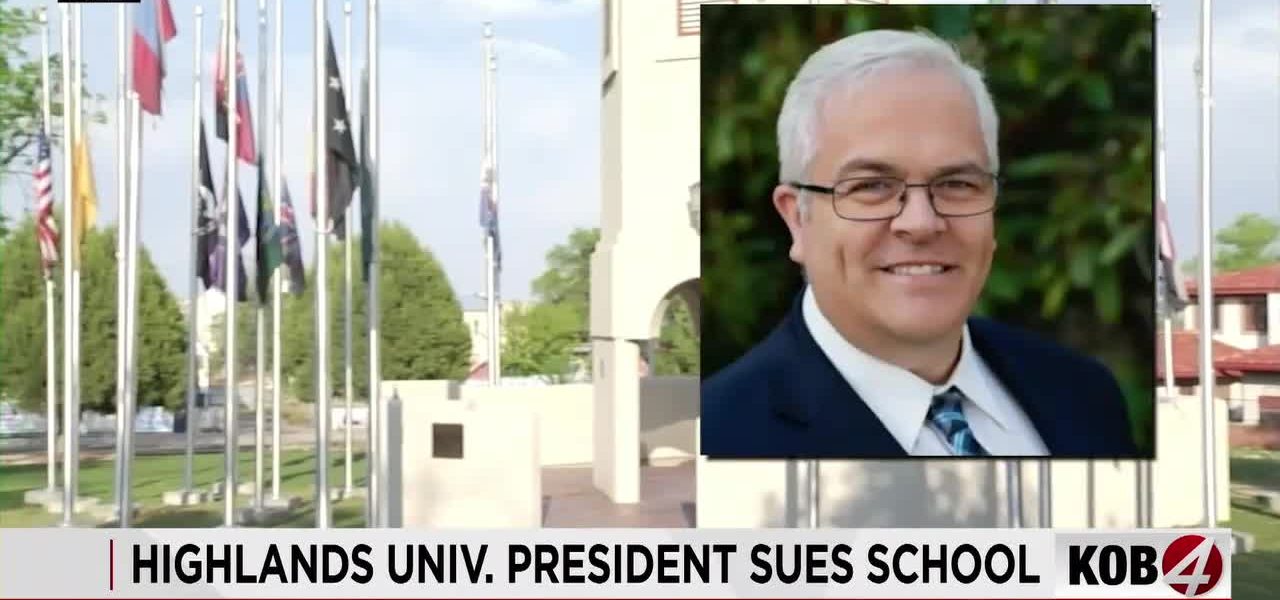
President Niel Woolf, far from quietly managing the university’s affairs, has unleashed a lawsuit that — let’s be blunt — blows a significant hole in the usual veneer of collegiate decorum. He isn’t just filing a complaint; he’s claiming the Board of Regents, through its chair, nudged him to perform a classic patronage play. The allegation? Rerouting a hefty $600,000 agreement not on merit alone, but to a crony. [QUOTE_PLACEHOLDER]
This isn’t about some philosophical disagreement on campus policy. No, this is about cold, hard cash — and who controls its flow. Woolf says the trouble started before he was placed on administrative leave earlier in May, an exit that itself now reeks of reprisal. But this isn’t some spontaneous outburst. He asserts Frank Sanchez, the Board of Regents Chair, told him to ditch an out-of-state vendor and, instead, funnel the massive half-million dollar contract to a local company. And why? Because this specific company, it seems, just happens to be run by a pal of Sanchez — and his brother-in-law, state Sen. Pete Campos. Small world, isn’t it?
Woolf, with the kind of specificity that lawyers love, claims Sanchez laid out the terms plainly: steering those funds to his friend would "go a long way towards securing money for the University from Senator Campos". It’s the kind of blunt horse-trading often whispered about but rarely so brazenly articulated within institutional frameworks. This isn’t just about a contract; it’s about the very mechanisms of influence that lubricate local politics, often unseen, always understood.
And Woolf isn’t just airing grievances; he’s demanding recourse. He’s seeking damages — and attorney’s fees under the New Mexico Whistleblower Protection Act. This legislation, designed to shield those who expose public-sector misconduct, is now being tested by the man who sat at the university’s helm. His very public stand suggests that for some, the risks of speaking out pale next to the perceived affront of institutional impropriety. It’s a risky gambit for sure, but then again, isn’t all public service?
Contrast this New Mexico skirmish with scenes sometimes found abroad. In places like Pakistan, for instance, the allocation of public contracts or government-affiliated roles based on political affiliation or familial ties isn’t a shocking exposé; it’s often an expected, almost institutionalized part of doing business. The layers of patronage, while perhaps more blatant, mirror the underlying human inclinations we see even in ostensibly well-governed regions. It makes you wonder, doesn’t it, about the common threads running through bureaucratic systems everywhere?
📄 POLICY WIRE WHITEPAPER PUBLISHED: PAKISTAN'S NATIONAL SECURITY POLICY PRIORITIES
👉 READ BY CLICKING HEREIndeed, a 2023 report from the National Academies of Sciences, Engineering, and Medicine found that nearly 60% of US institutions of higher education reported experiencing some form of financial fraud or abuse in the past five years. While this isn’t solely about public contracts, it hints at an underlying vulnerability across the sector. Woolf’s lawsuit—and its implied accusations of using public funds for private advantage—taps into that persistent well of distrust. It’s the kind of thing that makes you raise an eyebrow.
The president’s fight, therefore, isn’t merely local. It’s a stark reminder that even in democracies with robust legal frameworks, the pull of local power, personal connections, and financial quid pro quos can be remarkably potent. It illustrates how the small pond of university politics can become a stage for a much larger, uglier play.
What This Means
This lawsuit isn’t just academic gossip; it holds real implications for New Mexico Highlands University, the state’s political landscape, and the broader confidence in public institutions. For the university, it signals profound instability. The president is the institution’s face, its primary fundraiser, — and its strategic leader. Having him in an adversarial legal battle with his own board sends a dreadful message to prospective students, faculty, and — most critically—donors and lawmakers who control its purse strings. Losing confidence could translate directly into funding cuts or declining enrollment, which a regional university can ill afford.
Economically, if these allegations hold water, they paint a picture of wasteful spending and compromised bidding processes. A $600,000 contract, when awarded not on best value but on personal ties, means taxpayers, and the students paying tuition, aren’t getting the most bang for their buck. It’s inefficiency masquerading as community support. But because, such practices, even if isolated, chip away at the system’s integrity. The ripple effects could deter other qualified, independent contractors from even bothering to bid on future state projects, understanding that the game might be rigged from the start.
Politically, the inclusion of a state senator’s alleged involvement puts a spotlight on the nexus of power between elected officials and institutional governance. Sen. Campos hasn’t commented on the record, but the implied exchange of contract favoritism for legislative funding paints a cynical portrait of local governance. This case won’t just fade away; it’ll invite greater scrutiny on how contracts are awarded throughout the state, particularly in less visible agencies or institutions. But what if this isn’t an anomaly, but rather an unwritten rule that has merely surfaced? The political ramifications for Sanchez, and potentially Campos, could be significant, casting a pall over their public service and, for a time, even the very credibility of public administration in New Mexico.
📖 GET YOUR FREE COPY NOW OF POLICY WIRE DIGITAL MAGAZINE JULY 2026 EDITION
👉 READ & DOWNLOAD FREE MAGAZINE