


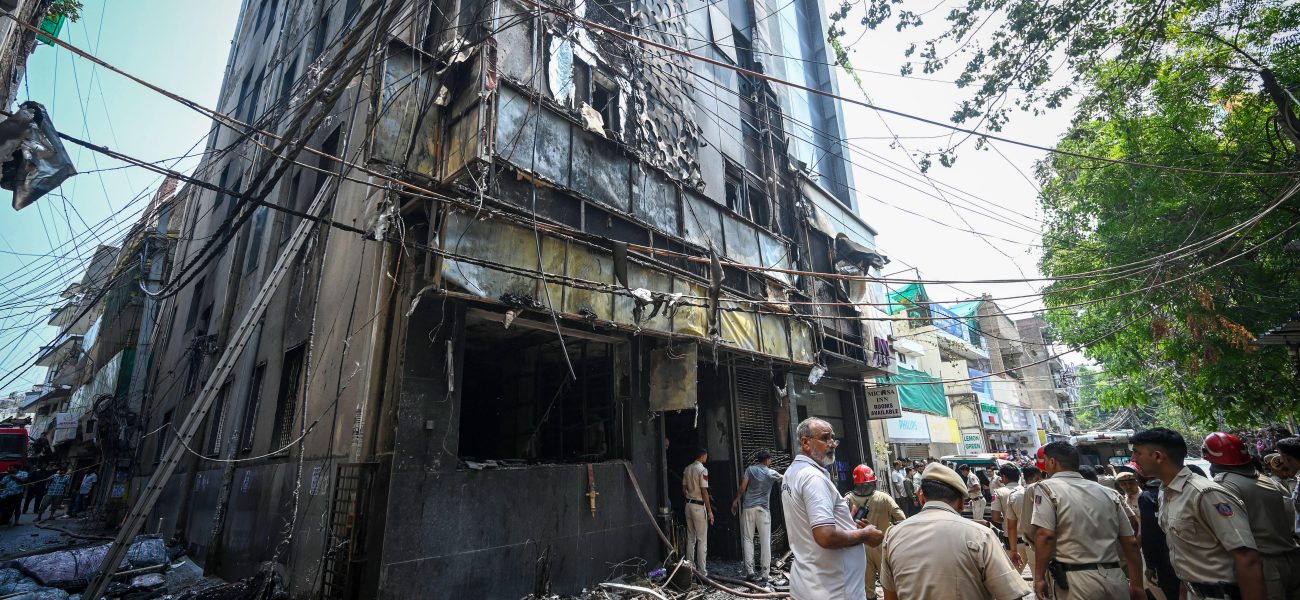
The Ashes of Neglect: Hotel Blaze Exposes India’s Systemic Safety Cracks
POLICY WIRE — New Delhi, India — The early morning clamor, often a soundtrack to this sprawling metropolis, gave way last week to a different kind of noise. A cacophony of sirens. Cracking flames....

POLICY WIRE — New Delhi, India — The early morning clamor, often a soundtrack to this sprawling metropolis, gave way last week to a different kind of noise. A cacophony of sirens. Cracking flames. Screams that quickly silenced. Not the usual urban bustle, but the harrowing crescendo of a disaster waiting to happen. Before dawn broke, a multi-story hotel in central Delhi, just blocks from Connaught Place’s bustling heart, became an inferno, snatching at least 21 lives, many of them foreign nationals.
It wasn’t a terror attack. It wasn’t an act of God. It was, instead, something far more insidious and, frankly, predictable: a devastating collision of negligence, lax oversight, and an economic engine built often without pausing for proper precautions. These sorts of tragedies? They’re depressingly familiar here. They happen. But the sheer scale of the international victims this time might just make it impossible for India to simply dust itself off and move on.
Firefighters, scrambling against locked escape routes and materials designed more for aesthetics than safety, fought for hours. But the damage, it was already done. Investigators are now picking through the charred remnants, but the narrative seems clear enough even from the soot and twisted metal. It’s not a question of ‘if’ but ‘when’ another one of these death traps claims more victims. According to a 2021 report by the Comptroller and Auditor General of India, over 60% of commercial buildings in major Indian cities, including Delhi, operate without required fire safety clearances, creating a constant, looming threat.
For nations like Pakistan, whose citizens frequently travel to India for trade, medical tourism, or family visits—often staying in budget hotels near business hubs—this tragedy hits close to home. The fragility of these shared infrastructure standards across South Asia suddenly feels less abstract. There’s a mutual dependence, yes, but also a shared vulnerability when one country’s regulatory failures catch fire.
Local authorities, predictably, have sprung into action—now. Delhi Chief Minister Arvind Kejriwal, known for his populist bent, wasn’t mincing words. He’d pledged an inquiry, of course, — and compensation. But more telling was his statement to the press. "This isn’t just an accident; it’s a catastrophic failure of our systems," Kejriwal declared, his face etched with grim determination. "We can’t afford to keep looking the other way while businesses prioritize profit over people’s lives." A sentiment we’ve all heard before. And, sadly, will likely hear again.
The Ministry of External Affairs, too, has stepped in, coordinating with various embassies and high commissions—a diplomatic fire drill of sorts. A spokesperson for the ministry, Smita Devi, expressed sincere regret. "Our hearts go out to the victims — and their families," she told reporters in New Delhi, her tone somber. "We’re actively assisting foreign missions in repatriating their deceased nationals and ensuring survivors receive all necessary support. This incident deeply affects our image on the global stage, and we’re committed to understanding exactly how this could’ve happened, so it won’t again." (She wasn’t making any concrete promises about what ‘understanding’ truly entails, naturally).
But the true cost isn’t just measured in human lives or damaged infrastructure; it’s also in the erosion of trust. Who travels to a country where a budget hotel can become a death trap? Not many. Especially when safer, more regulated alternatives exist across borders.
What This Means
This tragedy, grim as it’s, acts as a harsh mirror reflecting India’s long-standing challenges in urban planning, safety enforcement, and governance. Economically, while one hotel burning won’t tank India’s booming tourism, a string of such incidents could certainly ding its appeal as a safe, predictable destination—particularly for the burgeoning medical tourism sector, which relies heavily on patient confidence. There’s a direct, painful link between poor regulation — and cold hard cash.
Politically, the fire forces uncomfortable questions upon both municipal — and federal authorities. It isn’t just about one hotel owner; it’s about a culture of bribery, selective enforcement, and a labyrinthine bureaucracy that makes genuine compliance a headache. And, you know, sometimes people just look the other way. This isn’t a problem confined to India; many developing nations grapple with similar regulatory deficiencies—a global common denominator in infrastructure integrity, for sure. The incident could catalyze public pressure for more transparent, rigorous inspections, or it could simply be absorbed into the vast narrative of ‘things that happen here.’
But for the international community, particularly countries like Pakistan and others in the Gulf, it prompts a quiet re-evaluation of advisories for their citizens traveling to India. It’s a reminder that a state’s reach might extend to policy and geopolitics, but often fails to adequately guarantee something as fundamental as safe lodging for visitors—or its own people. And that, frankly, leaves an awful taste in the mouth of diplomacy. Perhaps this time, the whimper of injustice won’t be entirely unheard.